
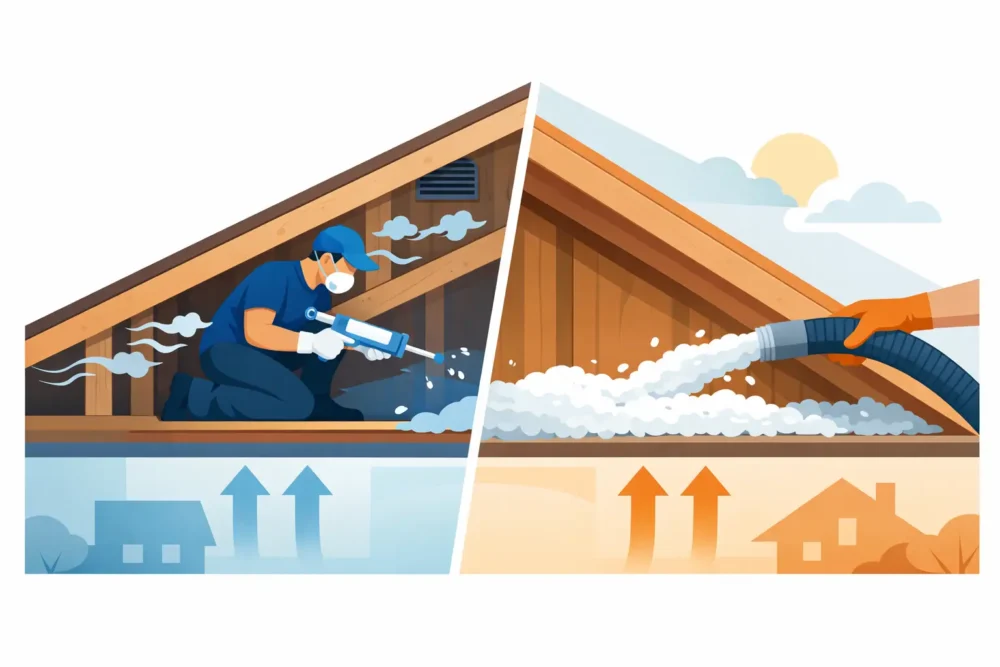
If your upstairs rooms are hard to keep comfortable and your energy bills keep climbing, adding more insulation might seem like the obvious fix. But attic air sealing before insulation is often the step that makes insulation actually work the way it should. Without it, warm or cooled indoor air can keep slipping through hidden gaps, and your attic turns into a place where energy dollars quietly disappear.
Many homeowners are surprised by how many openings exist between the living space and the attic. Small gaps around recessed lights, plumbing penetrations, wiring holes, bath fan housings, top plates, attic hatches, and duct chases may not look serious, but together they can add up to a major source of heat loss, heat gain, and moisture movement. Insulation slows heat transfer. It does not stop moving air. That distinction matters more than most people realize.
Why attic air sealing before insulation comes first
Think of insulation as a blanket. It helps resist temperature flow, but if outside air is freely moving through the space below or around it, that blanket cannot do its job well. Attic air sealing before insulation closes the pathways that let conditioned air escape from the home and outdoor air enter where it does not belong.
In winter, warm indoor air naturally rises. If your attic floor has leaks, that heated air can move into the attic and out of the house. In summer, the reverse pressure effects and extreme attic heat can still work against your comfort and HVAC efficiency. Either way, your heating and cooling system has to run longer to make up for those losses.
There is also a moisture issue. Air leakage carries water vapor. When that moisture reaches cooler surfaces in the attic, it can contribute to damp conditions, wood damage, insulation performance loss, and in some cases mold concerns. This is one reason air sealing is not just about utility savings. It is also about protecting the house itself.
What happens when insulation is added without air sealing
Homeowners sometimes call after having insulation installed but seeing little improvement. That is not always because the insulation was poor quality. Often, the missing piece was air sealing.
When insulation is installed over leaks, those gaps are still there. The insulation may even hide them, making future correction more difficult and more expensive. Air can continue moving through or around the insulation, reducing its effective performance. In some cases, existing insulation may also be dirty, compressed, contaminated, or disturbed by pests, which makes the problem worse.
This is why a proper attic upgrade starts with inspection, not guesswork. A trained team looks at the attic as part of the whole home envelope, not as a single product installation.
Common attic leaks homeowners rarely see
Most air leaks are not obvious unless you know where to look. Some are buried under old insulation. Others are tucked into framing transitions or utility penetrations.
The most common trouble spots include attic access openings, pull-down stairs, open wall cavities, gaps around plumbing stacks, electrical penetrations, dropped soffits over cabinets, recessed can lights, furnace flue areas, and duct boots. Bathroom fan housings are another frequent issue, especially when the fan is poorly sealed or vented incorrectly.
A homeowner can sometimes spot clues such as dusty insulation, uneven temperatures, drafts, or darkened areas around openings. But the full picture usually requires a closer evaluation. Thermal imaging and experienced visual inspection can help identify where the house is leaking and where insulation may have already been affected.
The right way to handle attic air sealing before insulation
The process depends on the home, the age of the structure, and what is already in the attic. There is no one-size-fits-all approach, which is why a customized inspection matters.
In many homes, the work begins with clearing access to the attic floor and locating all significant bypasses. If existing insulation is damaged, contaminated, or covering problem areas, removal may be necessary before sealing can be done properly. Once the leaks are exposed, technicians use appropriate materials for each opening. That may include caulk, foam sealant, weatherstripping, rigid blocking, or metal flashing where heat resistance is required.
This is also the stage where other hidden issues often come to light. Rodent activity, disconnected bath vents, duct leakage, moisture staining, and inadequate ventilation can all affect what should happen next. A dependable contractor will not ignore those findings just to rush to the insulation install.
After the air sealing is complete, insulation can be installed to the proper depth and type for the home. At that point, the insulation is working over a tighter, more controlled building envelope, which is where homeowners are more likely to feel a noticeable difference.
It depends on the attic, not just the insulation type
Blown-in insulation, batt insulation, and other attic insulation systems all perform better when air leakage is controlled first. But the exact sequence and scope can vary.
For example, if an attic has relatively clean existing insulation and only a few accessible leakage points, selective air sealing and an insulation upgrade may be straightforward. If the attic has old contaminated insulation, pest debris, or widespread bypasses, removal and a more involved sealing process may be the better long-term solution. If ventilation is poor, that may need to be corrected alongside sealing and insulation so the attic can manage heat and moisture properly.
This is where homeowners benefit from working with a company that handles more than one service. Air sealing, insulation, removal, ventilation improvements, and sanitation are connected. Treating them as separate problems can leave performance gaps behind.
Signs your home may need attic air sealing before insulation
Some homes practically advertise the problem. Others hide it behind normal-looking ceilings and steadily rising bills. If your upstairs is hotter in summer or colder in winter, if rooms feel drafty even with the HVAC running, or if insulation has been added before without much impact, attic leakage is worth investigating.
High energy costs are another clue, especially in older homes where penetrations and framing transitions were never sealed well. Dust buildup, persistent temperature swings, ice-cold ceiling areas in winter, and signs of attic moisture can also point in the same direction. Homes that have had electrical, plumbing, or HVAC work over the years often develop new attic bypasses as systems are added or changed.
In the St. Louis area, seasonal temperature swings can make these issues especially noticeable. A house that leaks badly into the attic does not just waste energy during one season. It can create year-round comfort problems.
DIY vs professional attic sealing
Some homeowners are comfortable sealing a few visible gaps around an attic hatch or exposed plumbing penetration. That can help. But a full attic air sealing project is usually more involved than it first appears.
There are safety concerns around wiring, combustion venting, recessed fixtures, and moving through the attic without damaging the ceiling below. There is also the challenge of knowing what should be sealed, what should not be sealed, and which materials are appropriate in each location. The goal is not simply to foam every opening in sight. The goal is to improve the home envelope without creating ventilation or fire safety issues.
Professional work also tends to be more complete. An experienced crew can identify concealed bypasses, evaluate insulation condition, and recommend whether removal, sanitation, rodent proofing, or ventilation changes should be addressed at the same time. That leads to better results and fewer surprises later.
What homeowners gain from doing it in the right order
The biggest benefit is that you get more value from the insulation you are paying for. When air sealing is done first, insulation can perform closer to its intended rating. That often means more consistent indoor temperatures, less HVAC strain, lower heating and cooling costs, and improved comfort in rooms that used to feel hard to control.
There can be indoor air quality benefits too. Sealing attic bypasses can reduce the movement of dusty, dirty attic air into the living space. If the attic has been affected by pests or contaminated insulation, addressing those conditions before reinsulating can make the home feel cleaner as well as more efficient.
For many homeowners, the real win is peace of mind. You are not just piling new material on top of an unresolved problem. You are fixing the leaks first, then upgrading the insulation over a better foundation.
A well-insulated attic starts with a tight attic floor. If you are thinking about improving comfort or lowering utility costs, attic air sealing before insulation is often the step that turns a partial fix into a lasting one.