
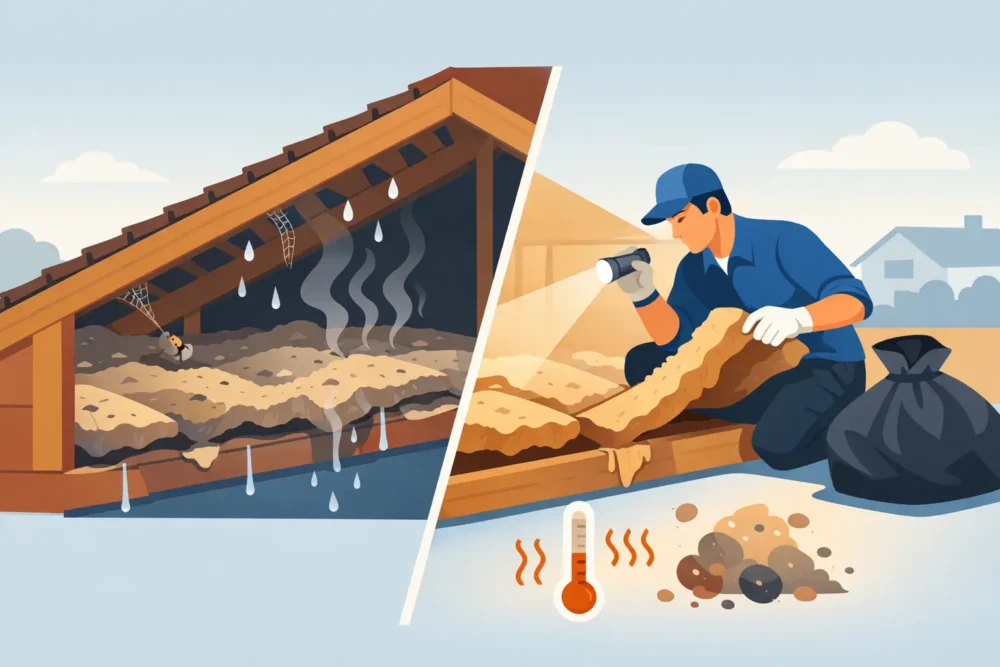
Your attic can quietly cause some of the biggest comfort and energy problems in the house. If rooms feel uneven, utility bills keep climbing, or you have musty odors that never seem to go away, it may be time to look closer at how to tell if attic insulation needs removal instead of just adding more on top.
That distinction matters. In some homes, insulation is simply underperforming because there is not enough of it. In others, the material is damaged, contaminated, compacted, or hiding larger attic issues like air leaks, moisture, or pests. When that happens, removal is often the right first step because new insulation installed over bad material does not solve the real problem.
How to tell if attic insulation needs removal before adding more
A lot of homeowners assume insulation is a “set it and forget it” part of the home. The truth is that attic insulation can lose effectiveness over time, especially in older homes or attics with roof leaks, poor ventilation, or rodent activity.
One of the clearest signs is contamination. If insulation has been exposed to rodent droppings, nesting, urine, or strong odors, removal is usually the safer choice. Contaminated insulation does more than reduce energy efficiency. It can affect indoor air quality and leave behind odors that circulate through the home.
Moisture damage is another major red flag. Insulation that is damp, matted down, moldy, or stained has likely lost much of its insulating value. Moisture in the attic can come from roof leaks, condensation, blocked ventilation, or air escaping from the living space below. If the insulation stays in place after that kind of exposure, the problem often gets worse.
Settling and compression also matter. Loose-fill insulation naturally settles over time, and fiberglass batts can slump, shift, or get compressed by storage boxes or service work. If the insulation is thin in some areas and piled in others, your attic may no longer be protecting the home evenly. Sometimes topping it off is enough, but if the existing material is dirty, deteriorated, or covering hidden issues, removal may be the smarter move.
Signs your attic insulation is no longer doing its job
The attic does not need to look dramatic to be causing real problems. Often, the clues show up inside the house first.
If your upstairs rooms are hard to keep comfortable, that can point to failing attic insulation. In the Saint Louis area, this often shows up as hot second floors in summer and chilly rooms in winter. When insulation is missing, degraded, or disturbed, the house loses heat and gains heat faster than it should.
Higher heating and cooling bills are another common warning sign. Energy costs can rise for a lot of reasons, so insulation is not always the only cause. Still, when bills increase along with comfort issues, the attic deserves attention.
Pay attention to indoor air quality too. Dusty air, musty smells, or worsening allergy symptoms can sometimes be tied to attic contamination. If the insulation has absorbed odors, supported mold growth, or been affected by pests, it can contribute to a less healthy indoor environment.
Ice dams in winter or unusually warm attic conditions in summer can also indicate a bigger attic system problem. Insulation works best when it is paired with proper air sealing and ventilation. If any one of those parts is missing, the attic can become a source of energy loss and moisture trouble.
Rodent damage is one of the biggest reasons for removal
Rodents are hard on insulation. They tunnel through it, flatten it, contaminate it, and use it for nesting. Even a small infestation can affect a large area because the damage is not always limited to one corner of the attic.
This is one of those cases where adding new insulation over the top usually does not make sense. The existing material may continue to hold waste, bacteria, and odor. A more effective approach is to remove the damaged insulation, sanitize the attic as needed, address entry points, and then install fresh material.
Moisture and mold call for a closer inspection
Wet insulation does not bounce back the way many homeowners hope it will. Once insulation becomes saturated or repeatedly exposed to moisture, it tends to lose performance and can create conditions that support mold growth.
The tricky part is that moisture problems are not always obvious from below. You may not see a stain on the ceiling, but the attic insulation can still be absorbing humidity or leaking air from bathrooms, kitchens, and recessed lights. That is why an inspection matters. It helps separate a simple insulation issue from a broader attic problem involving ventilation or air sealing.
When removal is necessary and when it is not
Not every attic needs a full insulation removal. If the existing insulation is dry, clean, and reasonably intact, adding more insulation may be enough to improve performance. That is often the most cost-effective path when the only issue is low insulation depth.
Removal becomes more likely when the material is contaminated, moldy, badly settled, smoke-damaged, or mixed with debris. It is also common in older attics where the insulation has been disturbed by years of electrical work, HVAC service, or pest activity. In those situations, starting fresh gives you a cleaner and more reliable foundation.
There is also a practical side to removal. It allows technicians to fully inspect the attic floor, find hidden air leaks, and seal problem areas before new insulation goes in. That step can make a major difference in comfort and efficiency because air leakage is often a large part of the problem.
What a professional inspection should look for
If you are trying to figure out how to tell if attic insulation needs removal, a professional inspection should go beyond a quick glance. The goal is not just to measure insulation depth. It is to understand the condition of the material and what is happening around it.
A thorough inspection should look for signs of rodent activity, moisture intrusion, mold, odor, compression, bare spots, and uneven coverage. It should also identify attic air leaks around plumbing penetrations, wiring, ductwork, hatch openings, and light fixtures. In many homes, the insulation problem and the air leakage problem are connected.
Thermal imaging can also help show where the home is losing energy, especially when comfort complaints do not match what is visible in the attic. That kind of diagnostic approach is useful because it leads to a more accurate recommendation. Some homes need removal and replacement. Others need targeted removal in damaged areas, plus air sealing and insulation upgrades.
Why removal is often part of a bigger solution
Homeowners sometimes think of insulation as a single product, but attic performance is really a system. If damaged insulation is removed without fixing air leaks, moisture sources, or pest entry points, the same issues can return.
That is why the best results usually come from a full-service approach. Removal clears out the problem material. Air sealing helps stop conditioned air from escaping into the attic. Ventilation improvements can reduce heat and moisture buildup. If rodents have been present, proofing and sanitation help protect the investment.
For many households, this is where comfort starts to change in a noticeable way. Rooms feel more even. The HVAC system does not have to work as hard. The home feels cleaner and more stable through both summer heat and winter cold.
Should you inspect your attic yourself?
You can spot some warning signs on your own, especially if you notice obvious droppings, strong odors, damp insulation, or visible staining. But attics can be difficult and unpleasant spaces to evaluate safely. Low clearance, exposed wiring, poor footing, and contaminated materials make do-it-yourself inspections less straightforward than they seem.
A trained inspection is usually the better choice when you suspect removal may be needed. It gives you a clearer answer on whether the insulation can stay, whether part of it should be removed, or whether the attic needs a full reset before new insulation is installed.
If your attic has been showing signs of contamination, moisture, or poor performance, getting expert guidance now can help you avoid paying twice – once for temporary fixes and again for the work that should have been done first. Better Home Insulation works with homeowners to identify the real cause of attic problems and recommend practical next steps that improve comfort, energy efficiency, and peace of mind. A clean, properly sealed, properly insulated attic does more than lower bills. It helps your whole home feel the way it should.