
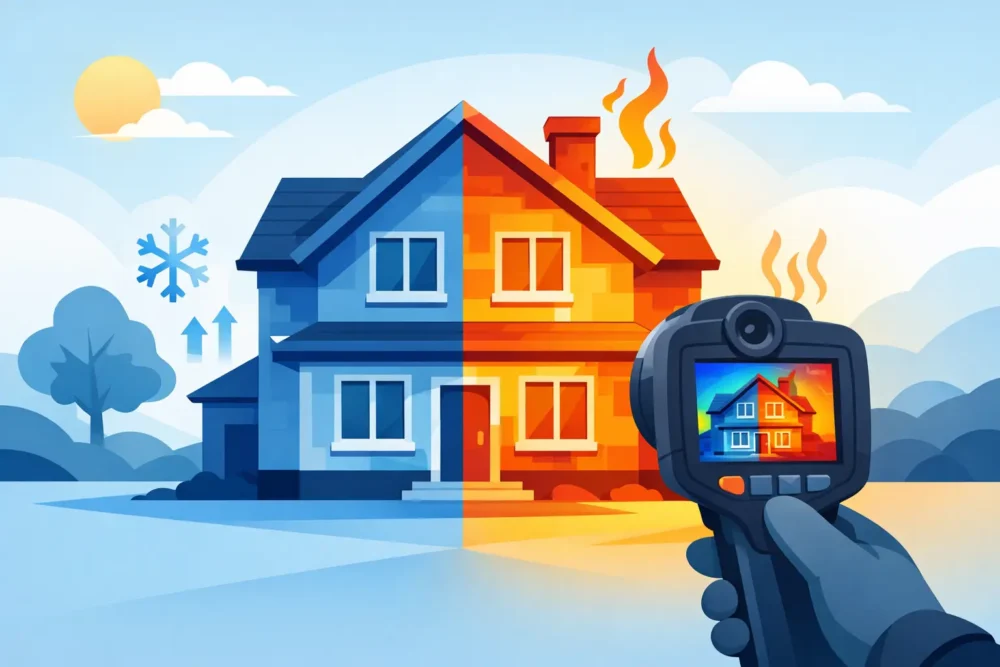
A house can look perfectly fine and still waste energy every day. Thermal imaging for home energy loss gives homeowners a way to see what the eye misses – where heat is escaping, where outside air is getting in, and where insulation is no longer doing its job.
That matters because comfort problems usually do not start with one obvious hole in the wall. More often, they come from a combination of attic air leaks, missing insulation, disconnected ductwork, moisture intrusion, or temperature transfer around recessed lights, rim joists, crawl spaces, and wall cavities. If you only treat the symptom, the room may still feel too hot in summer or too cold in winter. If you identify the source, you can fix the problem with more confidence.
What thermal imaging actually shows
A thermal imaging camera reads surface temperature differences. It does not see through walls like an X-ray, and it does not diagnose every issue by itself. What it does very well is highlight unusual hot and cold patterns that point to hidden home performance problems.
In a home inspection setting, those patterns can reveal attic bypasses, missing insulation, compressed insulation, air leakage around windows and doors, duct losses, and in some cases moisture-related concerns. A colder patch on an interior ceiling in winter may suggest missing attic insulation above it. A hot wall section during summer may point to heat gain where insulation has settled or where an air gap is allowing exterior heat inside.
This is where experience matters. A thermal image is useful, but interpreting it correctly is what leads to the right repair plan. The same temperature difference can have more than one possible cause. That is why thermal imaging works best as part of a broader inspection, not as a stand-alone shortcut.
Why homeowners use thermal imaging for home energy loss
Most homeowners call for help when something feels off long before they know why. A second-floor bedroom never cools down. Floors feel cold over a crawl space. Utility bills keep climbing without a clear explanation. One room stays drafty no matter how often the thermostat runs.
Thermal imaging helps narrow those issues down quickly. Instead of guessing whether the problem is insulation, air leakage, ventilation, or something else, the inspection can point to the likely source. That saves time and often prevents spending money on the wrong fix.
For example, adding more insulation alone may not solve a comfort problem if the real issue is uncontrolled air leakage in the attic. In other cases, air sealing helps, but old or contaminated insulation still needs to be removed and replaced. The value of thermal imaging is that it helps connect the symptom to the actual condition inside the home envelope.
Common problems a thermal scan can uncover
Attic air leaks and missing insulation
This is one of the most common findings. Warm air rises, and if the attic floor has gaps around wiring penetrations, plumbing stacks, can lights, or top plates, conditioned air can escape into the attic. That increases heating and cooling costs and can create uneven temperatures throughout the home.
Thermal patterns often make these weak points easier to identify. A scan can also show where insulation coverage is thin, displaced, or inconsistent. In older homes, it is not unusual to find a patchwork of problem areas rather than one single failure.
Crawl space and floor temperature loss
If rooms above the crawl space feel uncomfortable, the issue may involve missing insulation, poor air sealing, or moisture conditions affecting performance. Thermal imaging can help pinpoint colder floor sections and show where outside conditions are influencing the living space above.
That does not mean every cold floor needs the same treatment. Some homes need insulation upgrades. Others need a vapor barrier, crawl space sealing, or corrections to damaged material. A proper inspection helps sort out which combination makes sense.
Wall voids and settled insulation
Walls can lose effectiveness over time, especially in older homes or after remodeling work. Thermal imaging may reveal vertical patterns or isolated cold and hot spots that suggest insulation gaps inside wall cavities.
This is especially useful when a home has persistent room-to-room temperature differences. If one exterior-facing room always feels uncomfortable, the problem may be inside the wall assembly rather than at the HVAC system.
Duct leakage and HVAC loss
If conditioned air is traveling through unconditioned spaces like attics or crawl spaces, duct leakage can waste a surprising amount of energy. Thermal imaging may reveal temperature anomalies around ducts, boots, and registers that suggest air loss or poor sealing.
Again, this is not always visible without equipment. A home can have an HVAC system that runs constantly, yet the real problem is that the air is not reaching the rooms efficiently.
What thermal imaging does not do
A good contractor should be clear about the limits as well as the benefits. Thermal imaging does not automatically tell you the exact depth of insulation, the R-value in a cavity, or whether every dark area in an image is a leak. Conditions such as weather, indoor-outdoor temperature difference, sunlight exposure, and even recent appliance use can affect readings.
That is why thermal imaging should support the inspection, not replace building knowledge. It works best when paired with a visual assessment and practical understanding of how attics, walls, crawl spaces, ventilation, and air barriers interact.
For homeowners, that is actually good news. It means the goal is not just taking interesting pictures. The goal is using the scan to make sound recommendations that improve comfort and efficiency.
When a thermal scan makes the most sense
Thermal imaging is especially useful when you have recurring comfort complaints, rising utility bills, or signs that insulation may be damaged or incomplete. It is also valuable before buying a major insulation upgrade, because it can help confirm where the biggest losses are happening.
In the St. Louis area, seasonal temperature swings can make hidden performance issues more noticeable. Hot, humid summers and cold winter conditions put real pressure on attics, crawl spaces, duct systems, and older insulation. A thermal inspection can help homeowners understand why a home struggles during peak heating and cooling months rather than relying on guesswork.
It is also helpful after rodent activity, roof leaks, or older insulation contamination. If insulation has been disturbed, compacted, or compromised by moisture, thermal imaging can help show where performance has changed.
What happens after the scan
The best outcome from thermal imaging for home energy loss is a repair strategy that fits the house. Sometimes the answer is straightforward, like adding attic insulation after air sealing key penetrations. Sometimes the solution involves several connected improvements, such as insulation removal, sanitizing, rodent proofing, new insulation installation, and ventilation corrections.
That full-picture approach matters because home performance issues tend to overlap. A homeowner may think they have an insulation problem when they also have moisture exposure or contamination. Another home may need air sealing first so new insulation can perform as intended.
This is where working with a contractor that understands diagnostics and remediation together can save frustration. Better Home Insulation focuses on identifying the cause, not just selling a material, which gives homeowners a clearer path to long-term comfort and lower energy waste.
How to get the most value from the results
If you are scheduling a thermal inspection, the most useful next step is asking what the images mean in practical terms. Which areas are causing measurable loss? Which repairs should happen first? What can wait, and what is likely to keep costing you money or comfort if left alone?
A trustworthy inspection should lead to plain-language answers. You should understand whether the issue is attic leakage, weak insulation coverage, crawl space exposure, duct loss, or a combination. You should also know why the recommended work is being suggested and how it is expected to improve the home.
Not every thermal pattern calls for major work. Some findings are minor, and some homes have one dominant issue creating most of the discomfort. The point is clarity. Once you know where the energy is going, you can make smart improvements instead of chasing symptoms from season to season.
If your home has rooms that never feel right, utility bills that keep trending upward, or insulation concerns you cannot verify by sight alone, thermal imaging can turn hidden problems into visible ones. And once you can see the loss, fixing it becomes a much more practical decision.