
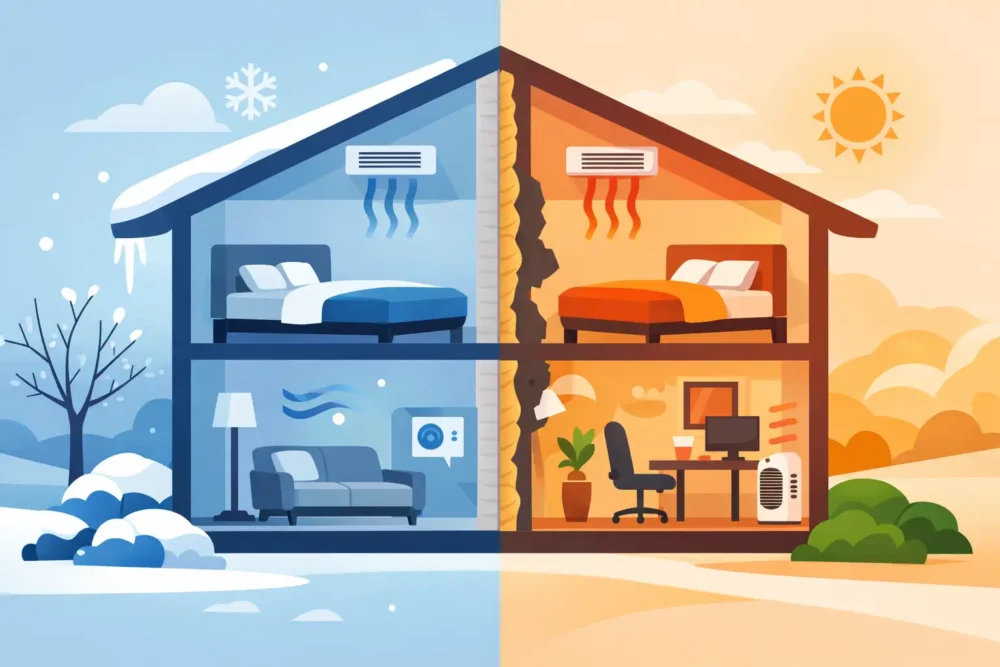
One bedroom is cold enough for extra blankets, while the room across the hall feels stuffy by mid-afternoon. That uneven room temperatures insulation problem is one of the most common signs that a home is losing control of its indoor comfort. It usually does not come from a single issue. More often, it points to a mix of missing insulation, air leaks, poor ventilation, duct losses, or moisture-related damage hidden in the attic, walls, or crawl space.
For homeowners, the frustrating part is that the thermostat can look fine while the house still feels wrong. If some rooms never seem to match the setting, the home envelope may not be doing its job. That means your heating and cooling system is working harder, energy bills climb, and comfort still falls short.
Why uneven room temperatures happen
A house does not heat and cool evenly on its own. It relies on a connected system: insulation to slow heat transfer, air sealing to stop drafts, ventilation to manage heat and moisture, and HVAC distribution to deliver conditioned air where it is needed. When one part is weak, certain rooms feel it first.
Upper-floor rooms often get hotter in summer because attics absorb intense heat. If attic insulation is thin, outdated, or disturbed, that heat moves into the rooms below more easily. In winter, the same area may lose warmth fast, making upstairs bedrooms feel colder at night.
Rooms over crawl spaces can have the opposite problem. If the crawl space is under-insulated, damp, or exposed to outside air, floors stay cold and the room never feels fully comfortable. Exterior-facing rooms also tend to show problems sooner because they have more wall area exposed to outdoor temperatures.
Then there is air leakage. Even decent insulation cannot perform well if outside air is constantly slipping in through attic bypasses, recessed lighting openings, plumbing penetrations, wall gaps, rim joists, or access hatches. Air leaks can make one room drafty, leave another stale, and create temperature swings throughout the day.
The uneven room temperatures insulation problem in real homes
In many homes, insulation problems are not obvious until a detailed inspection is done. From inside the living space, you may only notice that the nursery is always colder, the bonus room is always hotter, or the back of the house feels different from the front. Behind that comfort issue, there may be insulation that has settled, been compressed, gotten wet, or been contaminated by pests.
Older insulation can lose effectiveness over time, especially if it has been moved during electrical or HVAC work. In attics, it is common to find uneven coverage, bare spots near eaves, or insulation pulled away from the framing. In crawl spaces, fiberglass batts may sag or fall, leaving sections of the floor system exposed.
This is where diagnosis matters. If a contractor simply adds more insulation without identifying air leaks, ventilation issues, or damaged materials, the result may be only partial improvement. The right fix depends on why the temperature difference is happening.
Signs insulation is part of the problem
A few patterns strongly suggest insulation and home envelope issues instead of just thermostat preference. If the same rooms are uncomfortable every season, that is a clue. If the rooms nearest the attic or above the crawl space are the worst, that is another. High utility bills combined with hot ceilings, cold floors, or persistent drafts also point toward insulation and air sealing concerns.
You may also notice dust, musty odors, or allergy flare-ups in problem areas. That can happen when outside air, attic air, or crawl space air is entering the home through gaps. In some homes, rodent activity or old contaminated insulation is part of the equation, especially when attic or crawl space materials have been disturbed.
A professional inspection can confirm what is happening. Thermal imaging is especially useful because it can show where insulation is missing or where hidden temperature differences reveal air leakage.
How to fix uneven room temperatures insulation problem
The best approach starts with the house, not the thermostat. When rooms are uneven, homeowners are often tempted to keep adjusting the HVAC settings, closing vents, or using space heaters. Those steps may offer temporary relief, but they usually do not solve the underlying issue.
Start with an attic inspection
The attic is one of the most common sources of temperature imbalance. If insulation levels are too low, coverage is inconsistent, or air leaks are open around penetrations, the rooms below will struggle to stay comfortable. Attic air sealing is often just as important as adding insulation because moving air can carry heat far faster than insulation alone can control.
In some homes, old attic insulation needs to be removed before improvements are made. This is especially true if it has been damaged by moisture, pests, or contamination. Once the attic floor is properly sealed, new insulation can be installed to the right depth and coverage.
Check the crawl space or floor system
If a room has cold floors in winter or feels damp and uncomfortable, the problem may be below it. Crawl space insulation, vapor barrier installation, and moisture control can make a major difference in both comfort and indoor air quality. If insulation under the floor is sagging or missing, replacing it with the right material and securing it properly is often necessary.
This is also an area where moisture changes the recommendation. In a dry, well-managed crawl space, one insulation strategy may work well. In a damp or vented crawl space, the better solution may involve both insulation and vapor control.
Evaluate walls, ceilings, and problem rooms
Sometimes the issue is isolated to one addition, one over-garage room, or one part of the house with poor wall insulation. Wall and ceiling insulation can help, but it should be based on inspection findings. A room with west-facing sun exposure, for example, may also need ventilation improvements or radiant heat reduction to stay comfortable in summer.
Do not ignore ventilation and ducts
Insulation is a major comfort factor, but it is not the only one. An attic that traps excessive heat or moisture can make nearby rooms harder to cool. Ductwork running through unconditioned spaces can also lose heating or cooling before it reaches the room. Sometimes the uneven temperature problem is part insulation, part airflow.
That is why a whole-home view matters. The most effective solution often combines insulation upgrades with air sealing, ventilation corrections, and targeted remediation where materials are damaged.
Why quick fixes often disappoint
Homeowners sometimes try vent covers, portable fans, or extra blankets in the attic as a shortcut. These rarely address the real issue. Covering vents can disrupt HVAC balance. Portable heaters increase energy use. Adding insulation on top of wet, dirty, or compressed material can trap problems instead of fixing them.
There is also the question of where heat is moving. If conditioned air is leaking into the attic, or outside air is entering through bypasses, simply increasing insulation thickness will not stop that airflow. Good results come from matching the repair to the failure point.
What homeowners should expect from a professional assessment
A useful insulation assessment should explain more than R-value. It should identify where the home is losing energy, why certain rooms are uncomfortable, and whether the issue involves insulation, air leakage, contamination, moisture, or ventilation. The recommendations should be specific to the home rather than based on a one-size-fits-all package.
For many homeowners in the St. Louis area, seasonal swings make these problems easier to notice. Summer attic heat and winter cold snaps can exaggerate weak points in the home envelope. A proper inspection helps separate minor issues from the ones that are driving comfort complaints and utility costs.
Working with a licensed and insured insulation contractor also matters because some homes need more than added material. They may need insulation removal, sanitation, rodent proofing, air sealing, or crawl space vapor barrier work before new insulation will perform the way it should.
Comfort should be consistent from room to room
If one part of your house always feels harder to heat or cool, trust what you are feeling. Uneven temperatures are not just an annoyance. They are often a sign that the home envelope is underperforming in a way that affects comfort, efficiency, and sometimes indoor air quality.
The good news is that this problem is usually fixable once the real cause is identified. Whether the issue starts in the attic, walls, crawl space, or a combination of areas, the goal is the same: a home that feels more even, costs less to condition, and works the way it should every day. If that is what you want from your home, a thorough inspection is the right first step.