
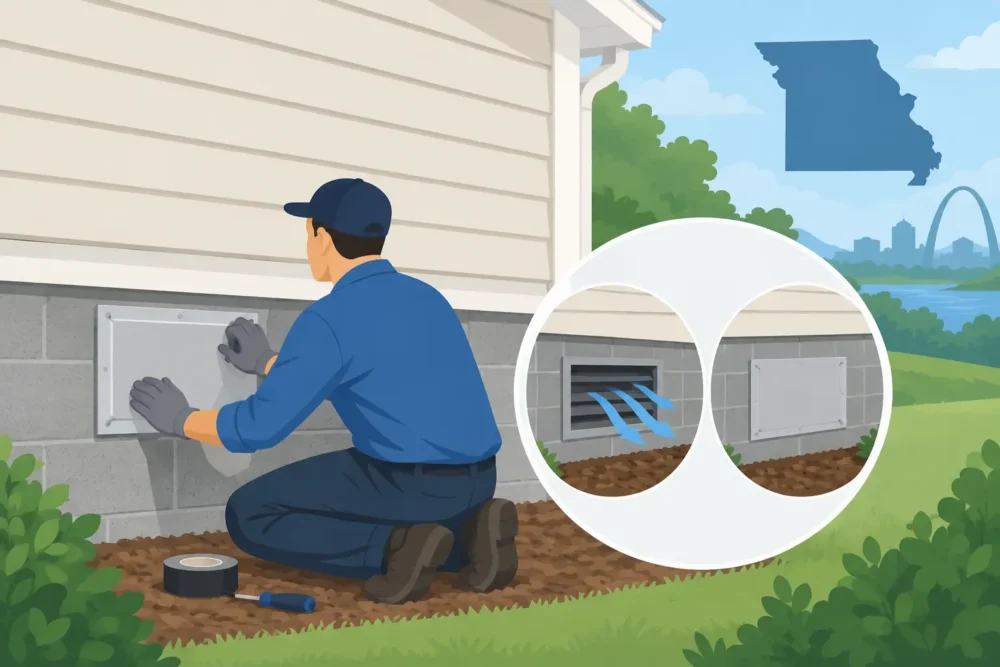
A crawl space can affect nearly every room above it. Musty odors, cold floors, high summer humidity, rising utility bills, and even damaged insulation often begin below the house. Knowing when to seal crawlspace vents can help solve those issues, but closing vents is not a stand-alone fix. It should be part of a complete moisture-control and insulation plan designed for your specific home.
For many older homes in the St. Louis area, crawl space vents were installed under the assumption that outdoor airflow would dry the space. In practice, Missouri’s humid summers can bring more moisture inside. Warm, damp air enters through the vents, cools against foundation walls and ductwork, and can leave condensation behind. That moisture can feed mold, attract pests, and make your home harder to heat and cool.
When to Seal Crawlspace Vents
Crawlspace vents are generally sealed when the crawl space is being converted from a vented area to a closed, conditioned, or semi-conditioned space. This approach is often called crawl space encapsulation, although the exact scope can vary from home to home.
The right time to close the vents is after the crawl space has been evaluated for water entry, ground moisture, insulation condition, air leaks, and mechanical equipment. A sealed crawl space needs another way to manage moisture. Simply covering vent openings while leaving bare dirt, wet masonry, damaged insulation, or plumbing leaks in place can trap an existing problem instead of correcting it.
Sealing vents may make sense when your crawl space has persistent humidity, condensation on ducts or pipes, mold-like odors, deteriorated floor insulation, or evidence of rodents and insects entering through vent openings. It can also be a strong option when cold floors and uncomfortable rooms are tied to air leakage from below.
Why Open Vents Can Cause Trouble in Missouri
Outdoor air is not always drying air. During a humid St. Louis summer, outside air can carry a substantial amount of moisture. Once that air enters a shaded crawl space, its temperature drops and its relative humidity rises. The result may be damp framing, sweating HVAC ducts, wet insulation, and a stale odor that travels upward into living areas.
Winter brings a different concern. Open vents allow cold air beneath the home, increasing heat loss through the floor system. Pipes may be more vulnerable to freezing during severe cold spells, and rooms above the crawl space may feel noticeably colder than the rest of the house.
A properly closed crawl space reduces uncontrolled outdoor air movement. It can make the building envelope more consistent, which helps your heating and cooling system maintain comfortable temperatures with less strain. The benefit is not just lower energy use. Homeowners often notice warmer floors in winter, fewer musty smells, and less moisture-related damage over time.
Do Not Seal Vents Without a Moisture Plan
The biggest mistake is treating crawl space vents like the only source of the problem. Before vents are closed, the crawl space should be dry and protected from future moisture.
A complete plan usually starts with addressing bulk water. If rainwater is entering through the foundation, pooling near the home, or flowing from a plumbing leak, that issue comes first. Exterior grading, gutter discharge, drainage concerns, and foundation seepage all deserve attention before encapsulation work begins.
Next, the ground should be separated from the crawl space air with a durable vapor barrier. Bare soil releases moisture continuously, even when it looks dry. A properly installed barrier limits that moisture movement and is typically sealed at seams and around support piers or other penetrations. In many homes, this step makes a major difference in crawl space humidity.
Air sealing is also essential. Along with vent openings, a contractor may seal gaps around plumbing, wiring, ducts, sill plates, and foundation penetrations. Then, depending on the crawl space design, insulation is installed where it will perform best – often on the foundation walls rather than between floor joists. This keeps the crawl space closer to indoor conditions and helps protect pipes and mechanical systems.
Finally, the space needs controlled humidity management. That may involve a dedicated crawl space dehumidifier, conditioned air supplied in accordance with local requirements, or another approved method. The best choice depends on the home, equipment layout, moisture level, and applicable building codes.
Situations Where Vents Should Stay Open
Not every crawl space should be sealed immediately. If the space has active water intrusion, visible structural decay, a sewage backup, or a major plumbing leak, closing vents should wait until remediation is complete. Airflow may be useful temporarily while the underlying issue is being corrected, but it is not a replacement for repair.
Homes with fuel-burning appliances in the crawl space require special attention. Furnaces, water heaters, and other combustion equipment need safe combustion air and proper venting. Changing the crawl space from vented to closed can affect those requirements. A qualified professional should assess the equipment and confirm that the final design is safe and code-compliant.
Radon is another consideration. In areas where radon may be present, testing can help guide the plan. A vapor barrier and sealed crawl space can be part of an effective mitigation strategy, but radon concerns should be addressed with the appropriate testing and mitigation measures rather than assumed away.
Local code requirements also matter. Crawl space standards can depend on the home’s construction, climate zone, mechanical systems, and whether the area is considered conditioned. A professional inspection helps ensure that sealing vents improves performance without creating a compliance or safety issue.
Signs Your Crawl Space Needs Professional Attention
You do not need to crawl under your home to know something may be wrong. The clues often show up indoors first. Persistent musty odors, floors that feel cold or damp, high indoor humidity, peeling paint, unexplained energy costs, and rooms that never seem comfortable can all point to crawl space air and moisture problems.
Visible signs below the house are even more direct. These include fallen or wet insulation, condensation on ducts, dark staining on wood, a damaged vapor barrier, pest droppings, standing water, or rusting metal components. Rodents often use unprotected vent openings as an entry point, then damage insulation and leave contamination behind.
A crawl space inspection should look at the whole system rather than one symptom. Moisture, air leakage, insulation, duct condition, pest access, and sanitation are closely connected. Correcting only one piece can leave the original cause in place.
What a Proper Crawl Space Upgrade Looks Like
The sequence matters. A reliable crawl space project begins with inspection and moisture diagnosis, followed by correction of water entry and pest issues. Once the space is dry and clean, damaged or contaminated insulation can be removed as needed. A vapor barrier, targeted air sealing, vent closure, appropriate insulation, and humidity control can then work together.
This is also a good time to inspect ducts and pipes. Leaky ducts in a vented crawl space can waste conditioned air, while uninsulated pipes can contribute to heat loss or freezing risk. Addressing those details during the same project can produce more meaningful comfort and efficiency improvements.
Better Home Insulation helps homeowners evaluate these connected issues, from crawl space insulation and vapor barriers to air sealing, rodent proofing, and removal of damaged insulation. The goal is not to sell a one-size-fits-all solution. It is to identify what is happening under your home and recommend work that supports a cleaner, drier, more comfortable living space.
The Best Time of Year to Do the Work
Crawl space improvements can be completed throughout the year, provided active water problems are managed. Spring and summer often reveal humidity and condensation concerns, while fall is a practical time to prepare for winter comfort and protect pipes from cold outdoor air.
Still, the best time is before minor symptoms turn into expensive repairs. Wet insulation loses effectiveness, mold growth can spread, and prolonged moisture can damage wood framing. If your home smells musty, has uneven temperatures, or shows signs of moisture below the floor, an inspection now can provide clarity before the next season puts more stress on the space.
Closing crawlspace vents works best when it is part of a thoughtful system, not a quick patch. A professional assessment can show whether your home needs vent sealing, drainage improvements, a vapor barrier, insulation upgrades, humidity control, or a combination of services – and give you a practical path toward drier air and more comfortable rooms.