
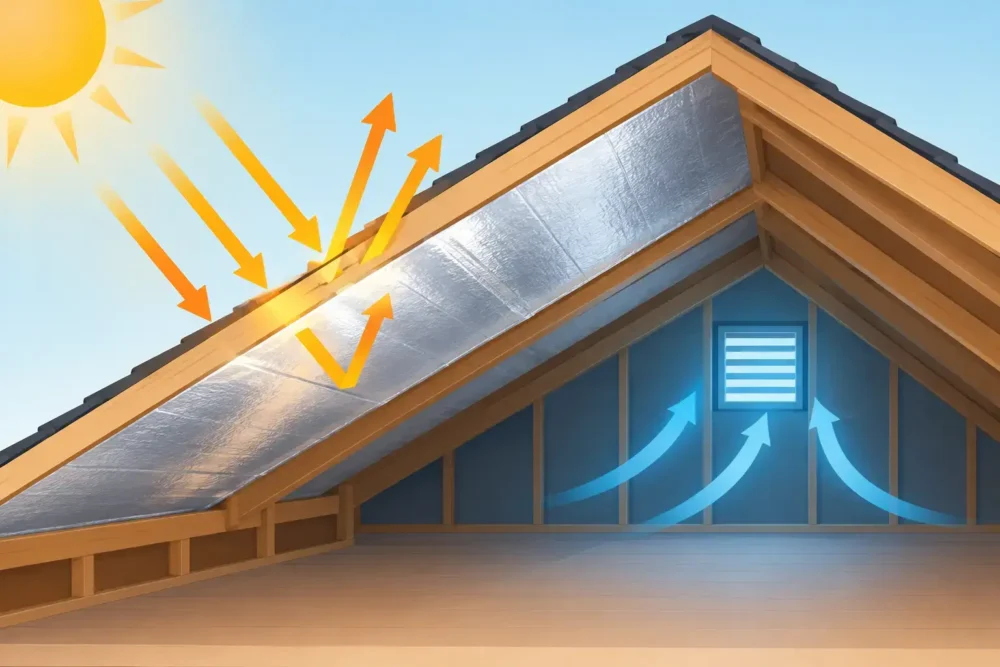
A St. Louis attic can reach punishing temperatures on a clear summer afternoon, even when the thermostat downstairs is set comfortably. Radiant barriers can help limit how much of that attic heat transfers toward your living space, but they are not a replacement for insulation, air sealing, or proper ventilation. The best results come from understanding what a radiant barrier does well and where it fits into the larger performance of your home.
What Is a Radiant Barrier?
A radiant barrier is a reflective material, usually aluminum-faced sheeting or foil, installed in an attic to reflect radiant heat. Unlike traditional insulation, which slows heat moving by conduction, a radiant barrier reduces heat transferred as infrared radiation.
Think about standing near a hot outdoor grill. You can feel the heat before touching anything because heat is radiating outward. In a similar way, a sun-heated roof transfers radiant heat to the attic floor, insulation, ductwork, and other surfaces below it. A properly installed reflective barrier helps send part of that heat back toward the roof rather than allowing it to radiate deeper into the attic.
That distinction matters because a radiant barrier does not carry an R-value in the same way fiberglass, cellulose, or spray foam insulation does. It is a specialized addition that works best when paired with the right insulation depth and airtightness.
Where Radiant Barriers Work Best
Radiant barriers are generally most useful in hot, sunny conditions, especially in attics with significant heat buildup. They can be a smart option for homes with air conditioning systems or ductwork located in the attic, where extreme temperatures force equipment to work harder.
In Missouri, homeowners often notice the biggest benefit during summer. Reducing attic heat can make upstairs rooms easier to cool, lessen strain on attic ductwork, and support more consistent indoor comfort. The impact varies, however, based on roof orientation, shading, insulation levels, attic ventilation, HVAC equipment, and how well the ceiling plane is air sealed.
A radiant barrier may be especially worth evaluating when:
- Your upstairs bedrooms are consistently warmer than the rest of the home.
- Attic ductwork becomes extremely hot during the summer.
- Your roof receives long hours of direct sun with limited tree shade.
- You are already planning attic insulation, air sealing, or ventilation improvements.
- Your existing insulation is old, compressed, contaminated, or needs removal.
The last point is often the most practical. If an attic is already being cleaned out for insulation removal or air sealing, it can be an efficient time to consider whether a radiant barrier belongs in the scope of work.
How Radiant Barriers Are Installed
The installation method affects performance. Radiant barriers need at least one adjacent air space to reflect radiant heat effectively. If the reflective surface is pressed tightly against another material or covered in dust, its ability to reflect heat can be reduced.
One common approach is installing foil-faced material along the underside of roof rafters. This can reflect heat before it reaches the main attic space while preserving the open air gap needed for performance. In some homes, a barrier may be installed over the attic floor insulation. That method requires careful planning so it does not trap moisture, interfere with ventilation, or create problems for future electrical and maintenance work.
Professional assessment matters because no two attics are exactly alike. The roof framing, existing insulation, wiring, bath fan vents, recessed lights, duct layout, and moisture conditions all need to be considered before material goes in.
Dust, Moisture, and Ventilation Matter
Radiant barriers are not maintenance-free in every location. A barrier placed horizontally can collect dust over time, which lowers reflectivity. For that reason, rafter installations are often preferred when suitable for the attic design.
Moisture is another concern. An attic needs to manage moisture safely, particularly in a mixed climate with cold winters and humid summers. A barrier should never be installed in a way that blocks intended attic ventilation or hides an existing roof leak. If bathroom fans terminate in the attic, ducts are disconnected, or damp insulation is present, those issues should be corrected first.
Radiant Barriers vs. Traditional Insulation
Homeowners sometimes hear that foil will “insulate” an attic and assume it can replace several inches of conventional insulation. It cannot. Traditional insulation is still the primary defense against heat flow through the ceiling between your attic and living space.
Insulation helps during both summer and winter. It slows heat entering the home through the attic in warm weather and slows heated indoor air from escaping in winter. A radiant barrier mainly addresses summer radiant heat gain. It may provide some benefit in other conditions, but its strongest role is reflecting heat from a hot roof.
Air sealing is equally important. Gaps around plumbing penetrations, light fixtures, attic hatches, wiring holes, and top plates can allow conditioned air to leak into the attic. That wastes energy, can contribute to moisture problems, and makes insulation less effective. Installing a radiant barrier without addressing major air leaks is often like putting a sunshade in a car with the windows open.
For many homes, the right order is straightforward: correct moisture or contamination concerns, air seal the attic floor, install or improve insulation to the appropriate level, and then consider a radiant barrier as an added heat-control measure.
Can a Radiant Barrier Lower Energy Bills?
It can contribute to lower cooling costs, but the savings should be viewed realistically. The results are not identical from one home to another, and promises of dramatic utility-bill reductions without an inspection should be treated cautiously.
A home with low attic insulation, open air leaks, leaky ducts, or poor ventilation may see greater value from fixing those core problems first. On the other hand, a well-insulated home with a sun-exposed roof and attic HVAC equipment may benefit meaningfully from a radiant barrier because it reduces the temperature surrounding those components.
Comfort is often the first improvement homeowners notice. Bedrooms below the attic may stay more even in the afternoon, and the cooling system may run less aggressively during peak heat. Those benefits can be valuable even when utility savings vary by season, thermostat habits, and energy rates.
When a Radiant Barrier Is Not the Right First Step
There are situations where a radiant barrier should wait. If insulation is thin or damaged, that is usually the priority. If rodents have contaminated the attic, removal, sanitizing, and rodent proofing should come before new materials are added. If the attic has evidence of water intrusion, mold-like growth, or improperly vented exhaust fans, the moisture source needs attention first.
It may also be less worthwhile in a heavily shaded home or an attic that already has strong insulation coverage, well-sealed ducts, and no meaningful comfort complaints. A professional should be willing to say when another improvement will offer a better return.
A Whole-Attic Approach Delivers Better Results
Attic problems rarely exist alone. High cooling bills may be connected to missing insulation, but they can also involve air leakage, inadequate ventilation, hot ductwork, pest damage, or insulation that has absorbed odors and contaminants. Looking at only one material can miss the real cause of discomfort.
At Better Home Insulation, attic recommendations begin with the condition of the home, not a one-size-fits-all product pitch. A thorough inspection can identify whether radiant barrier work makes sense alongside air sealing, insulation upgrades, ventilation improvements, or cleanup services. Homeowners deserve a clear explanation of what will help, what can wait, and why.
If your top-floor rooms feel uncomfortable every summer, start with an attic inspection rather than guessing at a single fix. The right combination of air sealing, insulation, ventilation, and radiant heat control can protect comfort long after the hottest week of the year has passed.