
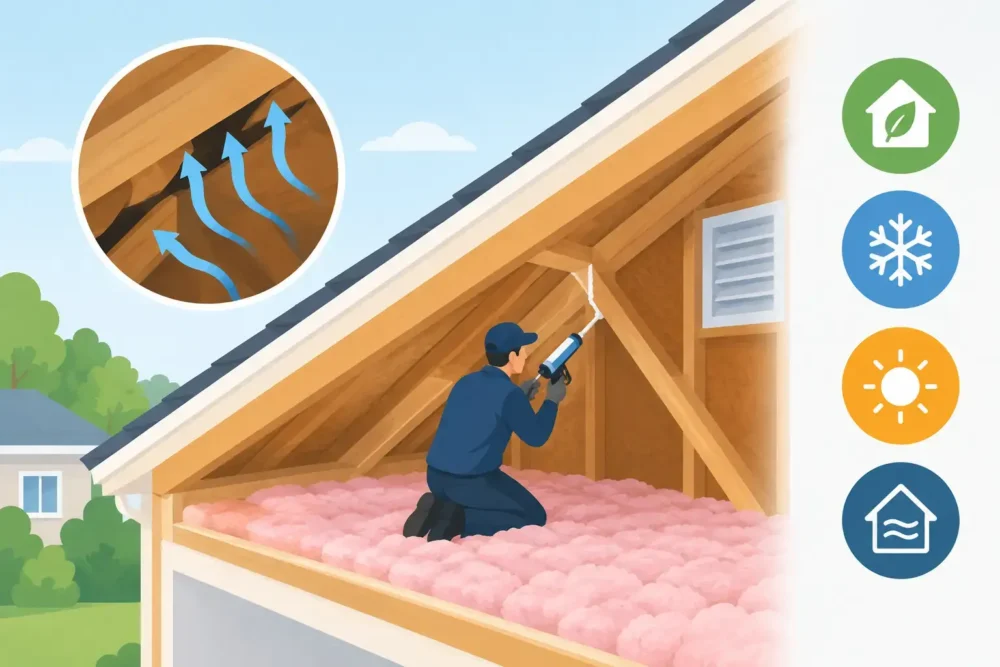
A cold upstairs bedroom in January, a stuffy second floor in July, and utility bills that keep climbing often point to the same overlooked area: the attic floor. So, what does attic air sealing do? It closes the hidden gaps between your living space and attic, limiting the uncontrolled movement of conditioned air, outside air, moisture, dust, and attic pollutants.
For many homeowners, adding more insulation seems like the obvious answer. Insulation matters, but it cannot perform as intended when air is freely moving through openings beneath it. Air sealing addresses the leaks first, then allows insulation to do its job of slowing heat transfer.
What Does Attic Air Sealing Do?
Attic air sealing creates a more continuous boundary between the conditioned rooms of your home and the unconditioned attic above. Technicians locate and seal openings around wiring, plumbing, duct penetrations, wall tops, recessed fixtures, chases, and other building details that are often buried under existing insulation.
These gaps can be surprisingly small, but their combined effect can be significant. Warm air naturally rises in winter and escapes through attic leaks. That escaping air pulls replacement air into the house through lower-level cracks, crawl spaces, rim joists, doors, and windows. This movement is commonly called the stack effect.
In summer, attic leaks can allow hot, humid attic air to enter the home. Your air conditioner then has to remove that added heat and moisture. Air sealing helps reduce this unwanted exchange, giving your heating and cooling system a more manageable workload.
The result is not usually a dramatic overnight transformation from one product alone. It is a practical improvement that supports lower energy use, steadier indoor temperatures, and a cleaner, more comfortable home.
Air Sealing and Insulation Solve Different Problems
Air sealing and insulation are often discussed together because the best attic upgrades use both. Still, they do different jobs.
Insulation slows conductive heat flow. In plain terms, it helps keep winter heat inside and summer heat outside. Air sealing controls air movement through holes and cracks. A thick layer of insulation can still be undermined by openings that allow air to pass from the house into the attic.
Think of a winter coat with the zipper left open. The coat material still has insulating value, but cold air can move through the opening. Sealing attic bypasses is like closing that zipper before relying on the insulation around it.
This order matters during attic work. If new insulation is installed over unsealed gaps, those leaks become harder to find and correct later. In homes with damaged, compressed, rodent-contaminated, or moisture-affected insulation, removal may be necessary before the full extent of the air leakage can be evaluated.
Where Attic Air Leaks Usually Hide
Most attic leaks are not obvious from inside the home. They are commonly concealed by insulation or located in areas homeowners rarely see. During an inspection, a trained crew may look for gaps around attic hatches, plumbing vent stacks, electrical boxes, wiring holes, furnace or chimney chases, duct boots, dropped soffits, and the tops of interior and exterior walls.
Recessed lights deserve special attention. Older fixtures may not be rated for direct insulation contact, and some require clearances for safety. Chimneys and certain flues also need proper noncombustible clearances. Effective air sealing is not simply a matter of spraying foam into every opening. The materials and methods must fit the location, temperature exposure, fire-safety requirements, and condition of the home.
In St. Louis-area homes, seasonal weather swings make these details especially meaningful. A home may face cold winter air, humid summers, and long cooling seasons. An attic that leaks in either direction can make the upper floor harder to keep comfortable year-round.
The Benefits Homeowners Notice Most
The first benefit many homeowners notice is more even comfort. Rooms near the attic, especially upstairs bedrooms, may feel less drafty in winter and less overheated in summer. Temperature differences can still have other causes, such as undersized HVAC equipment, poor duct design, sun exposure, or inadequate wall insulation, but attic air sealing often removes a major contributor.
Air sealing can also help reduce heating and cooling costs. The exact savings depend on the home’s age, existing insulation, duct condition, local weather, thermostat settings, and how much leakage is present. A newer, tightly built home may have fewer opportunities than an older house with open chases and thin or disturbed insulation. A professional assessment is the best way to set realistic expectations.
Indoor air quality is another reason to pay attention to attic leaks. Air moving from an attic into living areas can carry dust, fiberglass particles, pest debris, odors, and outdoor pollutants. If rodents have entered the attic or insulation is contaminated, sealing alone is not the complete remedy. The source of entry, damaged material, and sanitation needs should be addressed as part of the overall solution.
Finally, air sealing can help manage moisture risk. During cold weather, warm indoor air contains moisture. If that air reaches cold attic surfaces, condensation can form. Over time, excess moisture can contribute to staining, mold growth, wood deterioration, and reduced insulation performance. Ventilation may also be part of the answer, but ventilation does not replace air sealing. It works best after major paths of indoor air leakage have been controlled.
What Attic Air Sealing Does Not Do
Attic air sealing is highly valuable, but it is not a cure-all. It will not fix a roof leak, replace inadequate attic ventilation, repair disconnected ductwork, eliminate every draft from old windows, or solve a moisture issue caused by foundation water intrusion. It also will not compensate for an HVAC system that is improperly sized or poorly maintained.
That is why a whole-home perspective matters. A good recommendation considers insulation depth and condition, attic ventilation, duct leakage, moisture evidence, pest activity, and the home’s construction. The right scope might be air sealing and insulation only, or it might include insulation removal, rodent proofing, duct-related repairs, vapor control, or ventilation improvements.
There can be trade-offs as well. Tightening a home changes how it exchanges air with the outdoors. In most existing homes, targeted attic air sealing improves performance without creating a problem. However, homes with combustion appliances, unusual moisture conditions, or major renovation work may need additional evaluation for ventilation and combustion safety. This is another reason to avoid a one-size-fits-all approach.
How Professional Attic Air Sealing Is Performed
A quality project starts with inspection, not guesswork. The attic is assessed for insulation type and depth, visible bypasses, staining, damaged areas, pest evidence, ventilation pathways, and safety concerns. Thermal imaging and other diagnostic methods can help identify areas that deserve closer attention, though conditions during the inspection affect what a camera can reveal.
When needed, insulation is carefully moved aside or removed so the attic floor and penetrations can be accessed. Appropriate sealants are then used for each location. Larger openings may need durable blocking before sealing, while smaller gaps may be treated with caulk, foam, or other compatible materials. Attic hatches may be weatherstripped and insulated to reduce leakage at a frequently overlooked access point.
Once the air-sealing work is complete, insulation can be installed, restored, or upgraded to the recommended level for the home. Keeping soffit vents and other designed ventilation paths clear is essential. Covering those paths with insulation or sealant can create a different set of performance problems.
When It Is Time to Schedule an Inspection
Consider an attic evaluation if your upstairs rooms are consistently uncomfortable, energy bills seem unusually high, or you see dirty insulation around ceiling penetrations. Other warning signs include attic odors indoors, visible pest activity, frost or moisture in the attic during cold weather, and insulation that is flattened, contaminated, or unevenly distributed.
Better Home Insulation helps homeowners identify the hidden causes behind energy loss, attic contamination, and comfort problems. A professional inspection can clarify whether air sealing is the right next step and whether it should be paired with insulation, ventilation, rodent proofing, or cleanup work.
A well-sealed attic does more than keep conditioned air where you pay for it. It helps your home feel more consistent, protects the work your insulation is meant to do, and gives you a clearer path toward a cleaner, more efficient living space.