
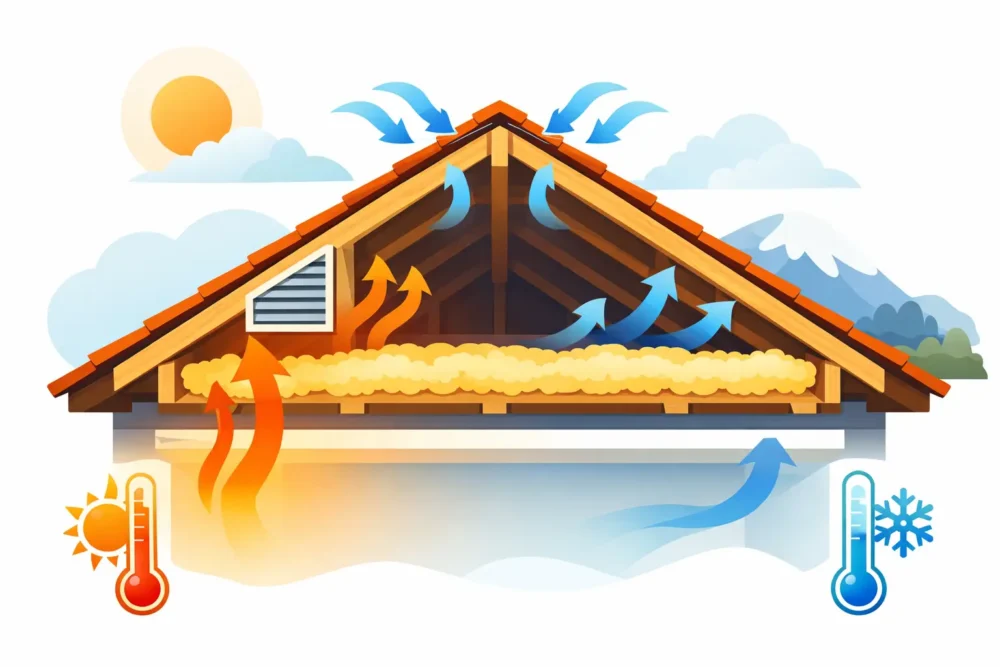
A hot second floor in July and ice dams in January usually point to the same place – the attic. Homeowners often ask, does attic ventilation affect insulation? Yes, it does, and the relationship goes both ways. Ventilation helps insulation perform the way it should, while poor insulation and air leaks can make ventilation less effective.
That does not mean every attic needs more vents. It means the attic needs the right balance of insulation, air sealing, and ventilation working together. When one part is off, comfort drops, utility bills rise, and moisture problems can quietly build over time.
How attic ventilation affects insulation performance
Insulation slows heat flow. Attic ventilation helps control heat and moisture that collect above your living space. Those jobs are different, but they are closely connected.
In summer, a poorly ventilated attic can trap extreme heat. That heat does not cancel out your insulation, but it increases the temperature difference across the ceiling and puts more stress on your HVAC system. Rooms below can feel harder to cool, especially upstairs bedrooms and bonus rooms.
In winter, the bigger concern is usually moisture. Warm indoor air escapes into the attic through gaps around recessed lights, wiring penetrations, bath fan housings, top plates, and attic access points. If that air reaches a cold attic and cannot dry out properly, condensation can form. Over time, insulation can become damp, matted, or compressed. Once that happens, it stops performing at its rated level.
So if you are wondering whether attic ventilation affects insulation, the practical answer is this: ventilation helps protect insulation from heat buildup and moisture damage, but it cannot make up for missing insulation or major air leaks.
Ventilation and insulation are not the same thing
This is where many homeowners get mixed signals. Someone says the attic is too hot and recommends more ventilation. Someone else says the insulation is too low and recommends adding more. Sometimes both are right.
Ventilation moves air through the attic. Insulation resists heat transfer. Air sealing closes the hidden openings that let conditioned indoor air escape into the attic. These three systems need to support each other.
If you add insulation without addressing air leaks, warm humid air can still reach the attic and create moisture issues. If you add vents without enough insulation, the home can still lose heat in winter and gain heat in summer. If soffit vents are blocked by insulation, even a roof with plenty of vent openings may not move air correctly.
That is why attic work should be based on an inspection, not a guess.
Does attic ventilation affect insulation in all homes the same way?
Not exactly. The answer depends on the attic design, the climate, the condition of the existing insulation, and whether the home has air leakage problems.
Older homes often have a mix of issues at once. Insulation may be thin or uneven. Vents may be undersized or blocked. Dust, rodent activity, or old moisture exposure may have reduced the insulation’s effectiveness. In those cases, ventilation matters, but it is only part of the fix.
Homes in the St. Louis area also deal with humid summers and cold winters, which makes attic moisture control especially important. Seasonal swings can expose weaknesses in the attic system fast. A house may seem fine most of the year, then show signs of trouble during the hottest or coldest weeks.
Signs your attic ventilation may be affecting insulation
You do not need to see dripping water to have a problem. A ventilation issue often shows up in more subtle ways.
If your upstairs rooms are consistently hotter or colder than the rest of the house, attic conditions may be part of the cause. If your energy bills feel high for the season, your insulation may not be performing as expected. If insulation looks flattened, dirty, damp, or disturbed, it may have already been compromised.
Other warning signs include musty attic odors, frost or condensation on roof decking in winter, mold-like staining on wood surfaces, and rusted nails protruding through the roof sheathing. Ice dams can also point to heat escaping into the attic, usually because of poor air sealing and insulation problems, sometimes combined with ventilation issues.
What poor ventilation can do to insulation
The main risk is moisture. Most insulation materials lose effectiveness when they get wet. Fiberglass can slump and lose its loft. Blown insulation can settle unevenly. Contaminated insulation can hold odors and become less sanitary, especially if pests have been present.
Heat is the second issue. Excess attic heat does not usually destroy insulation on its own, but it can contribute to uncomfortable rooms below and make the entire assembly work harder. Roofing materials also age faster in high-heat conditions, which is another reason proper attic airflow matters.
There is also a hidden problem homeowners rarely see from below: blocked intake ventilation. If soffit vents are covered by insulation and there are no proper baffles, airflow from the eaves gets cut off. The attic may technically have exhaust vents, but without intake, the system cannot do its job well.
Why more ventilation is not always the answer
This is an important trade-off. Adding more vents sounds simple, but ventilation has to be designed correctly. Too much exhaust without enough intake can pull air from the house instead of from the soffits. That can worsen energy loss and moisture movement.
Powered attic fans are another example. In some homes, they help. In others, they can draw conditioned air from the living space if air sealing is weak, which increases utility costs. A bigger ventilation setup is not automatically a better one.
The goal is balanced airflow and a well-protected attic floor. That usually means a combination of clear intake and exhaust ventilation, proper vent chutes or baffles, solid air sealing, and enough insulation depth for the home.
How to tell if the real problem is ventilation, insulation, or both
The best way is a full attic inspection. Looking at insulation depth alone does not tell the whole story. An attic can appear insulated but still perform poorly if the material is compressed, dirty, displaced, or installed over major bypasses.
A proper evaluation checks for air leaks, moisture signs, insulation condition, ventilation pathways, and any contamination from rodents or old damaged material. Thermal imaging can also help identify hidden temperature differences that point to missing insulation or air leakage.
This is where a whole-home approach matters. If the attic is treated as one isolated issue, the results can be disappointing. If the attic is looked at as part of the home’s full envelope, the fix is usually more accurate and more cost-effective.
What a good attic solution usually includes
In many homes, the right fix is not just adding insulation. It starts with air sealing the attic floor so indoor air stays where it belongs. After that, damaged or contaminated insulation may need to be removed, especially if moisture, pests, or heavy settling have reduced performance.
Then new insulation can be installed to the proper level and distributed evenly. Ventilation pathways should be checked so soffit vents stay open and airflow can move from intake to exhaust. If moisture has been an issue, that root cause should be addressed before new insulation goes in.
That combination tends to produce the results homeowners actually care about: steadier indoor temperatures, lower heating and cooling costs, a cleaner attic, and fewer recurring problems.
Does attic ventilation affect insulation enough to justify professional help?
If you are dealing with comfort issues, rising utility bills, musty attic conditions, or old insulation, yes. The attic is one of those areas where small hidden details make a big difference. A missed air gap or blocked vent can undermine a much larger insulation investment.
Professional attic work also matters when there is contamination involved. Rodent droppings, damaged insulation, and moisture exposure are not just performance issues. They can affect sanitation and indoor air quality too. In those cases, removal, cleanup, and proper replacement are often the safer route.
For homeowners who want clear answers, Better Home Insulation focuses on inspection-led recommendations so the solution fits the home instead of following a one-size-fits-all approach. That is especially valuable when the symptoms could point to multiple attic problems at once.
The attic does not need to be perfect to work well, but it does need its parts working together. When ventilation, insulation, and air sealing are aligned, the home feels more comfortable, the HVAC system does less heavy lifting, and the attic stops acting like a hidden source of energy loss.