
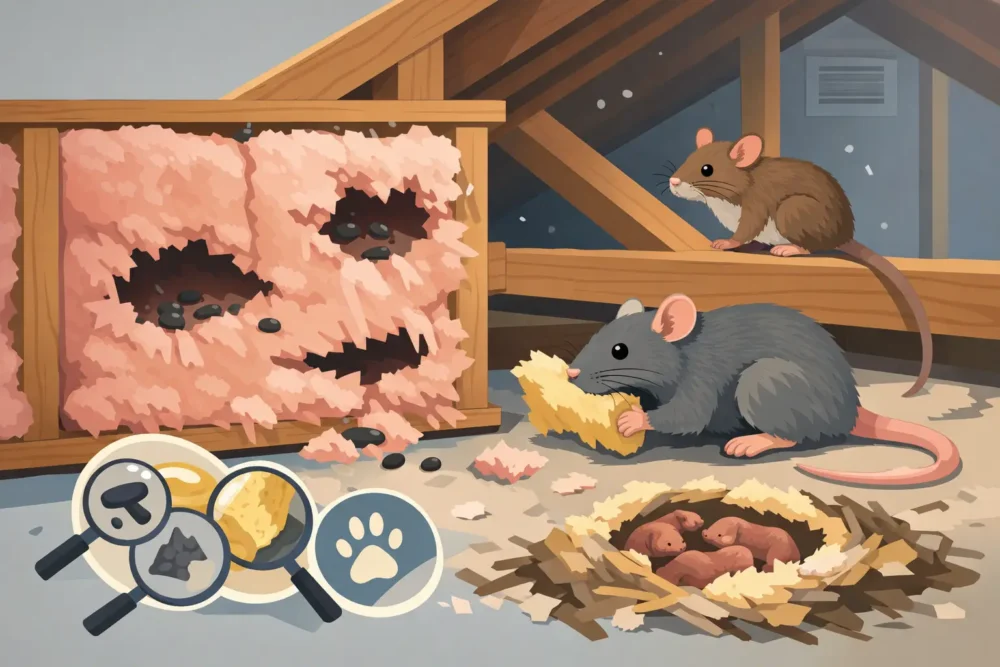
If your upstairs feels harder to cool, your attic has a stale odor, or you keep hearing scratching after dark, the signs of rodent damaged insulation may already be there. Homeowners often notice the comfort problem first and the pest activity second. By the time the issue becomes obvious, insulation may be contaminated, compressed, and no longer doing its job.
Rodents do more than make a mess. They tear apart insulation for nesting, leave behind droppings and urine, and open pathways that let outdoor air move through the home. That combination affects energy efficiency, indoor air quality, and sanitation all at once. The good news is that damaged insulation usually leaves clues if you know what to look for.
Why rodent-damaged insulation is a bigger problem than it looks
Insulation works best when it stays dry, evenly distributed, and free from contamination. Rodents change all of that. They tunnel through loose-fill insulation, shred batt insulation, and flatten material that should be trapping air. Even a small area of disturbance can reduce performance, especially in an attic or crawl space where temperature swings are already extreme.
There is also a health side to this issue. Droppings, urine, and nesting debris can create unpleasant odors and spread contaminants through the space. In some homes, those particles can enter the living area through gaps around recessed lights, duct penetrations, plumbing openings, or attic access points. If anyone in the household has allergies or respiratory sensitivities, this matters even more.
Common signs of rodent damaged insulation
1. Uneven temperatures in certain rooms
One of the first practical signs is a room that suddenly feels hotter in summer or colder in winter than the rest of the house. If insulation has been moved, compressed, or removed by rodents, the thermal barrier is no longer consistent. You may notice this most on top floors, over garages, or in rooms near attic edges.
Of course, uneven temperatures can also come from air leaks, duct issues, or older insulation that has simply settled over time. That is why inspection matters. The symptom may feel the same, but the fix can be very different.
2. Higher utility bills without a clear reason
If your heating or cooling costs climb even though your thermostat habits have not changed, damaged insulation may be part of the reason. Rodent activity reduces the insulation’s ability to resist heat flow, and it often happens alongside air leakage. Your HVAC system then runs longer to maintain the same indoor temperature.
This is especially common in older homes where the attic already had marginal insulation depth before pests made it worse. A bill increase alone does not prove rodent damage, but combined with other warning signs, it is a strong clue.
3. Scratching, scurrying, or movement in the attic or walls
Active rodent sounds are one of the clearest red flags. Mice and rats often move at night, and homeowners may hear scratching in the attic, ceiling, or wall cavities after the house gets quiet. If those sounds are paired with comfort issues or odors, insulation damage becomes much more likely.
The timing matters too. Hearing movement only during certain seasons can mean rodents are using the space for shelter when outdoor temperatures drop or when food and water are easier to find indoors.
4. Droppings near attic access, crawl spaces, or insulation
Rodent droppings are an obvious sign of infestation, but their location tells an important story. When droppings are concentrated near attic hatches, eaves, crawl spaces, or mechanical penetrations, it often means rodents are traveling through and nesting close to the insulation. In many cases, the insulation below or around those areas is already contaminated.
Homeowners should avoid sweeping or vacuuming droppings without proper precautions. Disturbing contaminated material can send particles into the air.
5. Strong musty or ammonia-like odors
A persistent odor in the attic, crawl space, or upper levels of the home can point to urine-soaked insulation. Rodents tend to return to the same areas, and over time the smell builds up, especially in warm weather. Some homeowners describe it as musty. Others notice a sharp ammonia-like odor.
This is one of the reasons spot treatment is not always enough. If the insulation itself has absorbed contamination, simply removing the rodents does not fully solve the problem.
6. Nesting materials mixed into insulation
Rodents build nests out of whatever is available – shredded insulation, paper, fabric, cardboard, and plant matter. During an inspection, these nests often appear as packed clusters or disturbed patches in what should be a uniform insulation layer. Batt insulation may look torn open or balled up. Blown insulation may have visible tunnels or low spots.
At that point, performance and cleanliness are both compromised. The area may need more than a quick patch.
7. Visible tunnels, trails, or compressed insulation
Loose-fill attic insulation should look relatively even across the surface. If you see narrow pathways, hollowed-out channels, or flattened sections, rodents may be traveling through it regularly. In crawl spaces, insulation attached beneath floors may sag, split, or pull away where animals have nested or moved through it.
This kind of damage is easy to miss from the attic hatch. A full inspection often reveals a much wider area of disturbance than expected.
8. Chewed wiring, wood, or vent openings nearby
Rodents rarely limit their damage to insulation alone. If there are gnaw marks on framing, stored items, duct boots, wiring, or vent screens, insulation damage is often close by. Chewed openings around rooflines, soffits, and utility penetrations may also show how they got in.
This is where a whole-home approach matters. Replacing insulation without addressing entry points usually leads to repeat problems.
9. Allergy symptoms or dusty indoor air that seems worse than usual
When contaminated attic or crawl space insulation is combined with air leaks, small particles can find their way into the home. Some families notice increased sneezing, irritation, or a general sense that the indoor air feels dirtier. It depends on the home and the severity of the contamination, but it is a real concern.
Not every air quality problem comes from rodents. Still, when poor indoor air and pest evidence show up together, the insulation should be checked.
What happens if you leave rodent-damaged insulation in place
Sometimes homeowners hope the issue will go away once traps are set or the noises stop. The problem is that insulation does not restore itself. If it has been contaminated or flattened, it remains less effective even after the rodents are gone.
Leaving it in place can mean ongoing odors, wasted energy, and a greater chance of hidden contamination spreading through the home envelope. In severe cases, damaged insulation also makes it harder to identify other problems, such as moisture intrusion or ventilation issues, because the material is already compromised.
When repair is enough and when removal makes more sense
It depends on the extent of the damage. If the rodent activity was limited and caught early, a localized repair may be enough. But when droppings, urine, nesting, and tunneling affect a wider area, removal and replacement are often the better long-term choice.
Attics are a common example. One corner may look like the only damaged section, but once insulation is moved aside, contamination often extends farther than expected. Crawl spaces can be similar, especially if insulation has fallen, absorbed moisture, or been used repeatedly for nesting.
A professional inspection helps separate minor disturbance from conditions that call for full removal, sanitizing, air sealing, and new insulation.
Why insulation replacement alone is not the full fix
New insulation will not solve a rodent problem if the entry points are still open. Homes need the source of the intrusion addressed, not just the aftermath. That can include rodent proofing, sealing gaps, correcting ventilation problems, and identifying areas where the building envelope is vulnerable.
This is also a good time to improve overall performance. When contaminated insulation is removed, homeowners have an opportunity to add proper attic air sealing, upgrade insulation levels, and correct hidden weak points that were driving energy loss before the rodents ever showed up.
For homeowners in the St. Louis area, this kind of problem is especially worth catching early because seasonal heat and humidity can make attic odors, comfort issues, and HVAC strain much more noticeable.
What to expect from a professional inspection
A thorough inspection should do more than confirm there are rodents. It should show where the damage is, how far it extends, whether the insulation can be salvaged, and what conditions allowed the infestation to happen. That may include checking attic depth, identifying contamination, looking for entry points, and spotting air leaks or moisture-related issues nearby.
This is where an experienced insulation contractor can provide more value than a basic pest-only visit. The goal is not just to remove evidence of rodents. It is to restore comfort, cleanliness, and energy performance in a lasting way.
If you suspect rodent damage, trust what your house is telling you. Strange odors, rising utility bills, and uncomfortable rooms are often connected, and dealing with them early is usually faster, cleaner, and less expensive than waiting for the damage to spread.