
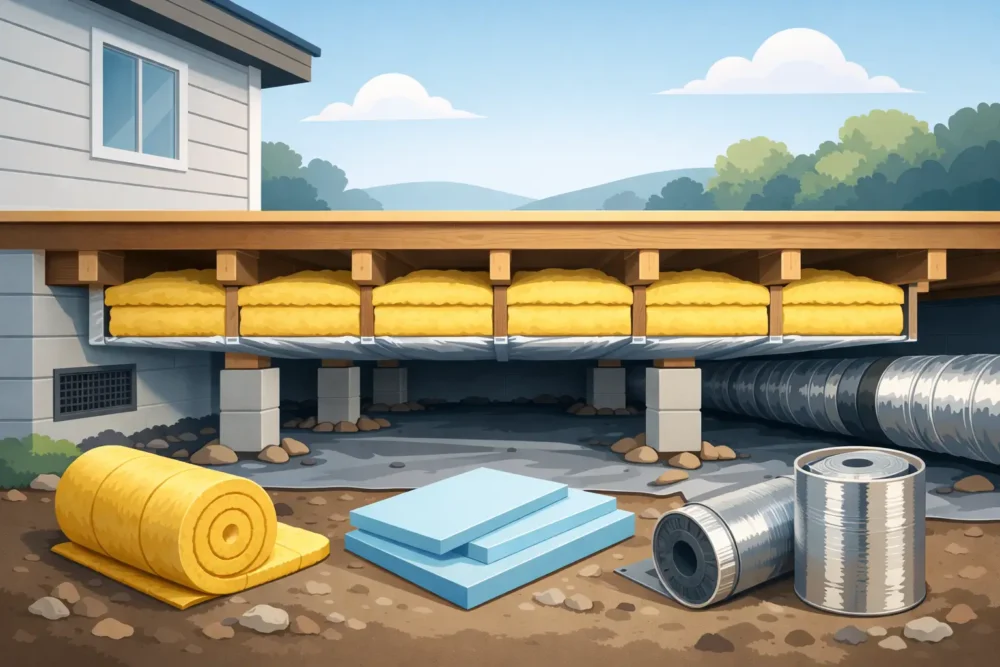
Cold floors in winter usually start below your feet. If you are trying to figure out the best insulation for crawl space floors, the right answer depends on one thing first – whether your crawl space is vented, damp, or being turned into a sealed space. That detail matters more than the product label, because the wrong insulation in the wrong crawl space can sag, trap moisture, and leave you with the same comfort problems you started with.
What makes crawl space floor insulation work well
Crawl space insulation has a harder job than insulation in many other parts of the house. It has to slow heat loss, hold up around plumbing and wiring, and deal with temperature swings and humidity. In some homes, it also has to stand up to pests or the effects of older contaminated materials.
That is why the best insulation for crawl space floors is not always the thickest or cheapest option. A good installation needs the right R-value, proper support, and attention to air leakage and moisture. If outside air is moving freely through the crawl space or ground moisture is rising unchecked, insulation alone will not fix the problem.
For most homeowners, the goal is simple. You want warmer floors, lower heating and cooling costs, and fewer hidden issues under the home. Reaching that goal usually takes a combination of insulation, air sealing, and sometimes a vapor barrier.
Best insulation for crawl space floors by material
Fiberglass batt insulation
Fiberglass batts are one of the most common options for crawl space floors, especially in vented crawl spaces. They are widely available, reasonably priced, and can deliver solid thermal performance when installed correctly between floor joists.
The catch is that fiberglass is very sensitive to installation quality. If batts are compressed, hanging down, missing around edges, or exposed to repeated moisture, performance drops quickly. In older homes, it is common to find fiberglass that has fallen out of place or absorbed enough humidity to become part of the problem instead of the solution.
Fiberglass can still be a practical choice when the crawl space is dry, the batts are properly sized for the joist cavities, and they are mechanically supported so they stay in contact with the floor above. It is often the lower-cost route, but it gives you less margin for error.
Mineral wool insulation
Mineral wool is a strong alternative for homeowners who want better moisture resistance and a more durable batt. It fits snugly, offers good thermal performance, and generally handles damp conditions better than fiberglass.
This can make it a smart option in crawl spaces where humidity is present but managed. It also tends to stay in place better and is less attractive to pests than some traditional batt products. The main trade-off is price. Mineral wool usually costs more upfront, but the improved durability can make that extra investment worthwhile.
Spray foam insulation
Spray foam is often the top performer when the crawl space has air leakage issues or complicated framing details. It insulates and air seals at the same time, which is a major advantage in homes where cold drafts are coming through gaps around rim joists, plumbing penetrations, and irregular floor framing.
Closed-cell spray foam is the stronger option in harsher crawl space conditions because it resists moisture better and adds a higher R-value per inch. Open-cell foam is less common for this application because it is more vapor permeable and not as well suited to damp environments.
The downside is cost. Spray foam is typically more expensive than batt insulation, and it needs to be installed carefully by trained professionals. Still, when comfort problems are severe or the crawl space has multiple performance issues, spray foam can deliver the most noticeable improvement.
Rigid foam board
Rigid foam board is not always the first material homeowners think of for crawl space floors, but it can work well in certain situations. It offers good R-value and moisture resistance, and it is often useful when insulating crawl space walls in an encapsulated crawl space.
For floor joists, rigid foam can be more labor-intensive because it usually needs to be cut and fitted around framing and sealed at edges. It is less forgiving than batt insulation in tight, irregular spaces. Where it shines is in sealed crawl space strategies or targeted air sealing and insulation upgrades.
The real question – floor insulation or crawl space encapsulation?
Many homeowners start by asking about the best insulation product, but the bigger issue is where the thermal boundary should be. In a traditional vented crawl space, insulation is usually installed under the floor to separate the house above from the unconditioned space below.
That approach can work, but only if the crawl space stays reasonably dry and the insulation remains intact. In many homes, especially where there is chronic humidity, musty odors, or visible ground moisture, insulating the floor alone is only a partial fix.
In those cases, sealing the crawl space, installing a vapor barrier, addressing air leaks, and insulating the crawl space walls may be the better long-term strategy. Instead of trying to protect the floor from a hostile environment, you improve the environment itself.
This is where a professional inspection becomes valuable. Two homes can have the same cold-floor complaint and need very different solutions. One may need well-supported batt insulation. The other may need moisture correction, air sealing, insulation removal, and a full crawl space upgrade.
Common mistakes that ruin crawl space insulation
The biggest mistake is ignoring moisture. If the crawl space has standing water, heavy condensation, or exposed soil releasing moisture, even the best insulation can underperform. Wet or damp insulation loses effectiveness and can contribute to odors, wood damage, and unhealthy air moving into the home.
Another common problem is poor fit. Gaps around wiring, plumbing, and framing leave thermal weak spots. Compression is also a problem. Insulation only delivers its rated performance when installed at the intended thickness and in full contact where required.
Support matters too. Batt insulation that is not secured properly will eventually sag or fall. Once that happens, the floor above becomes more vulnerable to heat loss and drafts.
It is also a mistake to treat crawl space insulation as a stand-alone project when there are obvious signs of air leakage or contamination. If rodents have damaged insulation, or if older material is dirty and compacted, removal and replacement may be part of the right solution.
How to choose the best insulation for your crawl space floors
If your crawl space is vented, dry, and in otherwise decent condition, fiberglass or mineral wool batts may be a cost-effective answer. Mineral wool is generally the sturdier and more moisture-tolerant option, while fiberglass is often the budget-friendly choice.
If your crawl space has significant air leakage, awkward framing, or recurring comfort complaints, spray foam may be the better fit. It costs more, but it often solves more than one problem at once.
If the crawl space is damp, musty, or showing signs of long-term moisture exposure, stop short of picking insulation by material alone. At that point, the better question is whether the space should be sealed and protected with a vapor barrier before or along with insulation work.
For homeowners in the St. Louis area, this matters even more because seasonal humidity and temperature swings can put extra stress on crawl space materials. What looks like a simple insulation job on the surface can actually be a moisture-control issue underneath.
When professional help makes sense
Crawl spaces are one of the easiest places in a home to misdiagnose. Homeowners often see cold floors and assume they just need more insulation, when the real cause may be air leakage, damaged material, high humidity, or all three.
A qualified insulation contractor should look at the full picture. That includes the condition of existing insulation, signs of moisture, air gaps, vapor barrier needs, and whether pests or contamination have affected the space. The best result usually comes from matching the insulation method to the actual conditions under the home, not from choosing a product in isolation.
That full-service approach is where companies like Better Home Insulation can provide real value. When insulation, air sealing, vapor barrier work, and removal of damaged material are coordinated together, homeowners are more likely to see lasting comfort and energy savings instead of a temporary patch.
If your floors are cold, your utility bills feel too high, or your crawl space smells damp and stale, the best next step is not guessing. It is getting the space inspected so the insulation solution actually fits the house.