
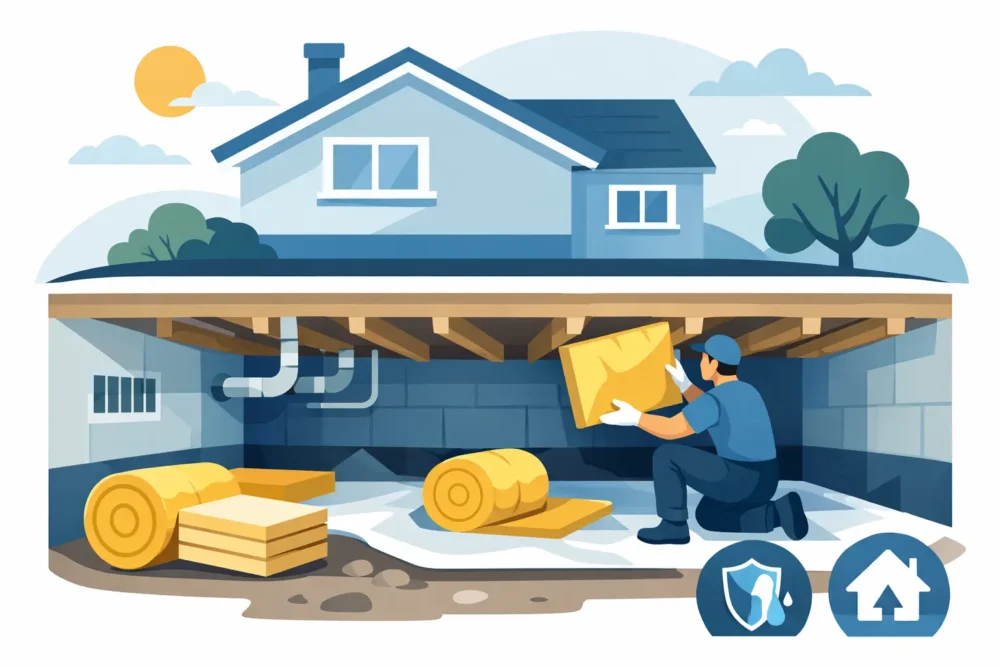
If your floors feel cold in winter, your utility bills keep climbing, or the house smells musty after rain, the crawl space may be part of the problem. Homeowners often search for how to insulate crawl space areas when they are really dealing with a bigger issue – heat loss, air leakage, and moisture working together under the home.
A crawl space is not just an empty area below the floor. It affects comfort, indoor air quality, and energy use throughout the house. When it is insulated the wrong way, or not insulated at all, the results show up upstairs fast. Rooms feel uneven, HVAC systems run longer, and moisture can create conditions for mold, odors, and damaged materials.
How to Insulate Crawl Space Based on the Space You Have
The best insulation method depends on one question first: is the crawl space vented or encapsulated? That choice matters because the right location for insulation changes with the design.
In a traditional vented crawl space, insulation is usually installed in the floor system above the crawl space, between the joists. The goal is to separate the conditioned living area from the colder or more humid air below. In an encapsulated crawl space, insulation is typically placed along the crawl space walls instead. That turns the crawl space into part of the home’s conditioned envelope and usually delivers better moisture control and more stable indoor temperatures.
This is where many homeowners get mixed results. They add insulation without addressing air leaks, exposed dirt, or moisture entry. Insulation helps, but it does not fix a damp crawl space on its own. If the area has standing water, heavy condensation, sagging material, pest contamination, or visible mold, those issues should be corrected before new insulation goes in.
Start With Moisture Before Insulation
Insulation performs best when it stays dry and in full contact with the surface it is meant to protect. In crawl spaces, moisture is often the reason insulation fails.
Ground moisture can rise from exposed soil. Humid outdoor air can enter through vents in warm weather. Plumbing leaks and poor drainage outside the house can also keep the space damp. Once insulation gets wet, it loses effectiveness and can become a source of odor, staining, or microbial growth.
That is why a proper crawl space upgrade often includes a vapor barrier, air sealing, and sometimes drainage improvements before insulation is installed. For many homes, especially in areas with humid summers and mixed seasonal temperatures like the St. Louis region, controlling moisture first is what makes the insulation investment last.
Insulating a Vented Crawl Space
If the crawl space remains vented, the insulation usually belongs under the subfloor. Fiberglass batts are common, but they need to be installed carefully. Gaps, compression, or batts falling away from the floor can reduce performance quickly.
The insulation should fit snugly between joists without being packed too tightly. Support wires or mesh are often used to hold it in place. Any plumbing, wiring, and penetrations should be air sealed as much as possible before the insulation is added, because outside air can move through even well-insulated cavities.
There are trade-offs with this approach. It can be more affordable upfront, and in some homes it is the most practical option. But vented crawl spaces are more vulnerable to damp air, cold floors, and insulation sagging over time. If the space has repeated moisture problems, insulating the floor alone may not solve the root issue.
Insulating an Encapsulated Crawl Space
Encapsulation usually means covering the ground with a durable vapor barrier, sealing vents and gaps, and insulating the crawl space walls instead of the floor above. This creates a more controlled environment below the home.
Rigid foam board is a common wall insulation choice because it handles moisture better than many other materials when properly installed. In some cases, closed-cell spray foam may also be used for rim joists or hard-to-seal areas. The right product depends on the crawl space layout, moisture conditions, local code requirements, and how the home is currently performing.
For many homeowners, this approach provides better long-term comfort. Floors tend to feel warmer, pipes are better protected, and the HVAC system does not have to fight outdoor conditions from below. It usually costs more than insulating between floor joists, but it often delivers better overall performance when moisture control is part of the plan.
Best Insulation Materials for Crawl Spaces
There is no single best material for every home. The right choice depends on whether the crawl space is vented or sealed, whether there is a history of dampness, and how accessible the space is.
Fiberglass batts are common and budget-friendly, but they are sensitive to moisture and installation quality. They can work in a dry, vented crawl space when installed correctly and supported well. Rigid foam board is often a stronger option for crawl space walls in encapsulated systems because it resists moisture and offers reliable thermal performance. Spray foam can air seal and insulate at the same time, which makes it useful around rim joists and irregular areas, though it is usually one of the higher-cost options.
A professional inspection helps sort through those options. The best answer is not just about R-value. It is about where the insulation goes, whether the area stays dry, and how the whole crawl space functions with the rest of the house.
Common Mistakes When Learning How to Insulate Crawl Space Areas
The biggest mistake is treating insulation like a standalone fix. If outside air is pouring in, the soil is uncovered, or old insulation is damaged by rodents or moisture, new material alone will not deliver the results you want.
Another common mistake is installing insulation in the wrong place. Homeowners sometimes insulate the floor joists while also trying to semi-condition the crawl space, which can create confusion in the thermal boundary. Others block vents without fully sealing and protecting the crawl space, leaving it trapped with moisture.
Material choice matters too. Using fiberglass in a crawl space with active dampness often leads to sagging and reduced performance. Ignoring the rim joist area is another missed opportunity, since this is a common source of air leakage. A good installation is less about adding more material and more about putting the right materials in the right locations.
Signs Your Crawl Space May Need More Than Insulation
Some crawl spaces need remediation before insulation can be effective. Musty odors indoors, visible mold growth, fallen fiberglass, rodent droppings, wood staining, and condensation on ducts or pipes all point to broader problems. If the floor above feels cold and humid at the same time, that usually means the space needs air sealing and moisture control, not just a higher R-value.
This is where a full-service approach can save time and money. When one contractor can evaluate insulation, vapor barriers, contamination, and air leakage together, the solution is usually more accurate. Better Home Insulation often sees homes where the real issue is not missing insulation alone, but a combination of old materials, moisture exposure, and untreated air leaks.
Should You DIY or Hire a Professional?
Some homeowners can install crawl space insulation themselves, especially in a dry, accessible area with no contamination or structural concerns. But crawl spaces are rarely simple. Tight access, exposed wiring, plumbing obstacles, wet ground, pests, and code requirements can complicate the job quickly.
Professional installation becomes more valuable when the crawl space needs encapsulation, insulation removal, sanitation, or air sealing. It also helps when you want the work evaluated as part of the home’s overall performance. A licensed and insured team can identify whether the crawl space should stay vented, whether wall insulation makes more sense than underfloor insulation, and whether existing materials should be removed before new insulation is installed.
For homeowners in older homes around St. Louis and surrounding communities, that kind of inspection-led approach often makes the difference between a short-term patch and a lasting improvement.
What Good Crawl Space Insulation Should Deliver
When the job is done correctly, the benefits are noticeable. Floors feel less cold. Rooms become easier to heat and cool. The HVAC system cycles more normally. Utility costs may improve, and the house often smells cleaner because moisture and air leakage are better controlled.
Just as important, proper crawl space insulation can help protect the home itself. Dry insulation lasts longer. Wood framing is less exposed to moisture stress. Pipes have more protection in colder weather. And when the crawl space is cleaner and better sealed, it is less inviting to pests and less likely to spread odors into the living space.
If you are wondering how to insulate crawl space areas in a way that actually improves comfort, start by looking below the surface. The best results come from treating the crawl space as part of the home, not an afterthought.