
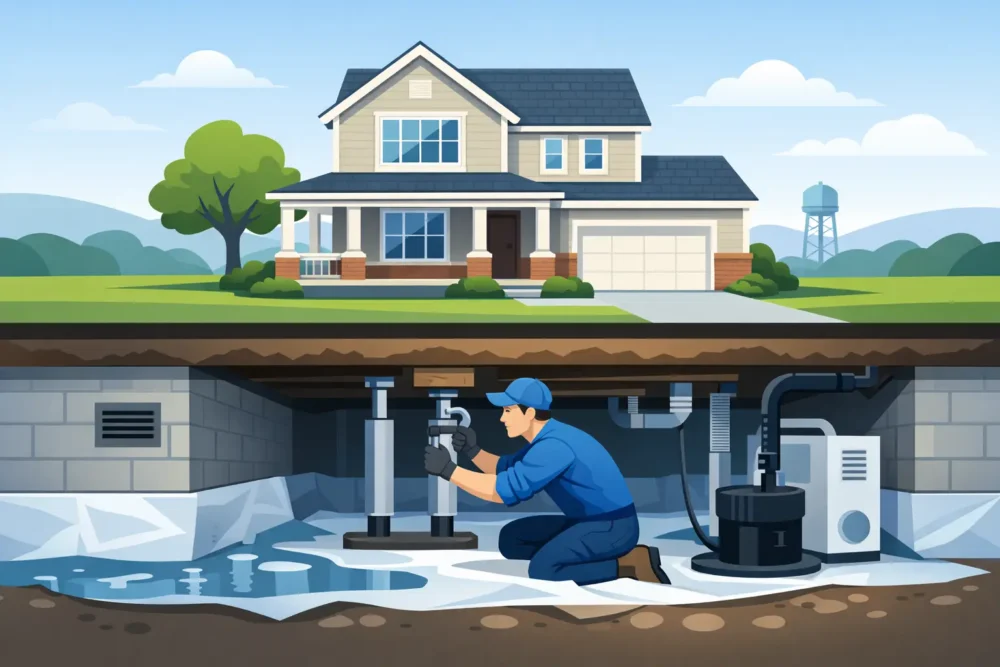
A musty smell in the hallway. Floors that feel cold even when the heat is running. Utility bills that keep climbing without a clear reason. These are often the first signs that crawl space repair Chesterfield MO homeowners put off is already affecting the rest of the house.
A crawl space is easy to ignore because you do not spend time there. But the air in that area, the condition of the insulation, and the amount of moisture under your home all have a direct impact on comfort, indoor air quality, and energy use. When problems start below the floor, they rarely stay below the floor for long.
Why crawl spaces cause bigger home problems
Your crawl space is part of your home envelope. If it is damp, under-insulated, open to outside air, or contaminated by pests, your house will feel the effects upstairs. In many homes, air from the crawl space moves into the living space. That means moisture, odors, and airborne particles can come with it.
This is one reason crawl space issues can show up as more than just a structural or insulation problem. Homeowners may notice uneven temperatures, extra humidity, dirty-smelling air, or higher heating and cooling costs. If the insulation has fallen down, absorbed moisture, or been damaged by rodents, it stops doing its job and can even make the situation worse.
Chesterfield homes see all kinds of seasonal moisture swings, from humid summers to cold winters. That makes crawl spaces especially vulnerable. A fix that works in a dry climate may not be enough here. The right repair plan depends on what is happening in the space now, not just what a standard package includes.
Signs you may need crawl space repair in Chesterfield MO
Some warning signs are obvious, like standing water or visible mold. Others are easier to miss. A home can have serious crawl space problems even when the access door stays shut and everything looks fine from the main floor.
If your floors feel chilly, especially over one section of the house, the insulation below may be missing, compressed, or wet. If the house smells musty after rain, ground moisture may be rising into the crawl space. If your air conditioner seems to run constantly in summer, high humidity below the home may be adding to the load.
Pest activity is another common clue. Rodents and insects are drawn to damp, accessible crawl spaces, and once they get in, they can damage insulation, leave contamination behind, and create new air quality concerns. In older homes, it is common to find multiple issues at once – moisture, air leakage, damaged insulation, and evidence of nesting.
What crawl space repair Chesterfield MO usually involves
There is no single repair that solves every crawl space problem. The best approach starts with inspection, because the visible symptom is not always the root cause.
For one home, the biggest issue may be exposed soil and excess humidity. In another, it may be outside air moving through open vents and gaps around plumbing or wiring. In another, the insulation itself may be contaminated or installed incorrectly.
Moisture control comes first
If moisture is not addressed, other repairs will not hold up well. Wet insulation loses effectiveness, wood stays damp longer, and musty odors tend to return. Moisture control often includes a crawl space vapor barrier to help block ground moisture from entering the space.
The quality of the vapor barrier matters. Thin materials can tear or shift. Poorly fitted sections leave gaps where moisture still gets through. A properly installed barrier should fit the layout of the crawl space and work with the rest of the moisture-control strategy.
Insulation needs to match the space
Crawl space insulation is not just about adding material wherever it fits. The location, type, and condition of the insulation all matter. In some homes, insulation between floor joists makes sense. In others, especially where moisture and air movement are major issues, a different approach may be more effective.
If existing insulation is dirty, sagging, moldy, or rodent-damaged, removal may be the smarter first step. Keeping contaminated insulation in place can continue to affect odor and air quality. Replacement should happen only after the source of moisture or contamination is addressed.
Air sealing often gets overlooked
One of the most common hidden problems in crawl spaces is uncontrolled air leakage. Small openings around pipes, ducts, wiring, and framing connections can let outside air in and conditioned air out. That air movement makes insulation less effective and contributes to drafts and energy loss.
Air sealing is one of those repairs that homeowners do not see once the job is done, but they often feel the difference quickly. Rooms above the crawl space tend to stay more consistent in temperature, and HVAC systems do not have to work as hard.
Sanitation and pest-related cleanup may be part of the job
If rodents have been in the crawl space, repairing the insulation alone is not enough. Droppings, nesting material, and contaminated insulation can linger long after the animals are gone. In that case, a more complete solution may include insulation removal, sanitizing, and rodent proofing measures to help prevent repeat problems.
This is where a full-service approach matters. Homeowners should not have to hire one company for insulation, another for cleanup, and another to close entry points if all of those issues are connected.
Repair or replace? It depends on what is down there
A lot of homeowners ask whether their crawl space just needs a quick repair or a more complete reset. The honest answer is that it depends on the age of the home, the extent of moisture exposure, and the condition of the current materials.
If insulation is mostly intact and the main issue is a missing vapor barrier or a few air leaks, targeted repairs may be enough. If the space has long-term moisture problems, widespread contamination, or badly deteriorated insulation, partial fixes often lead to repeat service calls and ongoing discomfort.
The goal should not be to do the smallest possible job. It should be to do the right job once, based on what the crawl space is doing to the rest of the house.
Why a home performance mindset matters
Crawl spaces affect more than just the area under the floor. They influence the comfort, cleanliness, and efficiency of the entire home. That is why the best repair plans are not based on square footage alone. They are based on diagnosis.
A contractor who understands insulation, air sealing, moisture control, and contamination issues can connect the symptoms you feel upstairs to the conditions below. That leads to more accurate recommendations and fewer band-aid fixes.
For example, if your crawl space is damp and under-insulated, adding insulation without solving the moisture source is not much of a solution. If the home has high utility bills because of air leakage and poor thermal performance, replacing one damaged section may not change much. A better inspection looks at how the system is working as a whole.
That is where companies like Better Home Insulation bring added value. Homeowners benefit when one team can inspect, explain the problem clearly, and complete the insulation, vapor barrier, air sealing, and cleanup work needed to restore performance.
What homeowners should expect from the inspection process
A good crawl space inspection should be practical and easy to understand. You should come away knowing what is wrong, why it matters, and which repairs are actually worth doing.
That means looking beyond a quick flashlight check. Moisture conditions, insulation quality, signs of air leakage, pest activity, and contamination all deserve attention. The recommendations should fit your home, not a one-size-fits-all package.
You should also expect clear pricing, licensed and insured service, and a repair plan tied to real homeowner benefits – lower energy waste, better comfort, cleaner air, and protection against future damage. Those are the outcomes that make crawl space work worth the investment.
If your home has been feeling drafty, damp, or harder to heat and cool, the problem may be closer than you think. Sometimes the most effective way to improve comfort is to fix the part of the house you never see.