
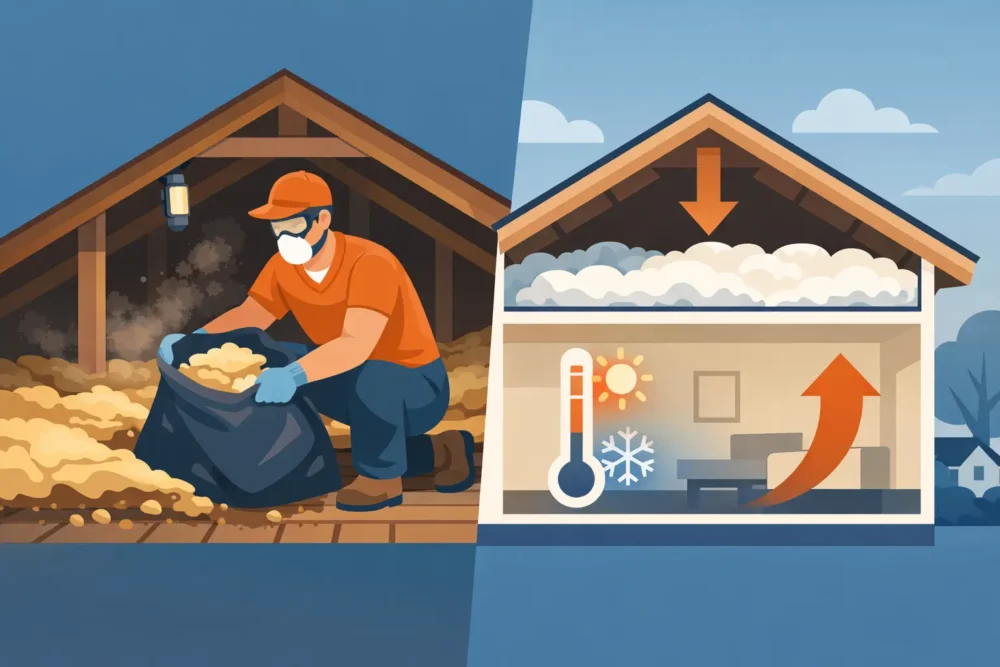
A spike in utility bills, rooms that never seem to stay comfortable, or a musty smell drifting down from the ceiling often sends homeowners looking upward. If you are asking when should attic insulation be removed, the short answer is this: not every attic needs removal, but damaged, contaminated, or ineffective insulation often does need to come out before the attic can perform the way it should.
That distinction matters. Insulation is supposed to slow heat transfer, but once it has been soaked, compressed, heavily soiled, or compromised by pests, it can stop doing its job well. In some homes, adding more insulation on top is enough. In others, removal is the smarter and cleaner fix because the real problem is not just low insulation levels – it is contamination, air leakage, moisture, or deterioration.
When should attic insulation be removed instead of added to?
Homeowners are often told they just need more insulation. Sometimes that is true. If existing insulation is dry, relatively clean, and still in decent shape, topping it off can improve comfort and efficiency without the added cost of removal.
But removal becomes the better option when the attic contains material that is no longer safe, sanitary, or effective. Insulation that has absorbed moisture can support mold growth or hold odors. Insulation disturbed by rodents can contain droppings, urine, nesting debris, and contaminated dust. Older insulation may be badly settled or uneven, leaving open areas where conditioned air escapes and outside temperatures push in.
The key point is that insulation is part of a larger attic system. If the attic has air leaks around recessed lights, plumbing penetrations, top plates, or duct chases, simply piling on new material will not address the hidden energy loss. In many cases, full or partial removal allows for proper inspection, air sealing, sanitizing, and then installation of fresh insulation at the right depth.
The clearest signs attic insulation should be removed
One of the most common reasons for removal is pest activity. If rodents have been in the attic, the insulation may be contaminated well beyond the visible area. Even if the nesting looks limited, waste and odors can spread through surrounding material. That affects indoor air quality and can make the attic unpleasant and unhealthy to work in.
Moisture damage is another major warning sign. If your roof had a leak, if attic ventilation has been poor, or if warm indoor air has been escaping into the attic and condensing, insulation can become matted and heavy. Wet insulation does not insulate well, and it can hide wood damage or microbial growth underneath.
Age and condition also matter. Insulation does not always need to be removed just because it is old, but older material can settle significantly over time. If it is thin, uneven, dusty, or full of debris from years of attic activity, removal may make more sense than trying to work around it.
There are also comfort clues inside the house. If some rooms are hot in summer, cold in winter, or harder to heat and cool than the rest of the home, the attic may be part of the problem. High energy bills, persistent drafts, and ceiling temperature differences can all point to insulation that is underperforming or hiding bigger envelope issues.
When should attic insulation be removed after water or mold problems?
After a roof leak or moisture event, removal is often necessary if the insulation got saturated or stayed damp for long. The reason is simple: once insulation holds water, its thermal performance drops, and the attic can develop sanitation issues that new insulation alone will not solve.
That said, it depends on the extent of the damage. A small, isolated leak caught quickly may affect only a limited section. In that case, targeted removal and replacement may be enough. But if the moisture problem has been ongoing, or if staining, odor, or suspected mold is spread across a larger area, a more thorough removal is usually the safer choice.
This is also where diagnostics matter. Before replacing anything, the source of the moisture has to be corrected. That could mean roof repair, ventilation improvements, or attic air sealing to stop warm, humid indoor air from escaping upward. Otherwise, the same problem can come back and damage the new insulation too.
Rodents, odors, and contamination are not cosmetic issues
Many homeowners try to ignore attic contamination because they do not spend time up there. But what happens in the attic does not always stay in the attic. Air movement can carry fine particles, odors, and allergens into living spaces through gaps in the ceiling plane, duct leakage, or pressure changes in the home.
If insulation has been used as a nesting area, removal is often the cleanest path forward. It creates access to identify entry points, complete rodent proofing, sanitize affected areas, and start fresh with new material. Trying to leave contaminated insulation in place can mean lingering odors and a less healthy home environment.
For families sensitive to air quality, this can be especially important. Even if energy performance is the original concern, sanitation should not be treated as a secondary issue.
Why removal can improve the quality of the next insulation job
Attic insulation works best when the attic floor is properly prepared. That usually means sealing air leaks first, checking for bypasses around fixtures and penetrations, and making sure ventilation is not being blocked. It is hard to do that thoroughly when old insulation is covering everything.
Removal gives technicians a clear view of the attic floor and the home’s hidden trouble spots. That can reveal disconnected ductwork, gaps around plumbing stacks, soffit vent obstructions, or signs of past moisture. Once those issues are addressed, new insulation can be installed evenly and to the right depth for the home.
This is one reason professional removal is often worth it. It is not just about taking material out. It is about creating the conditions for the replacement insulation to actually perform.
Cases where attic insulation may not need removal
Not every attic with older insulation needs a reset. If the insulation is dry, free of contamination, and still covering the attic floor consistently, an inspection may show that adding insulation is enough. This is often true in homes where the main issue is simply not enough R-value for current energy goals.
There are also situations where only part of the attic needs attention. If damage is isolated to one section, partial removal can be a practical middle ground. A good inspection should separate what is salvageable from what is not, rather than assuming every attic needs full removal.
That is where homeowners benefit from working with a company that looks at the whole attic system, not just the insulation depth. In older homes around St. Louis and surrounding communities, it is common to find a mix of issues – a little settling, some air leakage, maybe signs of past moisture. The right recommendation depends on what is actually happening in that specific attic.
What to expect during attic insulation removal
Professional removal usually starts with an inspection to identify contamination, moisture, ventilation concerns, and air leakage opportunities. From there, the old insulation is vacuumed or removed, bagged for disposal, and the attic floor is exposed for closer evaluation.
If needed, sanitizing and disinfecting can be performed, especially after rodent activity. Air sealing often comes next, because this is the best time to close gaps that waste energy and move unwanted air between the attic and the home. After that, new insulation can be installed with a cleaner surface, more accurate coverage, and better long-term performance.
For homeowners, the biggest benefit is clarity. Instead of guessing whether old insulation is still helping, you get a clean baseline and a chance to correct the underlying causes of discomfort and inefficiency.
The right time to act
If your attic insulation is dry, clean, and performing reasonably well, removal may not be necessary. But if there are signs of rodents, moisture, odors, major settling, or uneven home comfort, waiting usually does not make the problem cheaper or easier to fix.
A professional attic inspection can tell you whether your next step should be removal, air sealing, added insulation, or a combination of services. Better Home Insulation approaches that decision the way homeowners need it handled – practically, clearly, and with the goal of making the house more comfortable, cleaner, and less expensive to heat and cool.
If your attic has been sending warning signs, the best next move is not to guess from the hallway below. It is to find out what is really sitting above your ceiling and give your home the clean start it may need.