
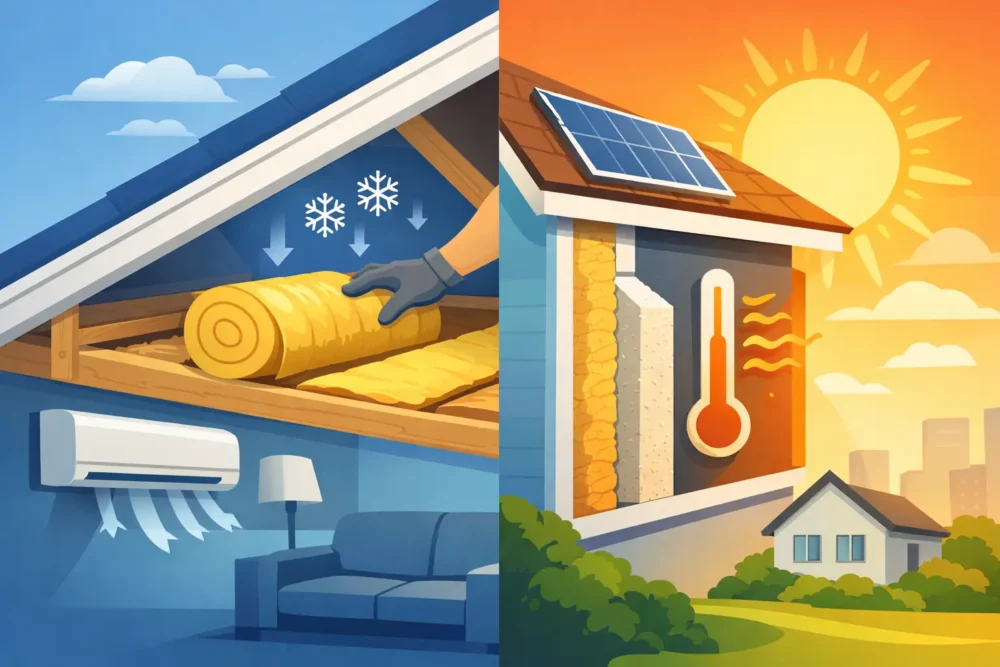
A second-floor bedroom that stays warm long after the thermostat reaches its setting is rarely just an air-conditioner problem. In many homes, it is a sign that heat is entering through the attic, outdoor air is leaking through hidden gaps, or insulation has settled, become damp, or been damaged. The best insulation upgrades for lower cooling costs address those causes together, helping your AC system cool the home more evenly instead of working overtime to overcome them.
For St. Louis-area homeowners, this matters during long stretches of hot, humid weather. The right project is not always simply adding more insulation. A professional assessment should identify where heat, air, moisture, and contaminants are moving through the home envelope first.
Start With Attic Air Sealing
Air sealing is often the highest-value improvement because insulation cannot stop air movement on its own. Warm attic air and outdoor air can enter the living space through small openings around plumbing pipes, electrical wiring, recessed lights, attic hatches, duct penetrations, and wall top plates.
Those gaps may look minor, but together they can create a steady path for conditioned air to escape and hot air to enter. Your cooling system then has to remove that added heat and humidity all day long.
Professional attic air sealing closes these pathways before new insulation is installed. It also helps the insulation perform closer to its intended R-value, which measures resistance to heat flow. Skipping this step can mean paying for added insulation while leaving the underlying leakage problem in place.
Signs that attic air sealing may help include dusty rooms, uneven temperatures, noticeable drafts, high summer bills, and insulation that looks thin or disturbed near attic edges and penetrations.
Upgrade Attic Insulation After Sealing
Once major attic leaks are sealed, improving attic insulation is usually the next priority. The attic is one of the largest surfaces separating your conditioned home from intense summer heat. On a sunny afternoon, attic temperatures can rise far above the outdoor temperature, pushing heat downward toward bedrooms, hallways, and living spaces.
An insulation upgrade slows that heat transfer. The correct material and depth depend on the home’s construction, the existing insulation, access conditions, and local energy recommendations. In many cases, an installer can add insulation over existing material if it is dry, clean, and in good condition.
However, adding new material is not always the right answer. Insulation affected by rodent activity, moisture, mold-like contamination, heavy dust, or significant settling may need removal and disposal first. Contaminated insulation can reduce comfort and raise indoor air quality concerns, while damp insulation loses much of its insulating value.
Do Not Treat R-Value as the Whole Story
A higher R-value is generally useful, but it does not guarantee lower cooling costs by itself. If air leaks remain open, attic ventilation is inadequate, or ducts are leaking in a hot attic, performance can still fall short.
That is why a complete attic evaluation matters. It allows the contractor to determine whether the home needs targeted air sealing, insulation removal, new insulation, ventilation improvements, or a combination of these services.
Consider a Radiant Barrier for Hot Attics
A radiant barrier can be a useful addition in homes where attic heat is a major concern. Rather than functioning like conventional insulation, it reflects radiant heat away from the attic space. This can help reduce the amount of heat absorbed by attic insulation and ductwork during peak sun exposure.
Radiant barriers are most useful when installed correctly and when the attic has appropriate ventilation. They are not a replacement for air sealing or adequate insulation depth. Think of them as a supporting upgrade that may improve attic conditions, particularly in homes with significant roof exposure or rooms that run hot beneath the roofline.
The results depend on roof design, attic configuration, existing insulation, and how much of the cooling load comes from attic heat. An inspection can determine whether a radiant barrier is likely to provide meaningful value for your home.
Insulate and Protect the Crawl Space
Cooling losses are not limited to the attic. A vented, damp, or poorly insulated crawl space can allow hot, humid air and moisture to affect the floors and walls above it. This can make rooms feel clammy, create uneven temperatures, and force the air conditioner to run longer.
Crawl space insulation helps separate the living area from these conditions. The best approach varies by foundation type and moisture level. In some homes, insulating the crawl space walls and adding a vapor barrier is more effective than insulating between floor joists. In others, floor insulation may be appropriate when the crawl space remains vented and dry.
A vapor barrier is especially important where ground moisture is present. It helps limit moisture vapor rising from the soil, which can protect insulation, framing, and indoor comfort. If the crawl space has rodent contamination, damaged insulation, standing water, or odors, remediation should happen before new materials are installed.
Address Wall and Ceiling Gaps in Older Homes
If your attic is properly sealed and insulated but certain rooms still heat up quickly, exterior walls and ceilings may be part of the problem. Older homes can have underinsulated wall cavities, gaps around additions, or sections where insulation has settled over time.
Wall insulation upgrades can improve comfort in rooms exposed to direct afternoon sun, rooms over garages, bonus rooms, and additions that were not built to the same standard as the original house. Ceiling insulation may also be needed beneath attic spaces, cathedral ceilings, or rooms with complex rooflines.
This work requires a careful assessment. Opening walls without a clear plan is disruptive, and not every comfort problem originates in the wall cavity. Thermal imaging can help identify suspicious hot spots and missing insulation areas, allowing homeowners to focus on the repairs most likely to make a difference.
Check Ducts, Ventilation, and Attic Access Points
Insulation upgrades work best when related performance issues are handled at the same time. Ductwork located in an unconditioned attic can pick up heat or lose cooled air through leaks. An attic hatch without proper insulation and weatherstripping can become a noticeable weak point. Poor attic ventilation can also trap excessive heat and moisture.
These concerns do not always require a major renovation, but they should not be ignored. A properly insulated, sealed attic access cover, improved ventilation, and attention to duct leakage can support the results of an insulation project.
Homeowners should also be cautious about blocking attic vents with insulation. Ventilation pathways need to remain clear. Professional installation helps maintain the proper balance between insulation coverage, air sealing, and attic airflow.
How to Prioritize the Best Insulation Upgrades for Lower Cooling Costs
The best order depends on what an inspection finds, but most homes benefit from addressing problems in this sequence: stop uncontrolled air leaks, correct moisture or contamination issues, improve insulation coverage, and then consider supporting measures such as radiant barriers and ventilation improvements.
A home with clean but thin attic insulation may be a straightforward upgrade. A home with rodent-damaged insulation, open attic bypasses, and crawl space moisture needs a more complete solution. Spending money on one visible issue while leaving the hidden causes untreated can limit savings and comfort.
A thorough inspection should look beyond insulation depth. It should consider the condition of existing material, attic access points, ventilation, moisture exposure, pest activity, duct locations, and temperature differences throughout the home. That approach creates recommendations based on your house rather than a one-size-fits-all package.
Choose Work That Improves Comfort, Not Just a Number
Lower cooling costs are a meaningful goal, but the daily benefits often show up first in comfort. Bedrooms cool more consistently. Floors feel less humid. The thermostat does not need to be lowered just to make one room tolerable. Your AC system may also cycle more normally instead of running for long periods during the hottest part of the day.
Better Home Insulation provides inspection-led recommendations for homeowners who want to address the full picture, including air leaks, aging insulation, crawl space moisture, rodent damage, and attic heat. Licensed and insured technicians can help identify which improvements are worth making now and which can wait.
If your home feels hotter than it should despite a working air conditioner, start with an inspection rather than another thermostat adjustment. Finding the path heat is taking into your home is the first practical step toward a cooler, cleaner, more efficient space.