
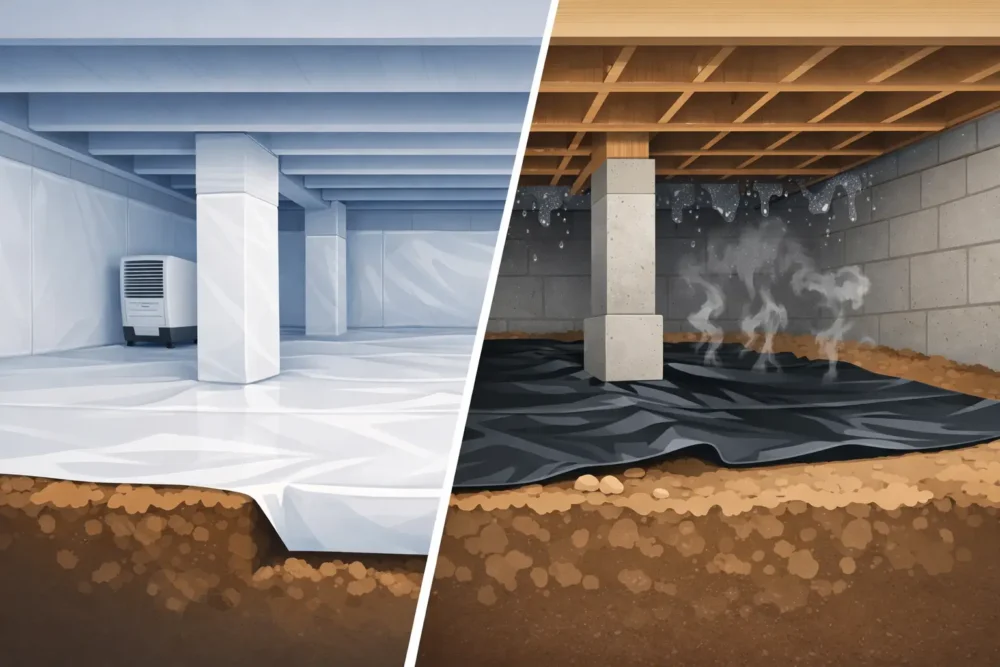
A crawl space can affect far more than the floor beneath your feet. Moisture, outside air, mold odors, pests, and poorly performing insulation can move from this hidden area into the living space above. When comparing crawl space encapsulation vs vapor barrier, the key question is not simply which material is better. It is whether your crawl space needs basic ground-moisture control or a complete system to manage moisture and outside air.
For many homes, a vapor barrier is a smart, cost-effective first step. For crawl spaces with persistent dampness, musty odors, high humidity, damaged insulation, or comfort problems, encapsulation may be the more durable solution. A professional inspection helps identify the source of the problem before money is spent on the wrong fix.
What a Crawl Space Vapor Barrier Does
A crawl space vapor barrier is a sheet of polyethylene installed across the soil floor. Its primary job is to limit water vapor rising out of the ground and entering the crawl space air. Even soil that looks dry can release substantial moisture over time, particularly after wet weather or during humid Missouri summers.
A basic installation typically covers the ground with overlapping seams. Higher-quality installations seal the seams and extend the material partway up foundation walls. The thickness of the material matters as well. Thin plastic can tear during installation, pest activity, or future service work, while thicker material offers better puncture resistance and a longer useful life.
A vapor barrier is especially helpful when the crawl space is generally dry, has no standing water, and does not have major outside-air leakage. It can reduce ground moisture, protect fiberglass insulation from excessive humidity, and make the area cleaner for future plumbing or electrical work.
Still, a vapor barrier does not seal the crawl space. It does not close foundation vents, seal rim joists, insulate walls, correct drainage problems, or remove humid air already entering through gaps. Those limitations matter when moisture is coming from more than the soil.
What Crawl Space Encapsulation Includes
Crawl space encapsulation is a broader moisture-control and air-sealing approach. It usually includes a heavy-duty vapor barrier installed over the floor and up the foundation walls, with carefully sealed seams and edges. Foundation vents and other openings are sealed, and the crawl space is brought inside the home’s conditioned envelope.
The exact scope depends on the home. A complete encapsulation project may also involve air sealing around utility penetrations, insulating foundation walls, removing wet or contaminated insulation, addressing rodent damage, improving drainage, and adding a dehumidifier when humidity levels require it.
Encapsulation is designed to control both moisture and unconditioned outside air. That distinction can improve comfort above the crawl space. Floors may feel less cold in winter and less clammy in summer, while HVAC equipment and ductwork located below the house operate in a more stable environment.
Encapsulation is not a substitute for fixing bulk water issues. If rainwater enters through foundation cracks, poor grading, leaking plumbing, or inadequate drainage, those conditions must be corrected first. Sealing moisture into a crawl space without resolving water entry can create more serious damage.
Crawl Space Encapsulation vs Vapor Barrier: The Real Difference
The most useful way to compare crawl space encapsulation vs vapor barrier is to think of a vapor barrier as one component of encapsulation. Both limit moisture coming from the soil. Encapsulation adds air sealing, wall coverage, ventilation changes, and often insulation or humidity control to create a more controlled space.
A vapor barrier may be enough when ground moisture is the only significant concern. It is generally less invasive and less expensive because it requires fewer materials and less labor. Homeowners often choose this option for a dry, vented crawl space that needs a cleaner and more moisture-resistant ground surface.
Encapsulation is often the better fit when several conditions are present at once: recurring musty odors, visible mold growth, condensation on ducts or framing, wet insulation, cold floors, high indoor humidity, pest activity, or elevated utility bills. These symptoms point to an entire crawl space environment that needs attention, not just a plastic sheet on the floor.
The trade-off is upfront investment. A proper encapsulation system costs more than a ground-only barrier because it requires detailed preparation, sealing, and sometimes additional equipment. However, it can reduce the likelihood of repeated insulation replacement, moisture-related repairs, and ongoing comfort complaints when the underlying conditions justify the work.
How Each Option Affects Energy Efficiency
A crawl space is part of your home envelope, whether you can see it or not. In a vented crawl space, summer humidity and winter air can enter below the home. That air may affect floor temperatures, insulation performance, ducts, pipes, and the air that finds its way into living areas through gaps.
A vapor barrier can support energy efficiency by reducing moisture that degrades insulation and raises humidity. But because it leaves the crawl space vented and largely connected to outdoor conditions, its energy impact is usually limited.
Encapsulation can have a greater effect because it reduces uncontrolled air movement. When paired with properly installed wall insulation and air sealing, it helps the home maintain more stable temperatures. This can be particularly valuable in older St. Louis-area homes with ductwork in the crawl space or rooms that stay uncomfortable despite thermostat adjustments.
No contractor should promise a specific utility-bill reduction before inspecting the home. Energy savings depend on the home’s existing insulation, air leakage, HVAC condition, duct location, moisture level, and how occupants use the space. The goal is a system that improves overall home performance, not a one-size-fits-all package.
Moisture, Mold, and Indoor Air Quality Considerations
Crawl space air can enter the home through openings around plumbing, wiring, flooring, and the framing at the perimeter. When that air carries moisture, mold spores, or odors, homeowners may notice a stale smell, sticky indoor air, or worsening allergy concerns.
A vapor barrier helps reduce one major moisture source, but it cannot prevent humid outside air from entering through open vents. It also cannot correct a crawl space with damp insulation, rodent contamination, or existing fungal growth.
Encapsulation provides more complete protection when air quality and sanitation are part of the concern. Before the barrier is installed, damaged insulation and debris may need to be removed. Rodent entry points should be sealed, and affected areas may require cleaning or disinfecting. This preparation is what turns an encapsulation project into a long-term improvement rather than a cosmetic cover-up.
Questions to Answer Before Choosing
The right recommendation begins with conditions, not a sales pitch. Look for standing water, damp soil, white mineral deposits on foundation walls, mold-like growth, torn insulation, sweating ducts, pest droppings, and obvious gaps to the outdoors. Also pay attention to what happens inside the home. Cold floors, odors, humidity, and rooms that are hard to heat or cool can all be connected to crawl space problems.
A qualified inspection should determine where the moisture is coming from and whether the existing ventilation strategy is helping or hurting. It should also evaluate insulation placement. In an encapsulated crawl space, insulating the foundation walls is often more appropriate than leaving fiberglass between floor joists, but the details depend on the structure and local conditions.
Ask whether drainage repairs, plumbing repairs, air sealing, insulation removal, pest exclusion, or dehumidification should be completed before the new barrier goes in. Addressing these details upfront prevents expensive rework later.
Get a Recommendation Built Around Your Home
The best choice is often straightforward once the crawl space has been assessed correctly. A basic vapor barrier can be an effective improvement for a dry crawl space with limited moisture exposure. Full encapsulation makes more sense when moisture, outside air, insulation damage, odors, or comfort issues are affecting the home as a whole.
Better Home Insulation provides inspection-led crawl space recommendations for homeowners who want clear answers, quality workmanship, and a practical path toward a cleaner, more comfortable home. A free estimate can help you understand what your crawl space actually needs, so you can invest in a solution that protects your home for the long run.