
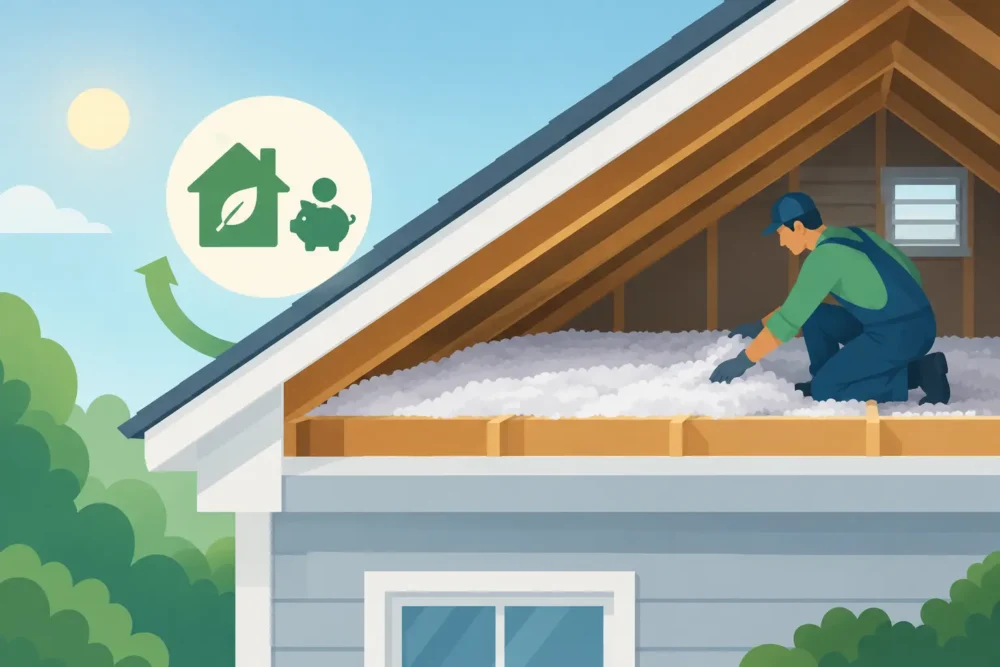
A thermostat can only respond to the temperature around it. It cannot stop conditioned air from slipping through attic gaps, poorly insulated walls, or an exposed crawl space. Real energy bill savings usually begin by finding out where your home is losing heat in winter and gaining heat in summer.
For homeowners in the St. Louis area, that matters through every season. Humid summers put air conditioners to work, while cold winter temperatures expose weak insulation and hidden air leaks. If certain rooms are always uncomfortable or utility costs keep climbing without a clear reason, the issue may be in parts of the home you rarely see.
Why Energy Bill Savings Depend on the Home Envelope
Your home’s envelope is the boundary between conditioned indoor space and the outdoors. It includes the attic, exterior walls, floors over crawl spaces, windows, doors, and the many small openings around pipes, wires, vents, and light fixtures.
When the envelope has gaps or inadequate insulation, your heating and cooling equipment has to run longer to hold the temperature you want. That does not always mean the furnace or air conditioner is failing. It can mean the equipment is compensating for heat moving through the house too easily.
Insulation slows heat transfer. Air sealing limits uncontrolled airflow. Both are needed because they solve different problems. Adding new insulation over major air leaks can improve performance, but those leaks may continue to bring hot, cold, humid, or dusty air into the home. Sealing first gives insulation a better chance to do its job.
The attic is often the first place to inspect
Warm air naturally rises, which makes the attic one of the most common sources of energy loss during heating season. In summer, attic temperatures can become far hotter than the outdoor air, pushing heat down toward bedrooms and upper floors.
Common attic trouble spots include thin or uneven insulation, open gaps around plumbing stacks and electrical penetrations, poorly sealed attic hatches, disconnected ducts, and insulation that has been compressed, wet, or disturbed by pests. A professional inspection can identify which conditions are present instead of assuming that more insulation alone is the answer.
Start With the Problems You Can Feel
High bills get attention, but comfort symptoms often point more directly to the cause. A home may need insulation or air sealing if you notice one or more of these issues:
- Upstairs rooms are much warmer in summer or colder in winter.
- Floors feel cold above a crawl space or over an attached garage.
- The HVAC system runs frequently but some rooms never feel comfortable.
- Drafts appear near recessed lights, attic doors, baseboards, or exterior-wall outlets.
- Utility bills rise sharply even though your household habits have not changed.
These symptoms can overlap. A cold room may be caused by low attic insulation, but it could also involve air leakage, duct issues, missing wall insulation, or moisture-damaged materials. That is why a whole-home inspection is more useful than choosing a single service based on a guess.
Air Sealing: The Step That Makes Insulation Work Better
Many homeowners picture insulation as a blanket, and that is partly accurate. The material resists heat flow, measured by its R-value. A higher R-value generally provides greater resistance to heat moving through a building assembly.
But insulation is not designed to stop strong air movement. Air can move around, through, or beneath loose material when openings are left unsealed. In an attic, small gaps can add up around wiring, top plates, plumbing pipes, exhaust vents, and dropped soffits.
Professional attic air sealing addresses those openings before insulation is installed or restored. The work is detailed, but the result is practical: less conditioned air escapes, less outdoor air enters, and indoor temperatures become easier to maintain. The right approach depends on the attic’s layout, existing insulation, ventilation, and the condition of any wiring or ductwork.
Air sealing should also be done carefully. For example, bathroom exhaust fans need proper ducting to the exterior, and attic ventilation must not be blocked by insulation. A quality installation balances tighter air control with safe moisture management and ventilation.
When Old Insulation Is Part of the Problem
Not all existing insulation should be covered up. If it is clean, dry, evenly distributed, and performing well, adding insulation may be appropriate. If it has been contaminated by rodents, saturated by a roof leak, heavily compacted, or affected by mold-like growth, removal may be the better choice before new material goes in.
Contaminated attic or crawl space insulation can affect more than energy use. Rodent droppings, nesting debris, odors, and damaged air barriers can contribute to unhealthy indoor conditions. Moisture can reduce insulation performance and create conditions that need to be corrected before the area is closed back up.
A full-service solution may include removing and disposing of damaged insulation, rodent proofing entry points, sanitizing affected areas, air sealing, and installing new insulation. Handling the source of the damage matters. Otherwise, new material may face the same problem again.
Do Not Overlook the Crawl Space
A crawl space has a direct effect on the rooms above it. When it is damp, vented inappropriately for the home’s design, missing insulation, or exposed to outside air, floors can feel cold and HVAC costs can increase.
Crawl space insulation and vapor barriers address different needs. Insulation helps slow heat transfer between the crawl space and living area. A vapor barrier helps limit ground moisture from entering the space. In some homes, moisture control, air sealing, insulation, and ventilation improvements need to work together.
The correct recommendation depends on the crawl space condition. Standing water, musty odors, visible pest activity, or wet insulation should be investigated before simply adding more material. Covering a moisture issue does not solve it, and it may lead to costly repairs later.
Use Diagnostics Instead of Guesswork
The fastest path to meaningful improvements is identifying the actual weak points in the home. Thermal imaging can help reveal temperature differences behind surfaces and around building components. It can indicate areas where insulation is missing, shifted, or less effective than expected.
Thermal imaging is most useful as part of an experienced inspection, not as a stand-alone answer. A cooler or warmer area in an image may relate to insulation, air movement, moisture, framing, or changing outdoor conditions. A qualified technician considers the image alongside visible conditions in the attic, crawl space, and accessible areas of the home.
This inspection-led approach helps prioritize work. Some homes benefit most from attic air sealing and insulation. Others need contaminated insulation removal, crawl space vapor barrier installation, wall insulation, or targeted ventilation corrections. The best investment is not necessarily the biggest project. It is the project that addresses the conditions causing the loss.
Practical Energy Bill Savings Without Cutting Comfort
Reducing energy use does not have to mean setting the thermostat at an uncomfortable temperature. Once major heat loss and air leakage are addressed, many homeowners find their HVAC system cycles more normally and rooms stay closer to the set temperature.
You can support professional envelope improvements with routine habits. Replace HVAC filters on schedule, use programmable temperature settings that fit your routine, keep supply vents open and unobstructed, and address roof or plumbing leaks promptly. These steps are helpful, but they cannot compensate for a poorly insulated attic or a wet, unprotected crawl space.
Be cautious of promises that quote the same savings for every home. Actual results depend on the home’s age, size, construction, existing insulation, utility rates, thermostat settings, and the extent of air leakage. A trustworthy contractor explains what they find, recommends a scope based on the home, and provides a clear estimate before work begins.
If high utility bills come with uncomfortable rooms, drafts, moisture concerns, or signs of pests, treat those clues as useful information. A careful inspection can turn a vague frustration into a practical plan for a cleaner, more comfortable, and more efficient home.