
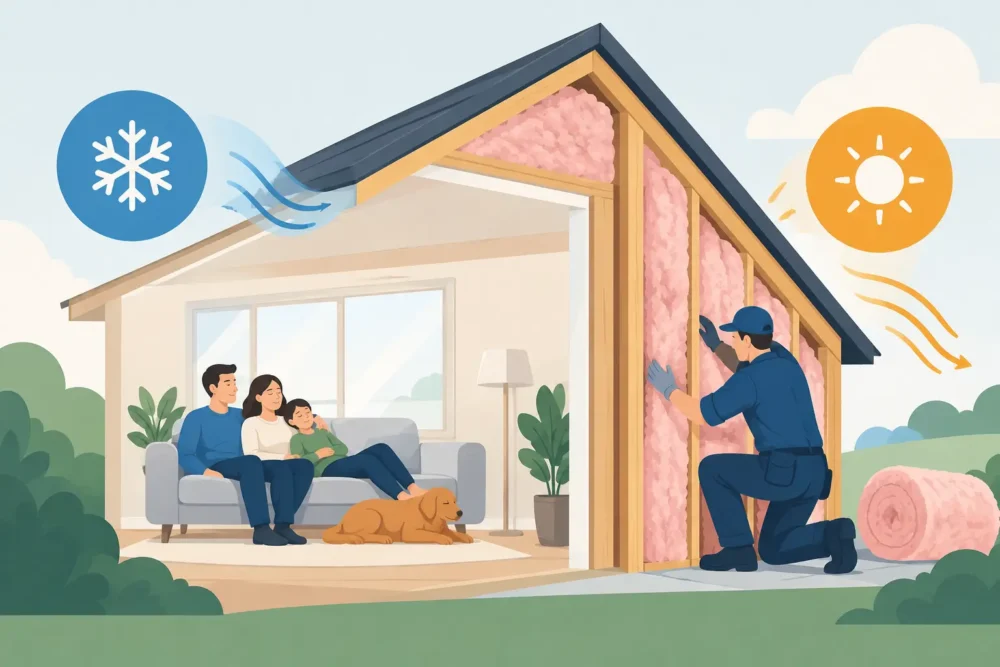
A bedroom that stays cold while the rest of the house feels warm is rarely just a thermostat problem. The same goes for an upstairs floor that becomes unbearable in July, unusually high utility bills, musty crawl space odors, or dust that seems to return as soon as you clean. Experienced insulation contractors look beyond the visible symptoms to find where your home is losing conditioned air, taking on moisture, or falling short in thermal protection.
For homeowners, the goal is not simply to add more insulation. It is to create a home that holds a steady temperature, uses heating and cooling equipment more efficiently, and supports cleaner, healthier indoor conditions. That takes an inspection-led approach, because every attic, wall cavity, and crawl space has different needs.
What Insulation Contractors Actually Do
Many people picture insulation work as rolling out fiberglass in an attic. That can be part of the job, but a qualified contractor should assess the entire area before recommending material or R-value. Insulation performs best when the surrounding conditions are right.
In an attic, for example, warm air from the home can escape through gaps around plumbing stacks, electrical penetrations, recessed lights, attic hatches, and framing connections. If new insulation is installed over those openings without air sealing first, the home may still lose expensive heated or cooled air. The insulation slows heat transfer, but it does not stop air movement on its own.
A thorough contractor also looks for damaged or compressed insulation, evidence of rodent activity, moisture staining, poor ventilation, and unsafe or inaccessible areas. In crawl spaces, the assessment may include insulation condition, ground moisture, vapor barrier coverage, exposed ductwork, and signs that outside air or pests are entering the structure.
The best recommendation is often a combination of services rather than one product. Air sealing may need to come before attic insulation. Contaminated insulation may need removal and sanitation before replacement. A damp crawl space may require a vapor barrier and moisture-focused improvements before new insulation makes sense.
Why a Home Inspection Should Come First
Two homes built in the same year can have entirely different comfort problems. One may have adequate attic insulation but major air leaks. Another may have insulation that was installed decades ago and has settled below an effective depth. A third may have rodent-damaged material that affects both performance and indoor cleanliness.
This is why a free inspection and clear estimate can be more valuable than a quick quote based only on attic square footage. A contractor should explain what they found, why it matters, and what work is optional versus urgent. Homeowners should be able to understand the recommendation without needing a background in building science.
Thermal imaging can be especially useful when diagnosing hard-to-see weaknesses. It can help identify temperature differences that point to missing insulation, air leakage, or poorly performing areas around ceilings and exterior walls. It is not a replacement for a hands-on inspection, but it can provide helpful evidence when a problem is hidden behind finished surfaces.
The inspection should also consider the source of the issue. If insulation is wet, for instance, adding more material is not the solution until the moisture cause is addressed. That cause could be a roof leak, plumbing leak, condensation, poor ventilation, or exposed soil moisture below the home.
R-Value Matters, But It Is Not the Whole Story
R-value measures how well insulation resists heat flow. Generally, a higher R-value provides more resistance, but the right target depends on where the insulation is installed, the local climate, the assembly of the home, and the available space.
Homeowners in the St. Louis area experience hot, humid summers and cold winter stretches, so attic performance matters year-round. An attic with insufficient insulation can allow heat to enter living spaces during summer and let heated air escape during winter. That extra load can force the HVAC system to run longer and make rooms feel inconsistent.
Still, R-value alone does not guarantee results. Gaps, voids, compression, and air bypasses can reduce real-world performance. A deep layer of insulation with unsealed openings below it may not deliver the comfort improvement a homeowner expects.
Material choice also depends on the application. Loose-fill insulation can work well for filling irregular attic spaces and increasing coverage over existing material when conditions are suitable. Batt insulation can be effective when properly fitted around framing and obstructions. The key word is properly. Even quality insulation loses value when it is installed with gaps or squeezed into a space where it cannot maintain its intended thickness.
When Insulation Removal Is the Better Choice
Adding insulation over existing material can be practical when the old insulation is dry, clean, and still performing reasonably well. It is not always the right choice.
Removal should be considered when insulation has been heavily contaminated by rodents, soaked by moisture, damaged by fire or smoke, or buried under extensive debris. Rodent droppings and nesting material can create sanitation concerns, while wet insulation may lose effectiveness and contribute to odors or mold-related conditions.
Professional removal is also useful when it allows a contractor to access the attic floor for air sealing, repairs, and detailed inspection. Once the old material is removed, hidden gaps and damage are easier to identify. Eligible removed materials may sometimes be recycled, reducing waste where possible.
This work should be handled carefully. Disturbing contaminated insulation without appropriate containment, protective equipment, and disposal practices can spread dust and debris into other parts of the home. A professional team can remove the material, sanitize affected areas when needed, seal likely entry points, and prepare the space for a clean installation.
Crawl Spaces Need Their Own Strategy
Crawl spaces are easy to ignore because they are out of sight. Yet they can influence floor temperatures, moisture levels, odors, pest activity, and energy use throughout the home.
A cold floor in winter may be linked to missing or failing crawl space insulation. Persistent musty smells can point to moisture below the house. Open vents, torn vapor barriers, gaps around utility penetrations, or rodent entry points can all affect conditions in the crawl space and eventually the rooms above it.
The correct solution depends on the structure and moisture conditions. Some crawl spaces benefit from insulation improvements paired with a properly installed vapor barrier. Others need cleanup, insulation removal, rodent proofing, or ventilation-related corrections first. Treating only the symptom can leave the underlying cause in place.
Questions to Ask Before Hiring Insulation Contractors
The lowest estimate is not always the best value, especially when it leaves out air sealing, removal, disposal, sanitation, or repairs that are necessary for the insulation to perform. Ask what the estimate includes and whether the contractor inspected for moisture, pests, and ventilation concerns.
It also helps to ask how the crew protects the home during the work, how contaminated materials are handled, and whether the contractor is licensed and insured. A reputable company should be comfortable explaining the installation method, expected scope, and any limitations of the proposed work.
Be cautious with promises of a specific utility-bill reduction. Better insulation and air sealing can reduce heating and cooling demand, but savings vary based on energy rates, HVAC condition, thermostat habits, home size, and the severity of existing deficiencies. A trustworthy contractor will focus on measurable improvements in comfort and home performance rather than make unrealistic guarantees.
A Better Path to a More Comfortable Home
At Better Home Insulation, the work begins with identifying what is happening inside the home envelope, not with selling a one-size-fits-all material. That may mean attic air sealing and new insulation, crawl space vapor barrier installation, removal of damaged insulation, rodent proofing, or a combination of services that addresses the full problem.
A more comfortable home is often built through details that are easy to miss: a sealed attic opening, a dry crawl space, insulation installed at the right depth, or contaminated material removed before it affects the rest of the house. If certain rooms never feel right or your energy bills keep climbing without a clear reason, a professional inspection can turn those frustrating symptoms into a practical plan for improvement.