
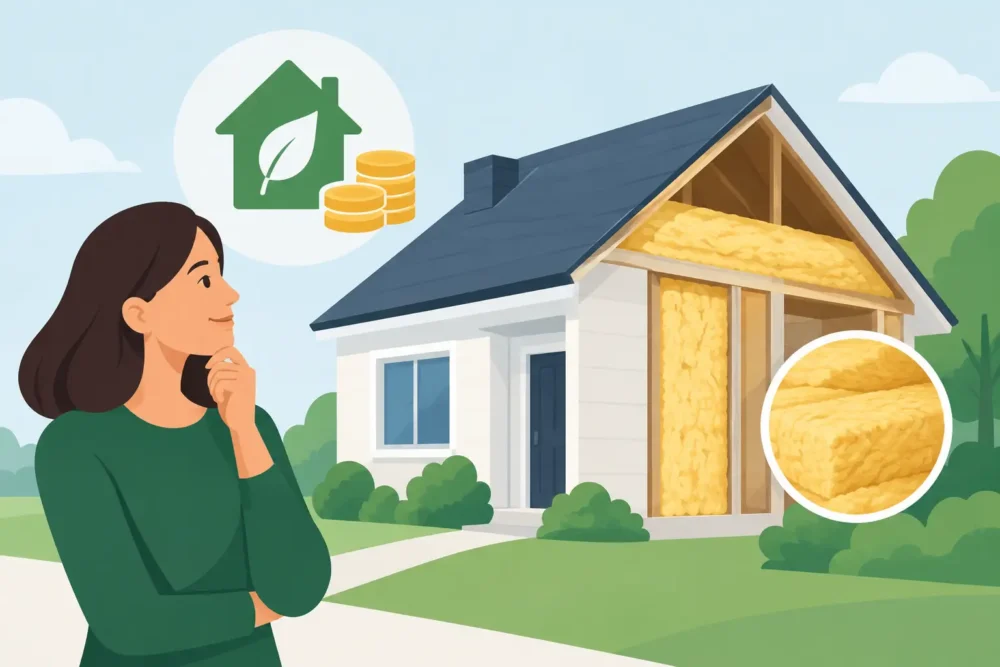
A cold upstairs bedroom, a furnace that seems to run without stopping, and rising utility bills often point to the same hidden problem: heat is escaping through the attic, walls, or crawl space. Insulation tax credits helped many homeowners offset part of the cost of correcting those issues. However, the federal rules changed after 2025, so timing matters just as much as the work itself.
For homeowners who completed eligible improvements in 2025, the federal Energy Efficient Home Improvement Credit may still be available when filing that tax return. If you are planning work in 2026 or later, do not assume a federal insulation credit applies. A professional inspection can still make excellent financial sense because reduced energy waste, better comfort, and healthier conditions are benefits that do not depend on a tax credit.
How insulation tax credits worked through 2025
For qualifying improvements placed in service by December 31, 2025, the federal Energy Efficient Home Improvement Credit generally covered 30% of eligible costs. Insulation materials and air-sealing materials were included among the qualifying categories, subject to the annual limits for the credit.
The maximum available for most building-envelope improvements was generally part of a $1,200 annual credit limit. That means the credit was not a dollar-for-dollar reimbursement for an entire insulation project. It reduced the income tax you owed, up to the applicable limit, rather than arriving as a cash payment beyond your tax liability.
The federal credit was scheduled to end for property placed in service after December 31, 2025. Homeowners filing a 2025 return should confirm their eligibility with current IRS instructions or a qualified tax professional. Tax rules, forms, and individual circumstances can affect the final result.
Materials qualified, but labor was treated differently
One detail catches many homeowners by surprise: for insulation and air sealing, the federal credit generally applied to qualifying materials, not installation labor. A contractor invoice may include removal, disposal, air sealing, insulation materials, installation, cleanup, and other remediation work. Only the eligible material portion was generally used to calculate this particular federal credit.
That does not make the labor less valuable. Proper installation is where an insulation project succeeds or fails. Gaps around wiring, open soffits, recessed fixtures, attic hatches, duct penetrations, and top plates can allow conditioned air to leak into the attic. Adding insulation over those leaks without addressing them can limit the comfort and efficiency gains you expected.
What improvements were commonly eligible?
Eligible insulation had to meet applicable International Energy Conservation Code standards in effect at the start of the year the work was completed. In practical terms, common qualifying materials often included batt insulation, blown-in fiberglass, cellulose, rigid foam, spray foam, and certain air-sealing products when they were installed as part of an eligible energy-efficiency improvement.
The product itself was only one part of the equation. The improvement also generally needed to be installed in an existing home used as your principal residence in the United States. New construction and rental-only properties were treated differently. Second homes may have had limited eligibility in some circumstances, but homeowners should verify the rules before relying on a credit.
Attic insulation is often the clearest place to start because it can address a large source of heat gain and heat loss. In St. Louis-area homes, we regularly see attics with thin, compressed, shifted, or damaged insulation. Older homes may also have hidden air leaks that allow winter heat to rise out of the home and summer attic heat to work its way downward.
Air sealing can be just as valuable as more insulation
Insulation slows heat transfer. Air sealing reduces uncontrolled airflow. Your home usually needs both.
For example, an attic with plenty of insulation can still underperform when warm indoor air leaks through ceiling openings. That air can carry moisture into the attic during cold weather, contributing to condensation or staining over time. In summer, humid outdoor air can enter through other gaps and make your cooling system work harder.
A complete attic assessment looks beyond depth alone. It should consider insulation condition, current R-value, attic bypasses, ventilation, ductwork, moisture evidence, rodent activity, and the condition of the attic hatch. That approach helps identify whether added insulation is the right first step or whether removal, sanitation, air sealing, or ventilation corrections should come first.
Keep the right records for your tax return
If you completed qualifying work in 2025, good documentation can make tax preparation much easier. Keep the final invoice, proof of payment, product details, manufacturer information, and any written certification or eligibility statement provided for the materials.
Ask your contractor for an invoice that clearly separates material charges from labor whenever possible. This is especially useful when a project includes several services. For instance, removing contaminated insulation, rodent proofing, disinfecting an attic, sealing air leaks, and installing new insulation may all be appropriate parts of restoring the space, but they are not necessarily treated the same way for federal tax purposes.
You should also retain records showing the date the improvement was completed. For the 2025 credit, that placement-in-service date is central to eligibility. Your tax preparer can help determine which expenses belong on the relevant form and whether your tax liability allows you to use the full available credit.
Do not let a credit drive the wrong repair
Tax incentives can improve the economics of a project, but they should not be the only reason to choose a repair. A homeowner with wet insulation from a roof leak or crawl space moisture issue needs to correct the source of moisture before simply adding more material. Likewise, insulation contaminated by rodents may need careful removal, sanitizing, and exclusion work to protect indoor conditions and prevent a repeat problem.
The right solution depends on what is happening inside the home envelope. Sometimes the answer is an attic air-sealing and insulation upgrade. Sometimes it is crawl space insulation with a vapor barrier. Sometimes thermal imaging reveals wall cavities, duct leaks, or ceiling penetrations that are creating the discomfort. A lower upfront price is not always the lower-cost choice if it leaves the cause of the problem untouched.
Other savings may still be available
The expiration of the federal insulation credit after 2025 does not mean homeowners have no opportunities to reduce project costs. Local utilities, state programs, municipal initiatives, and manufacturer promotions can change over time. Some incentives are tied to energy assessments, income levels, specific equipment, or contractor requirements, so confirm the details before scheduling work around a rebate.
Even without an incentive, insulation improvements can deliver value every day the heating and cooling system runs. The savings vary with the home’s age, existing insulation, air leakage, utility rates, thermostat habits, and the quality of installation. Comfort is often the more immediate payoff: rooms feel more even, drafts decrease, and the HVAC system does not have to fight the house as hard.
Start with a clear picture of your home
Before choosing an insulation level or counting on any incentive, have the attic, crawl space, or affected area evaluated as a system. Better Home Insulation provides free inspections and estimates to help homeowners understand where energy loss, moisture, pest damage, or contaminated materials may be affecting the home.
A well-planned project gives you more than paperwork for a tax return. It gives your family a cleaner, more consistent, and more comfortable home to live in long after filing season has passed.