
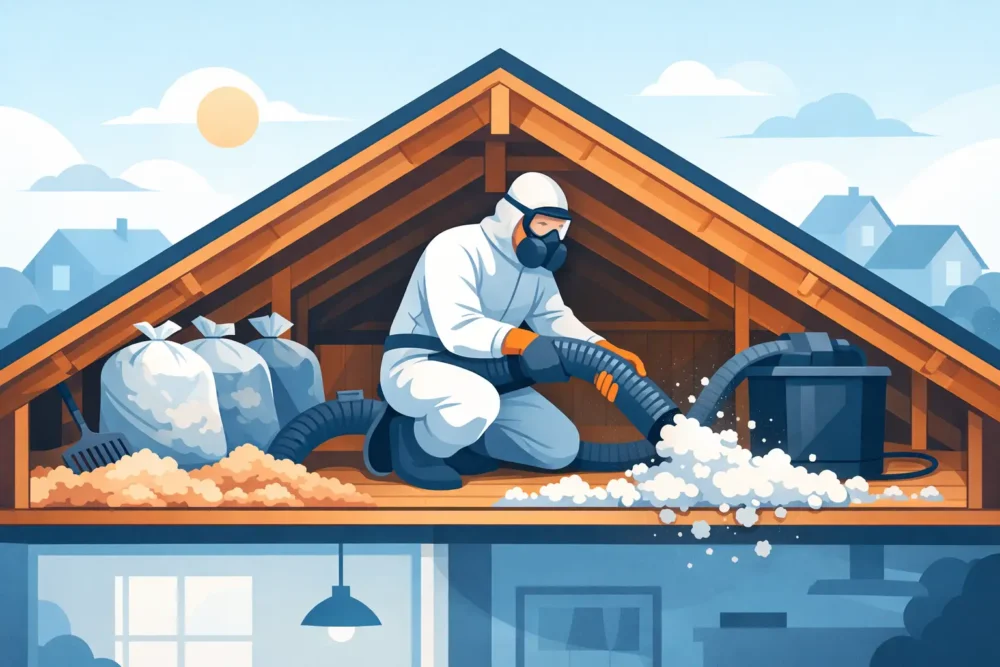
If your attic smells musty, your energy bills keep climbing, or you have old insulation that looks dirty, compacted, or chewed up, adding more material on top is not always the right fix. An attic insulation removal guide matters because the real issue is often contamination, air leakage, moisture, or damage that needs to be addressed before new insulation goes in.
For many homeowners, attic insulation removal is not about starting over for no reason. It is about clearing out insulation that is no longer doing its job and making space for a cleaner, more effective system. When handled correctly, removal gives you a chance to inspect the attic floor, seal hidden air leaks, correct ventilation issues, and install insulation that performs the way it should.
When an attic insulation removal guide applies to your home
Not every attic needs full removal. In some homes, existing insulation is still dry, clean, and adequately installed, so adding material may be enough. But there are clear cases where removal is the better path.
Rodent activity is one of the biggest reasons. Once insulation has been exposed to droppings, urine, nesting, or tunneling, its condition is not just an efficiency problem. It can also become a sanitation issue. The same goes for insulation affected by water intrusion from a roof leak, condensation, or long-term humidity. Wet insulation loses effectiveness quickly, and if the moisture problem is left alone, mold and wood damage can follow.
Age matters too, but not by itself. Older insulation is not automatically bad. What matters is whether it has settled, shifted, become contaminated, or was installed around bypasses and gaps that still allow conditioned air to escape. In many homes, especially older ones, poor attic performance is really a combination of worn insulation and unsealed air leaks.
If you have uneven room temperatures, drafty ceilings, or heating and cooling equipment that seems to run constantly, removal may be part of the solution. It depends on what an inspection shows beneath the existing insulation.
What attic insulation removal actually involves
Homeowners are often surprised that insulation removal is a controlled process, not a simple vacuum-and-go job. A professional crew typically begins by evaluating the attic type, the insulation material, access points, contamination level, and any signs of moisture or pest entry.
Loose-fill insulation such as fiberglass or cellulose is usually removed with specialized vacuum equipment designed to collect material efficiently while limiting mess. Batt insulation may need to be pulled out by hand, especially if it is stapled in place, layered irregularly, or mixed with debris. Either way, the work should include careful containment, safe handling, and proper disposal.
The most important part often happens after the old insulation is gone. With the attic floor exposed, technicians can see plumbing penetrations, wiring openings, top plates, recessed fixture gaps, disconnected ductwork, and other pathways where indoor air escapes into the attic. That is the ideal time for air sealing and for identifying issues that would otherwise stay buried.
This is also when a contractor can assess whether the attic has ventilation problems, signs of past leaks, mold-like growth, or entry points that may have allowed rodents inside. If removal is done without correcting those conditions, new insulation may not last or perform as expected.
Why removal is sometimes better than adding insulation
Homeowners understandably want the most cost-effective option. In some cases, adding insulation over existing material is appropriate. In others, it can hide bigger problems and delay a more complete fix.
If the current insulation is contaminated, compressed, or badly uneven, covering it does not restore its original performance. If the attic floor has dozens of unsealed penetrations, more insulation alone does not stop air leakage. If pests are still getting in, fresh insulation can become damaged too.
Removal creates a clean baseline. That allows your home to benefit from a more complete upgrade – sanitation if needed, rodent proofing where entry points exist, air sealing, ventilation improvements, and correctly installed new insulation. For homeowners focused on long-term comfort and lower utility costs, that full-system approach usually delivers better results than simply burying the problem.
How to know if your insulation should stay or go
A visual check from the attic hatch can tell you a little, but not enough to make a confident decision. Dirty insulation around the attic perimeter, dark streaking, matted areas, visible droppings, and signs of moisture are all red flags. So are persistent odors that seem stronger near the attic access.
Still, some problems are not obvious from a quick look. Insulation may appear present but still perform poorly because of settling, low depth, hidden gaps, or extensive air movement through the material. In a home with comfort issues, a proper inspection often reveals that the insulation itself is only one part of the problem.
This is why homeowners benefit from an inspection-led recommendation instead of a one-size-fits-all sales pitch. A trustworthy contractor should explain whether your attic needs removal, partial removal, or simply targeted improvements. The answer is not always dramatic, and that is a good thing.
What to expect during the project
Most homeowners want to know two things first: how disruptive the work will be and whether it is safe. Professional attic insulation removal should be planned to protect the home during the process. That means equipment setup, controlled collection of debris, and attention to keeping insulation dust out of living areas as much as possible.
Project length depends on attic size, ease of access, material type, and whether there is contamination to address. A straightforward job may move quickly. A more involved attic with rodent damage, disposal needs, air sealing work, and reinsulation will take longer. That is normal. The goal is not speed by itself. The goal is a cleaner attic and a better-performing home.
You should also expect clear communication about what was found once the attic is exposed. This is where experienced contractors add value. They can show you whether the attic had hidden bypasses, moisture stains, disconnected vents, or other conditions affecting comfort and efficiency.
Choosing the right contractor for attic insulation removal
This is not a job where the lowest price always leads to the best outcome. Removal touches indoor air quality, sanitation, energy performance, and sometimes pest-related cleanup. You want a contractor who understands the attic as a system, not just a place to suck out old material.
Look for a company that is licensed and insured, explains its process clearly, and can handle more than one part of the job. If removal uncovers major air leaks, ventilation concerns, or rodent entry points, it helps to work with a team that can address those issues without sending you to multiple providers. That saves time and often leads to a more consistent result.
For homeowners in the St. Louis area, that whole-home perspective matters. Seasonal humidity, cold winter air, and summer attic heat can all magnify insulation and ventilation problems, so the right recommendation needs to fit the house, not just the square footage.
The next step after removal
An attic should not be left bare any longer than necessary. Once old insulation is removed and any air sealing or corrective work is complete, the attic needs new insulation installed to the right depth and coverage for the home.
This is also the point where material choice matters. Fiberglass and cellulose each have advantages, and the best fit depends on your attic layout, existing conditions, and performance goals. The right answer is not always the same from one house to another. What matters most is complete, even coverage and a plan that supports comfort, efficiency, and durability.
A good attic upgrade should leave you with more than a cleaner space overhead. You should notice more stable indoor temperatures, less strain on your HVAC system, and greater confidence that hidden issues have been addressed instead of covered up.
If your attic has old, damaged, or contaminated insulation, do not assume more insulation is automatically the answer. Sometimes the smartest improvement starts by clearing the space, fixing what has been overlooked, and giving your home a clean foundation for better performance.