
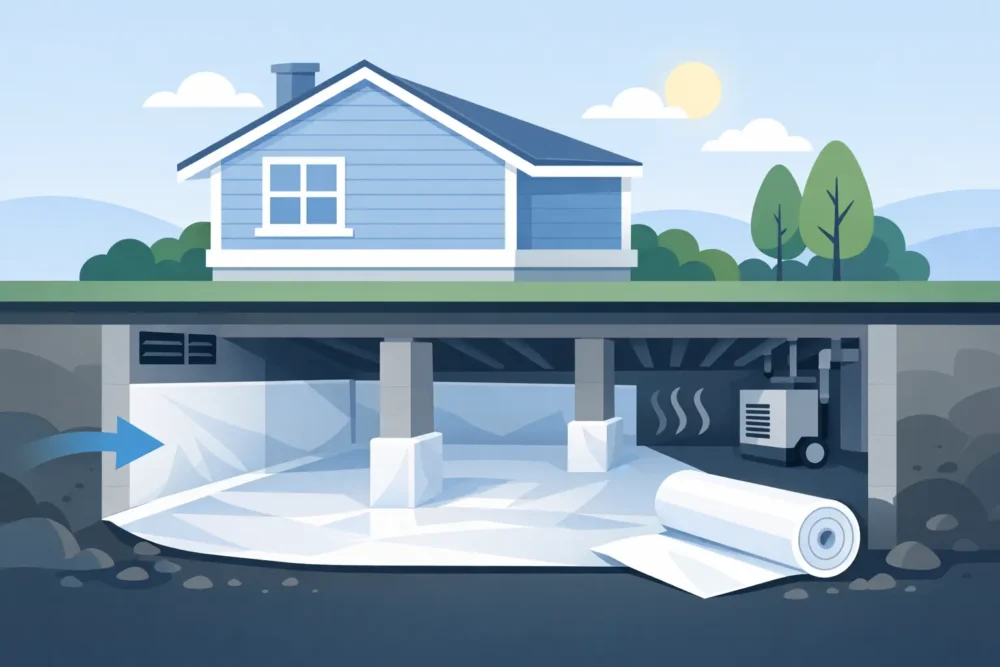
If your floors feel damp in summer, your house smells musty after rain, or the air downstairs never feels quite right, the problem may be under your feet. This crawl space vapor barrier guide explains what a vapor barrier does, when it helps, and how it fits into a healthier, more energy-efficient home.
What a crawl space vapor barrier actually does
A crawl space vapor barrier is a thick plastic material installed over the soil and, in some cases, up the foundation walls to slow ground moisture from moving into the crawl space air. That matters because crawl spaces are often cool, dark, and poorly controlled environments. Once moisture gets in, it does not take much for mold, odors, wood damage, and insulation problems to follow.
Many homeowners think of a vapor barrier as a simple sheet of plastic. In reality, the effectiveness depends on the material thickness, how completely the surface is covered, how seams are sealed, and whether the crawl space has other issues like standing water, outside air leakage, or damaged insulation. A loose, thin sheet tossed on the dirt may reduce some evaporation, but it is not the same as a properly installed system.
Why crawl space moisture becomes a whole-house problem
Crawl spaces do not stay isolated from the rest of the home. Air moves. In many houses, air from the crawl space can migrate upward through gaps around plumbing, wiring, framing joints, and duct penetrations. That means excess moisture, musty odors, and contaminated air can affect the rooms above.
This is one reason homeowners notice symptoms before they ever look below the floor. You may see cupping hardwood, cold floors in winter, higher indoor humidity, or insulation that keeps underperforming. In some homes, moisture also attracts pests or worsens the effects of rodent activity. When that happens, the issue is no longer just about comfort. It becomes a sanitation, durability, and energy-efficiency concern.
Signs you may need this crawl space vapor barrier guide in real life
A few warning signs tend to show up again and again. If you notice a musty smell, sagging or wet crawl space insulation, condensation on ductwork, visible soil moisture, mold on framing, or rising cooling costs, a crawl space inspection is worth scheduling. Even if you do not see standing water, constant ground evaporation can still create a damp environment.
Missouri homes are especially familiar with humidity swings, heavy rain events, and seasonal moisture changes. In areas around St. Louis and St. Charles County, that combination can make crawl spaces a repeated source of hidden home performance problems. The fix is not always the same in every house, which is why inspection matters more than guesswork.
Not every vapor barrier installation is the same
There is a big difference between a basic ground cover and a more complete crawl space moisture control approach. A basic installation usually covers the soil to reduce evaporation. A more complete system may include sealed seams, attachment to walls and piers, insulation corrections, air sealing, drainage improvements, and in some cases conditioned or dehumidified crawl space air.
The right level depends on what the crawl space is dealing with. If the main issue is minor soil moisture in an otherwise stable crawl space, a properly installed barrier may go a long way. If there is bulk water intrusion, failed drainage, open vents bringing in humid summer air, or contaminated insulation, the vapor barrier is only one part of the remedy.
That is where homeowners can get frustrated. They pay for plastic on the ground and expect the smell and humidity to disappear, but the underlying moisture source was never fully addressed. Good recommendations should connect the barrier to the entire crawl space condition, not treat it as a one-size-fits-all product.
Material thickness and installation quality matter
A thin barrier is cheaper, but it is also easier to tear, shift, or fail over time. Heavier materials hold up better in crawl spaces that may need service access later. They also create a more durable surface when properly fitted around columns, corners, and utility penetrations.
Seams should overlap and be sealed. Edges should be secured where appropriate. Gaps around supports and pipes should not be left wide open. These details are where installation quality shows up. A vapor barrier only works as intended when it limits moisture movement across the entire area rather than most of the area.
Homeowners do not need to become material experts, but they should know this: price alone does not tell you whether the crawl space will perform better afterward. The quality of the inspection and the completeness of the installation usually matter more.
How vapor barriers work with crawl space insulation
One of the most common problems in damp crawl spaces is damaged insulation. Fiberglass installed between floor joists can sag, absorb moisture, trap debris, and lose effectiveness when the crawl space stays wet. In that condition, the home may feel colder in winter and harder to cool in summer, even if insulation is technically present.
A vapor barrier helps by reducing the moisture load below the home, but it does not automatically fix insulation that is already dirty, moldy, or falling down. In some homes, old insulation needs to be removed and replaced after moisture control is improved. That can make a noticeable difference in comfort and indoor air quality.
This is also why a crawl space should be evaluated as a system. Moisture control, insulation, air sealing, and ventilation decisions affect one another. Treating only one piece may leave savings and comfort on the table.
Should you vent the crawl space or seal it?
This is one of the biggest it-depends questions. Older thinking often assumed crawl spaces should be vented to dry out moisture. In practice, venting can make things worse in humid weather. Warm, wet outdoor air enters the cooler crawl space and creates condensation problems instead of solving them.
In many homes, a better approach is a more closed, controlled crawl space with a vapor barrier and supporting measures that manage air and moisture deliberately. But that does not mean every vent should be closed without evaluating drainage, insulation location, and overall design. The right plan depends on the house.
A careful contractor should look at the conditions first, explain the trade-offs, and recommend a solution based on performance rather than habit. That is especially important if you have recurring moisture, wood damage, or comfort problems that have already outlasted quick fixes.
When a vapor barrier alone is not enough
A vapor barrier can do a lot, but it cannot stop water flowing in from outside. If your crawl space has puddling, foundation seepage, grading issues, leaking plumbing, or gutter discharge near the home, those problems need attention too. Otherwise, the barrier may be covering an environment that still stays too wet.
Likewise, if the crawl space has rodent contamination, torn insulation, or strong odors, cleanup and sanitation may need to happen before or along with new moisture control work. A clean installation over an unresolved contamination problem is not a complete solution.
This is where a full-service approach helps. Instead of calling one company for insulation, another for cleanup, and another for moisture control, homeowners often benefit from one inspection that ties the issues together and prioritizes the work in the right order.
What homeowners should expect from an inspection
A good crawl space inspection should do more than confirm that the area looks damp. It should identify where moisture is coming from, how it is affecting insulation and air quality, and what level of vapor barrier system makes sense for the home. Photos help. Clear explanations help more.
You should also expect realistic guidance. Sometimes the recommendation is straightforward. Sometimes it involves a combination of vapor barrier installation, insulation replacement, air sealing, or drainage correction. The point is to fix the cause of the problem, not just its appearance.
For homeowners who want fewer surprises, lower utility bills, and a more comfortable house year-round, that kind of whole-home thinking matters. Better Home Insulation takes that approach because crawl space problems rarely stay in the crawl space for long.
Cost versus value
The cheapest option often handles the least. A more complete crawl space vapor barrier installation costs more upfront, but it may also last longer and do more to protect insulation, reduce odors, and support better indoor comfort. If moisture has been driving repeated repairs or high energy bills, the long-term value can be stronger than the initial price tag suggests.
The real question is not just what a barrier costs. It is what ongoing moisture is already costing you in comfort, air quality, and wear on the home.
If your crawl space has been sending warning signs, it is worth taking them seriously before the damage spreads any further. A well-planned fix underneath the house can make the rooms above it feel cleaner, drier, and easier to live in every day.