
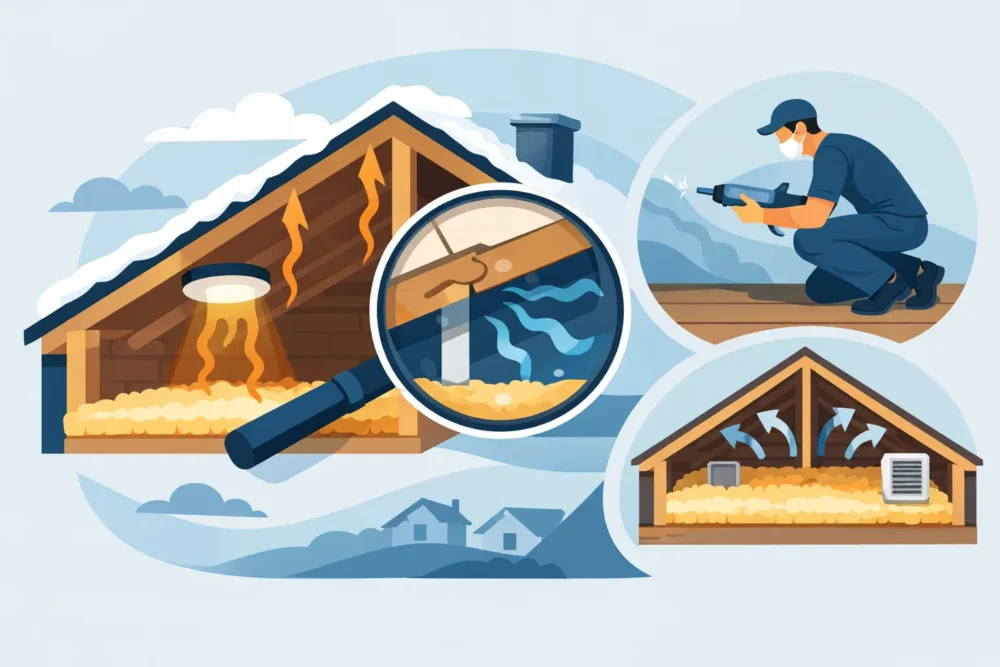
A bedroom that is chilly every winter, a second floor that never seems to cool down, and insulation that looks adequate on paper can all point to the same hidden issue: attic air leaks. Warm or cooled indoor air does not need a large opening to escape. Small gaps around wiring, pipes, light fixtures, framing, and access hatches can add up, making your HVAC system work harder while comfort slips away.
For homeowners in the St. Louis area, where humid summers and cold winter stretches both put pressure on a home, attic air sealing is often one of the most practical ways to improve energy performance. The right solution is not simply adding more insulation. First, the pathways that allow air to move between the living space and attic need to be identified and sealed safely.
Why Attic Air Leaks Matter
Your attic sits directly above the conditioned areas of your home, making it a major boundary between indoor air and outdoor conditions. When that boundary has gaps, air movement follows natural pressure differences. In winter, warm air rises and escapes through openings at the top of the house. That air loss can pull cold outdoor air in through lower-level gaps, including around windows, doors, basements, and crawl spaces.
In summer, hot attic air and outdoor humidity can affect the rooms below. Leaks allow conditioned air to escape into the attic, while heat radiating from the roof increases the load on the air conditioner. The result may be longer run times, higher utility bills, and rooms that feel noticeably different from one another.
Air leakage can also carry moisture. Warm, humid indoor air entering a cold attic in winter can condense on roof sheathing or framing. Over time, that moisture may contribute to staining, mold growth, wood deterioration, or compressed insulation. Not every attic moisture issue is caused by leaks, since ventilation and roof leaks must also be considered, but uncontrolled air movement is a common factor worth investigating.
Common Places Attic Air Leaks Hide
Most homeowners will not see air leaks from the hallway or living room. They are often buried beneath loose-fill insulation, tucked behind framing, or located around items that penetrate the ceiling plane. A professional inspection can reveal the full picture, but several locations frequently need attention.
Ceiling Penetrations and Electrical Openings
Recessed lights, ceiling-mounted fixtures, electrical boxes, and wiring holes can create direct pathways into the attic. Older recessed lights are especially important to evaluate. Some fixtures are not rated for insulation contact and need safe clearance around them, which can leave an unsealed opening if the work is not handled correctly.
Gaps around plumbing vent stacks, bathroom fan ducts, furnace flues, and other pipes are also common. These openings are sometimes covered loosely with insulation, but insulation slows heat transfer. It does not stop air movement on its own.
Attic Hatches, Pull-Down Stairs, and Knee Walls
An attic hatch is one of the largest accessible openings in many homes. If it lacks weatherstripping, an insulated cover, or a secure fit, it can leak a surprising amount of air. Pull-down attic stairs are even more prone to leakage because they have multiple seams and a large surface area.
Knee walls, which are short interior walls behind finished attic spaces or upper-level rooms, can be another trouble spot. If they are not properly sealed and insulated, they may expose conditioned rooms to unconditioned attic air. These areas require careful treatment because air barriers, insulation, and access needs all have to work together.
Top Plates, Duct Openings, and Framing Gaps
The top plates are the horizontal framing members at the top of interior walls. Gaps at these locations can be hidden under attic insulation, yet they often allow air to move freely from wall cavities into the attic.
Duct boots and duct penetrations deserve the same attention. A register may look normal from below while the connection around it is open in the attic. Leaky or disconnected ductwork is a separate problem from attic air leakage, but both can reduce HVAC efficiency and should be evaluated during the same inspection.
Signs You May Need Attic Air Sealing
High utility bills are a reason to investigate, but they are not the only sign. A home may have attic leaks when upper rooms run hot in summer or cold in winter, when indoor temperatures change quickly near exterior walls, or when the HVAC system seems to run constantly without delivering consistent comfort.
Other clues include dirty insulation near gaps, visible frost or moisture on attic surfaces during cold weather, drafts around ceiling fixtures, and an attic hatch that feels cold to the touch. Pest activity can also create or enlarge openings. Rodents may disturb insulation, damage ducts, and leave contaminated material that should be removed before sealing and reinsulating the area.
These symptoms can overlap with other home-performance problems. Inadequate insulation depth, aging HVAC equipment, poorly sealed ducts, roof moisture, and crawl space conditions may all play a role. That is why an inspection-led approach is more valuable than assuming a single fix will solve every comfort complaint.
How Professionals Seal Attic Air Leaks Safely
Effective attic air sealing begins with access and diagnosis. Technicians inspect insulation conditions, attic ventilation, visible moisture, duct connections, pest evidence, and the areas where the home’s ceiling plane is interrupted. Thermal imaging can help identify temperature patterns that point to hidden gaps, especially when used alongside a hands-on inspection.
Before sealing begins, existing insulation may need to be moved aside. If it is heavily contaminated by rodents, damp, mold-affected, or badly deteriorated, removal and disposal may be the safer first step. Clean, dry insulation in good condition can sometimes be retained and redistributed after sealing, depending on the material and the extent of the work.
The sealing method depends on the opening. Small gaps around wiring and framing may be sealed with approved caulk or expanding foam. Larger openings may require rigid blocking, sheet material, or specially rated sealants. Areas near chimneys, flues, and certain heat-producing fixtures require noncombustible materials and proper clearances. These are not places for a quick DIY foam application.
Once leaks are addressed, insulation can be installed or restored to the appropriate depth and R-value for the home and climate. This sequence matters. Adding insulation before sealing can make future leak detection more difficult, while leaving the underlying air pathways open.
Air Sealing, Insulation, and Ventilation Work Together
Homeowners sometimes worry that sealing an attic will prevent it from breathing. The goal is not to trap moisture in the home or eliminate necessary attic ventilation. The goal is to separate the living area from the attic while maintaining the ventilation strategy the roof assembly requires.
Air sealing controls unintended airflow from the house into the attic. Insulation slows heat transfer. Ventilation helps manage heat and moisture in a vented attic when the roof design calls for it. Each has a different job, and problems occur when one is used as a substitute for another.
For example, adding more soffit or ridge ventilation will not fix a large opening around a plumbing stack. Likewise, thick insulation will not correct an attic hatch that leaks conditioned air every day. A qualified contractor should look at the full system, including bath fan exhaust locations, roof conditions, insulation type, and any evidence of moisture or pest damage.
Is Attic Air Sealing a DIY Project?
Some homeowners can improve a basic attic hatch by adding weatherstripping and an insulated cover. Minor, clearly identified gaps away from electrical equipment and heat sources may also be manageable for experienced DIYers who understand the materials involved.
However, attic work has real trade-offs. Walking on ceiling framing can be hazardous, disturbed insulation can release dust and irritants, and incorrect sealing around combustion vents, chimneys, or recessed lighting can create safety concerns. Older homes may also have unusual framing, inaccessible cavities, or insulation contaminated by animal activity.
Professional service is generally the better choice when the attic has multiple comfort issues, visible moisture, damaged or contaminated insulation, duct concerns, or recurring pest activity. It is also the right call when you want a clear recommendation based on how the whole home is performing rather than a guess based on one visible gap.
A More Comfortable Home Starts at the Top
Attic air leaks are easy to overlook because they are out of sight, but their effects show up where your family lives: uncomfortable rooms, stubborn drafts, moisture concerns, and higher heating and cooling costs. Addressing those leaks before adding or replacing insulation helps protect the value of every energy-efficiency improvement that follows.
Better Home Insulation provides inspections and customized attic solutions for homeowners who want clear answers, quality workmanship, and a practical path toward a cleaner, more comfortable home. A careful evaluation can reveal whether air sealing, insulation work, ventilation improvements, rodent proofing, or a combination of services will make the biggest difference. The most useful next step is simply to find the actual source of the problem before spending money on a fix.