
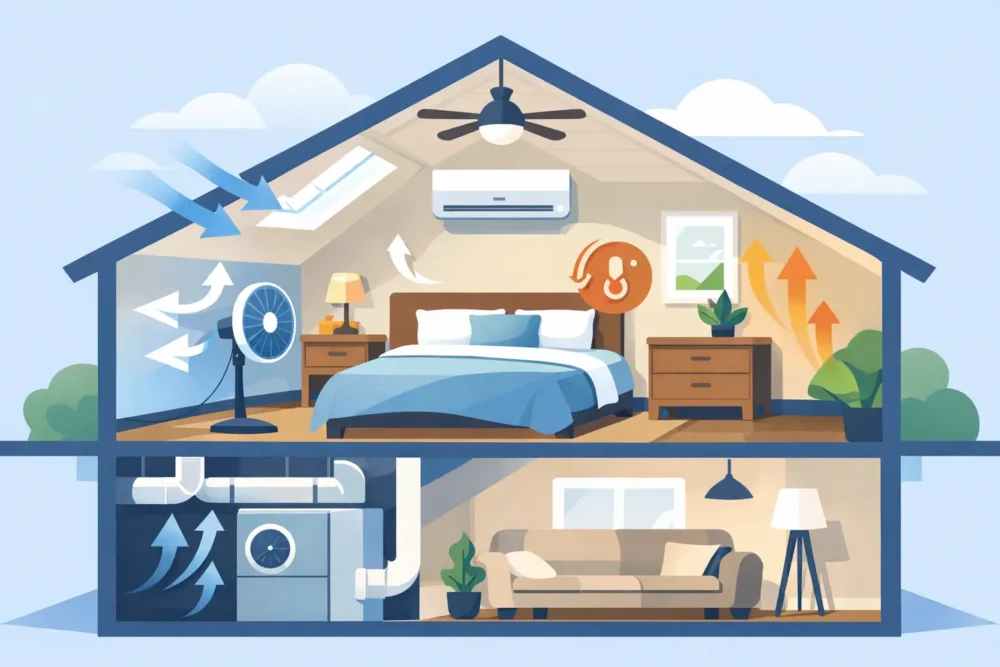
A bedroom that feels ten degrees warmer than the rest of the house is not just an upstairs problem you have to live with. It is usually a sign that heat, air, and moisture are moving through the home differently than they should. Knowing how to improve upstairs room comfort starts with finding the cause instead of simply turning the thermostat down and hoping for the best.
Many two-story homes across the St. Louis area struggle with hot upper floors in summer and chilly bedrooms in winter. The reasons are often hidden above the ceiling, inside exterior walls, around ductwork, or at the connection points between the attic and the living space. The right fix can make rooms more usable, reduce strain on your HVAC system, and help control monthly energy costs.
Why Upstairs Rooms Feel Less Comfortable
Heat naturally rises, but that is only part of the story. During summer, the attic absorbs intense solar heat. If the attic floor is under-insulated, poorly air-sealed, or both, that heat transfers into the rooms below. A second-floor bedroom can then stay warm long after the sun goes down, even while the first floor feels comfortable.
In winter, warm conditioned air can leak upward through gaps around wiring, plumbing pipes, recessed lights, attic hatches, and wall openings. That air loss can make upstairs rooms drafty and force the heating system to run longer. Insulation slows heat flow, but it does not stop moving air. This is why adding insulation without checking for air leaks may produce only partial results.
Uneven temperatures can also come from undersized ducts, poor duct connections, blocked vents, limited return-air pathways, or an HVAC system that was not designed for the home’s current layout. A comfort solution should consider the entire system, not assume that one material or one repair fits every house.
How to Improve Upstairs Room Comfort: Start Above the Ceiling
For many homes, the attic is the most effective place to begin. It sits directly between outdoor conditions and your upstairs rooms, so problems there have an outsized effect on comfort.
Seal attic air leaks before adding insulation
Attic air sealing targets the hidden openings that allow conditioned air to escape and outdoor air to enter. Common leakage points include holes around pipes and electrical wiring, open framing cavities, gaps around chimneys, unsealed top plates, and attic access doors.
Professional air sealing is especially valuable because some areas require careful handling. For example, clearances around chimneys, flues, and certain light fixtures must be treated with appropriate fire-safe materials. A thorough inspection helps distinguish ordinary gaps from areas that need a specific solution.
When air sealing is completed before new insulation is installed, the insulation can perform closer to its intended R-value. It also helps keep hot attic air, dust, and attic odors from filtering into bedrooms below.
Make sure attic insulation is adequate and even
Insulation works by resisting heat transfer. Its effectiveness is described by R-value, with a higher R-value providing more resistance to heat flow. However, depth alone does not tell the full story. Insulation that is compressed, thin in spots, damp, disturbed by pests, or covering only part of the attic floor will not perform consistently.
A professional inspection can identify whether your attic has insufficient insulation, uneven coverage, or older material that no longer supports a healthy and efficient home. In some cases, insulation can be added over existing material. In others, removal is the smarter choice, particularly when insulation is contaminated by rodents, affected by moisture, heavily compacted, or masking air leaks that need to be sealed.
The goal is not simply to fill the attic with more material. It is to create continuous coverage while preserving necessary ventilation paths and avoiding hazards such as buried junction boxes or blocked soffit vents.
Check attic ventilation and radiant heat exposure
Ventilation helps manage attic moisture and temperature, but it is not a substitute for air sealing or insulation. A well-ventilated attic can reduce excessive heat buildup and help prevent moisture issues during colder weather. Still, adding vents alone will not solve an upstairs bedroom that is overheated because the attic floor lacks insulation.
In homes with significant sun exposure, a radiant barrier may also be worth considering. It is designed to reflect radiant heat and can help reduce attic heat gain under the right conditions. Its value depends on the roof design, existing insulation levels, ventilation, and local climate. It should be part of a complete attic strategy rather than a stand-alone promise of instant comfort.
Look for Problems Around the Upstairs Rooms
The attic is a common culprit, but it is not the only place where comfort is lost. Exterior walls, windows, floors over garages, and knee walls in finished attic spaces can all create weak points.
Knee walls deserve particular attention. These short walls are often found in bonus rooms or rooms with sloped ceilings. If they are poorly insulated or lack an air barrier, attic air can move directly behind the finished wall and make the room difficult to heat and cool. Insulating and air sealing these areas correctly can make a noticeable difference.
Windows may contribute as well, especially if they are older, damaged, or poorly sealed. Before replacing every window, check for failed weatherstripping, gaps around frames, and missing caulk. These repairs can reduce drafts at a far lower cost. Window coverings can help with direct sunlight, but they will not correct heat entering through an under-insulated roof or attic floor.
If an upstairs room is located over a garage, inspect the floor assembly and adjacent walls. Garages are rarely conditioned like living areas, and missing insulation in the ceiling below a bedroom can leave the floor cold in winter and allow heat to rise from the garage in summer.
Improve Airflow Without Treating Symptoms Only
Ceiling fans can make an upstairs room feel cooler by moving air across the skin, but they do not lower the room’s actual temperature. Use them when the room is occupied, and make sure the fan rotates counterclockwise in summer for a cooling breeze. In winter, a low-speed clockwise setting can help circulate warm air without creating a draft.
Keep supply registers open and clear of furniture, curtains, and rugs. Closed vents can increase pressure in the duct system and may not direct more cooling to the rooms you want. If a bedroom has a supply vent but no easy path for air to return to the HVAC system, pressure can build when the door is shut. That can reduce airflow and worsen temperature differences.
A qualified HVAC contractor can evaluate duct sizing, balancing, return-air needs, and equipment performance. Better Home Insulation can address the building-envelope side of the equation so conditioned air stays where it belongs. These are related jobs, but they are not interchangeable. Insulation and air sealing reduce the load on your system, while HVAC adjustments help deliver conditioned air effectively.
Do Not Ignore Moisture, Pests, or Old Insulation
Comfort is not only about the thermostat reading. Musty odors, humidity, rodent droppings, or visible stains in the attic can point to problems that affect air quality as well as energy performance.
Moisture can reduce insulation effectiveness and create conditions that support mold growth. Rodents can tunnel through insulation, contaminate it, and create openings that allow more air leakage. Simply adding new insulation over damaged material may trap the underlying issue out of sight.
When an attic has signs of contamination or animal activity, removal, disposal, sanitizing, and rodent proofing may be the appropriate first steps. Once the area is clean and entry points are addressed, air sealing and new insulation can provide a durable comfort upgrade rather than a temporary cover-up.
Know When a Professional Inspection Is Worth It
A few homeowner checks can reveal obvious issues, such as a poorly sealed attic hatch or furniture blocking a register. But persistent upstairs discomfort often has multiple causes. Guessing can lead to spending money on a new thermostat, portable AC unit, or extra insulation when the actual issue is air leakage, ductwork, moisture damage, or an uninsulated wall section.
A professional inspection can assess insulation condition, attic bypasses, ventilation, moisture indicators, and areas of abnormal heat transfer. Thermal imaging can be particularly useful for locating temperature patterns that are not visible from the room itself. The result should be a clear set of recommendations based on your home, not a one-size-fits-all sales pitch.
A comfortable upstairs should not require setting the rest of the house uncomfortably cold in summer or overly warm in winter. Addressing the hidden gaps, insulation weaknesses, and airflow issues behind the problem can give your family a more even, healthier place to live – and a home that costs less to condition over time.