
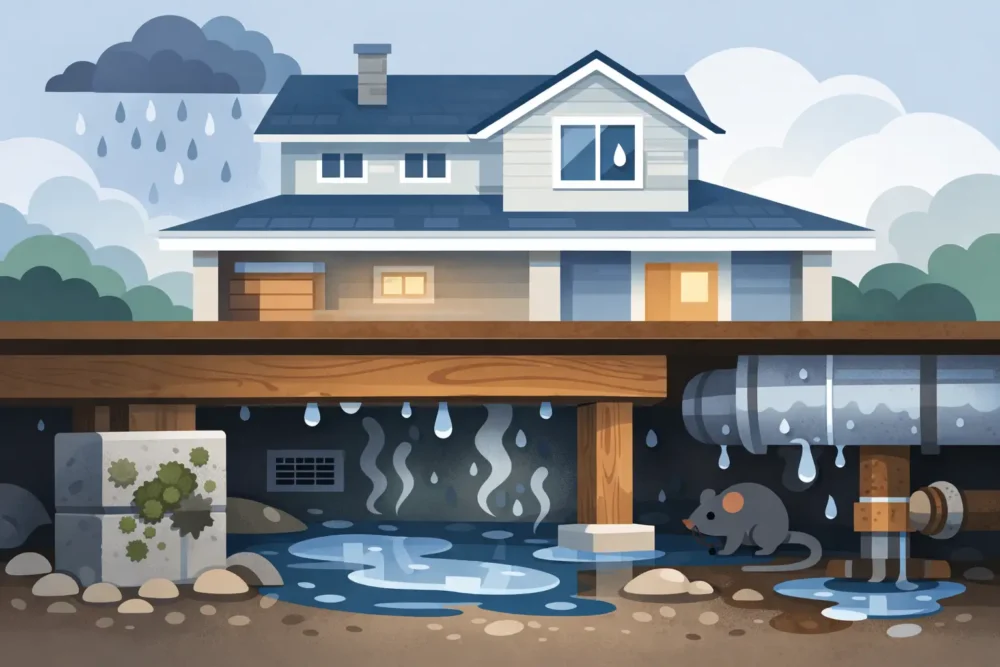
A damp crawl space can be easy to ignore because it sits below the rooms you use every day. But is crawl space moisture dangerous? It can be. Persistent moisture can affect the wood structure under your home, reduce insulation performance, invite pests, and contribute to musty air that moves upward into living spaces.
The good news is that moisture problems are usually fixable when the source is identified early. A professional inspection can separate a minor humidity issue from active water intrusion, mold growth, damaged insulation, or conditions that need prompt remediation.
Is Crawl Space Moisture Dangerous? It Depends on the Cause
A little temporary dampness after heavy rain is not automatically a crisis. Many crawl spaces experience seasonal humidity changes, especially in the St. Louis area, where hot, humid summers and wet weather can put extra pressure on a home’s foundation and drainage system.
The concern begins when moisture stays in the crawl space instead of drying out. Standing water, wet soil, condensation on ducts or pipes, damp insulation, visible mold, or a lingering earthy odor are signs that the space is not managing moisture properly. Over time, that environment can create problems that extend well beyond the crawl space itself.
The level of risk depends on how much moisture is present, how long it has been there, and what materials it is affecting. A plumbing leak requires a different fix than groundwater entering through foundation walls. High humidity may call for air sealing, vapor barrier improvements, insulation work, or controlled drying, while poor exterior drainage may need to be corrected before interior crawl space work can succeed.
What Persistent Moisture Can Do to a Home
It can damage wood framing
Floor joists, beams, subflooring, and sill plates are built to last, but they are not meant to remain damp. Long-term moisture can encourage wood rot and fungal growth, weakening structural components over time. In advanced cases, floors may begin to feel soft, uneven, or bouncy above the crawl space.
Catching this early matters. Surface discoloration or minor dampness may be manageable before serious repairs are needed. Waiting until wood is soft or visibly deteriorated can turn a moisture-control project into a larger structural concern.
It can affect indoor air quality
Homes naturally exchange air between lower and upper areas. This is often called the stack effect: air movement can pull air from a crawl space into the living areas above, particularly when the home is heated or cooled.
If the crawl space smells musty or contains mold growth, rodent waste, or damp organic material, that air may not stay below the floor. Family members may notice persistent odors, increased allergy-like symptoms, or rooms that feel humid even when the thermostat is set correctly. Moisture is not always the only cause of these issues, but it should not be overlooked.
It can make insulation less effective
Insulation works by slowing heat transfer, but moisture can compromise that job. Fiberglass insulation can sag when wet, leaving gaps beneath the floor. Damp or contaminated insulation can also hold odors and become less reliable as part of the home envelope.
When insulation under the floor is damaged, rooms above may feel cold in winter, warmer in summer, or drafty near exterior walls. Homeowners may also see higher heating and cooling bills because the HVAC system has to work harder to maintain a steady indoor temperature.
It can create favorable conditions for pests
Moisture and pests often go together. Rodents, insects, and other unwanted visitors are drawn to sheltered areas with accessible water and damp nesting material. Wet insulation and moisture-damaged wood can make a crawl space more appealing, while pest activity can add contamination that requires cleanup and sanitizing.
Moisture control is not a substitute for rodent proofing, but it is an essential part of making the space less inviting. A complete solution addresses entry points, damaged insulation, contamination, and the moisture source rather than treating each symptom separately.
Common Signs Your Crawl Space Needs Attention
You do not need to enter a crawl space every month to protect your home. Instead, pay attention to changes inside and outside the house. A musty odor, rising utility costs, cold floors, cupped hardwood, peeling paint, or unexplained indoor humidity can all point to a hidden moisture issue below.
Visible clues around the exterior matter too. Water that pools near the foundation after rain, clogged gutters, downspouts that discharge too close to the house, and low soil grading can send water toward the crawl space. Inside the space, warning signs include puddles, muddy soil, water stains, wet insulation, rust on metal components, mold-like growth, or condensation on ducts and pipes.
A single sign does not always confirm the cause. For example, condensation may result from humid outdoor air entering an unsealed crawl space, cold HVAC ducts, a plumbing issue, or a combination of conditions. That is why inspection-led recommendations are more reliable than choosing a product or repair based on one visible symptom.
The Right Way to Correct Crawl Space Moisture
The best repair begins with moisture control, not simply covering up the odor or replacing insulation. First, identify where the water or humidity is coming from. Exterior drainage, plumbing leaks, foundation seepage, open vents, missing vapor barriers, unsealed gaps, and humid air infiltration all need to be considered.
For many homes, a properly installed crawl space vapor barrier helps limit ground moisture from evaporating into the area. The material must be fitted carefully around piers, walls, and penetrations to perform as intended. A loose or torn barrier may offer limited benefit, especially when water is entering from another source.
Air sealing can also be valuable. Gaps around pipes, wiring, ductwork, and access doors allow outside air, pests, and humid air to enter. Sealing those pathways can support better moisture control and improve comfort in the rooms above. The right insulation approach depends on the crawl space design, local conditions, and whether existing insulation is dry and intact or needs removal.
In some cases, ventilation improvements are appropriate. In others, adding more outside air can make a humid crawl space worse during summer. This is one of the biggest reasons crawl space moisture should not be handled with a one-size-fits-all approach. The goal is a drier, cleaner, more controlled space, not simply more airflow.
If mold, rodent contamination, or damaged insulation is present, remediation should be part of the plan. Removing compromised materials without correcting the underlying moisture issue can lead to the same problem returning. Likewise, installing a vapor barrier over wet conditions without addressing leaks or drainage may trap the problem rather than solve it.
When to Call a Professional
Call for an inspection promptly if you see standing water, widespread mold-like growth, sagging insulation, soft floors, obvious wood deterioration, or signs of an active plumbing leak. These conditions can worsen quickly and may require coordination with drainage, plumbing, or structural professionals depending on the cause.
It is also worth scheduling an evaluation when your crawl space has a recurring odor, your floors feel unusually cold, or your energy bills remain high despite normal thermostat use. Hidden air leaks, wet insulation, and poor moisture control often work together, which means a complete assessment can reveal opportunities to improve comfort and efficiency at the same time.
Better Home Insulation provides crawl space inspections and customized recommendations for homeowners who want clear answers rather than guesswork. From vapor barrier installation and crawl space insulation to air sealing, insulation removal, rodent proofing, and sanitizing, the right scope of work should match the actual condition of your home.
A dry crawl space is not just a maintenance detail below your floor. It is part of protecting the comfort, air quality, energy performance, and long-term condition of the home above it. If something smells, feels, or looks off, addressing it now is usually easier than waiting for the problem to announce itself through damaged floors or higher utility bills.