
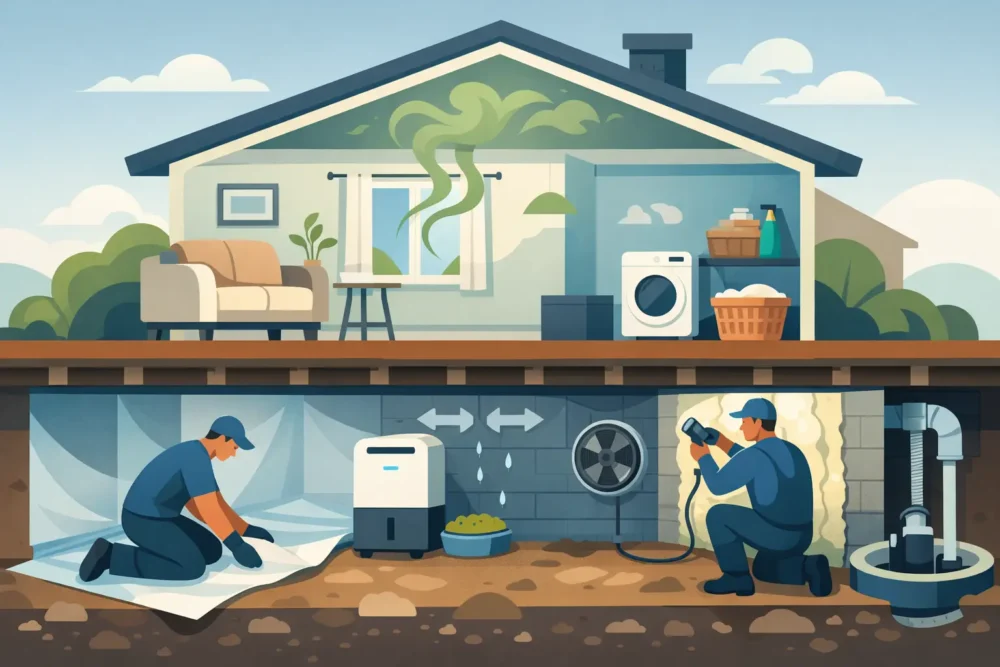
That stale, earthy odor near a floor vent or in a downstairs room rarely starts in the living space. It often rises from the crawl space, where damp soil, humid air, damaged insulation, or pest activity can create conditions for mold and mildew. The best crawl space fixes for musty smells do more than cover up the odor. They locate and correct the moisture source so your home can stay cleaner, healthier, and more comfortable.
A scented spray or room deodorizer may make the smell less noticeable for a few hours, but it cannot dry wet materials, remove contamination, or stop humid air from entering below your home. A lasting repair begins with a careful inspection of the crawl space and the systems around it.
Why Crawl Spaces Develop Musty Odors
Crawl spaces are naturally cooler than the outdoor air in warmer months. When humid air enters through open vents, gaps, or an unsealed access door, it can condense on cool framing, ductwork, and insulation. Even when standing water is not visible, consistently high humidity can support mildew growth and leave wood, fiberglass insulation, and debris smelling musty.
In the St. Louis area, seasonal rain, clay-heavy soil, and humid summers can make crawl space moisture especially persistent. Water may enter through foundation cracks, poor grading, overflowing gutters, plumbing leaks, or groundwater movement. Air leaks between the crawl space and the home can then carry those odors upward through gaps around pipes, wiring, ductwork, and flooring.
Rodents can add another layer to the problem. Nesting materials, droppings, and urine can contaminate insulation and create strong odors that do not disappear with basic cleaning. Before selecting a solution, it helps to identify whether the smell is caused by moisture, contamination, or both.
The Best Crawl Space Fixes for Musty Smells
The right combination depends on the condition of your crawl space. A home with minor humidity may need air sealing and a quality vapor barrier, while a space with wet insulation, mold growth, or drainage problems requires a more complete remediation plan.
Stop Water From Reaching the Foundation
No interior crawl space product can perform as intended if water continues to collect around the foundation. Start outside by checking that the soil slopes away from the house and that gutters, downspouts, and extensions direct rainwater well away from the foundation wall. Clogged gutters and short downspout discharge points are common causes of recurring crawl space dampness.
Visible puddles, wet soil after dry weather, or water stains on foundation walls may point to a larger drainage issue. Depending on the cause, the home may need improvements such as exterior drainage corrections, a sump system, or repairs to a plumbing leak. This work is not always the first thing homeowners expect when they notice an odor, but controlling bulk water is often the most important step.
Install a Proper Crawl Space Vapor Barrier
A vapor barrier is one of the most effective ways to limit ground moisture. Bare earth continually releases moisture vapor into the crawl space. In a closed or poorly ventilated space, that moisture raises humidity and can make insulation, framing, and ductwork damp over time.
A professionally installed ground vapor barrier covers the crawl space floor and is carefully secured and sealed at seams and edges. The quality of installation matters as much as the material itself. Thin plastic that is loosely laid over the soil can tear, shift, or leave exposed areas that continue releasing moisture.
For some homes, extending and sealing the barrier along foundation walls is part of a full crawl space encapsulation approach. Encapsulation can provide stronger moisture control, but it is not automatically the best choice for every house. The crawl space must first be dry, drainage issues must be addressed, and the space needs an appropriate plan for humidity management.
Remove Wet, Moldy, or Contaminated Insulation
Insulation that has absorbed moisture may lose its ability to resist heat flow. It can also trap odors from mildew, rodents, or old debris. If insulation is sagging between floor joists, darkened, compressed, or contaminated, leaving it in place can keep the odor problem active even after a vapor barrier is installed.
Professional crawl space insulation removal allows the affected material to be handled safely and the framing below your home to be evaluated. This is also the right time to look for hidden air leaks, damaged ductwork, and pest entry points. Eligible insulation materials may be recycled when possible, while contaminated materials should be properly disposed of.
Once the crawl space is clean and dry, new insulation can help improve floor comfort and reduce heating and cooling loss. The best insulation type and R-value depend on the structure of the crawl space, local conditions, and whether the space will remain vented or be brought into the home’s conditioned envelope.
Air Seal Gaps Between the Crawl Space and Home
Musty air reaches your rooms through small openings that are easy to overlook. Gaps around plumbing penetrations, electrical wiring, ducts, and the rim joist can pull crawl space air into the home, especially when exhaust fans, furnaces, or stack effect pressure changes are operating.
Air sealing these pathways helps limit odor transfer while improving energy efficiency. It can also make floors feel less drafty in winter and reduce the workload on your heating and cooling system. Air sealing should be paired with moisture control, not used as a substitute for it. Sealing a home tightly while leaving wet materials below can trap the underlying problem where it started.
Control Humidity With the Right Ventilation Strategy
More ventilation is not always the answer. Traditional crawl space vents were intended to move outdoor air through the space, but in hot, humid weather they can introduce more moisture than they remove. That is why a vented crawl space may still smell damp even when its vents are open.
The best strategy depends on your home’s design and the amount of moisture present. Some crawl spaces benefit from targeted ventilation improvements. Others perform better when outside air is limited, the ground is sealed, air leaks are addressed, and humidity is controlled with a properly sized dehumidifier or conditioned air strategy.
A humidity reading provides useful direction. Relative humidity that remains above about 60% creates favorable conditions for mold and mildew. A professional inspection can determine whether the concern is seasonal humidity, an ongoing water intrusion issue, or a combination of both.
Address Mold, Debris, and Pest Contamination
If mold is visible on wood or insulation, the area should be assessed before cleaning begins. Surface treatment alone may not solve the problem if moisture remains high or contaminated insulation is still present. The goal is to remove the conditions that allowed growth, clean or remediate affected areas as appropriate, and prevent recurrence.
Pest activity should receive the same practical attention. Rodent proofing can close likely entry points, while removal of contaminated insulation and sanitizing services can help eliminate lingering odor sources. A clean crawl space is not just more pleasant to live above. It is easier to inspect and less likely to hide a future plumbing, moisture, or pest problem.
When a Musty Smell Calls for a Professional Inspection
A mild odor after several days of heavy rain may indicate a manageable humidity concern. But a smell that returns regularly, grows stronger when the HVAC system runs, or is paired with soft floors, visible staining, condensation, pest signs, or higher utility bills deserves a closer look.
A crawl space inspection should consider the full picture: ground moisture, drainage, framing condition, insulation performance, air leakage, duct condition, ventilation, and signs of rodents or mold. Treating only one visible symptom can waste money if the actual moisture pathway remains open.
Better Home Insulation provides inspection-led recommendations for homeowners who want a clear explanation of what is happening below the house and which repairs will deliver meaningful results. Licensed and insured technicians can help coordinate the practical combination of vapor barrier installation, insulation removal or replacement, air sealing, ventilation improvements, rodent proofing, and sanitizing when needed.
If your home smells musty, do not wait for the odor to become part of everyday life. A dry, sealed, properly insulated crawl space can help protect your indoor air, improve comfort underfoot, and support lower heating and cooling costs for years to come.