
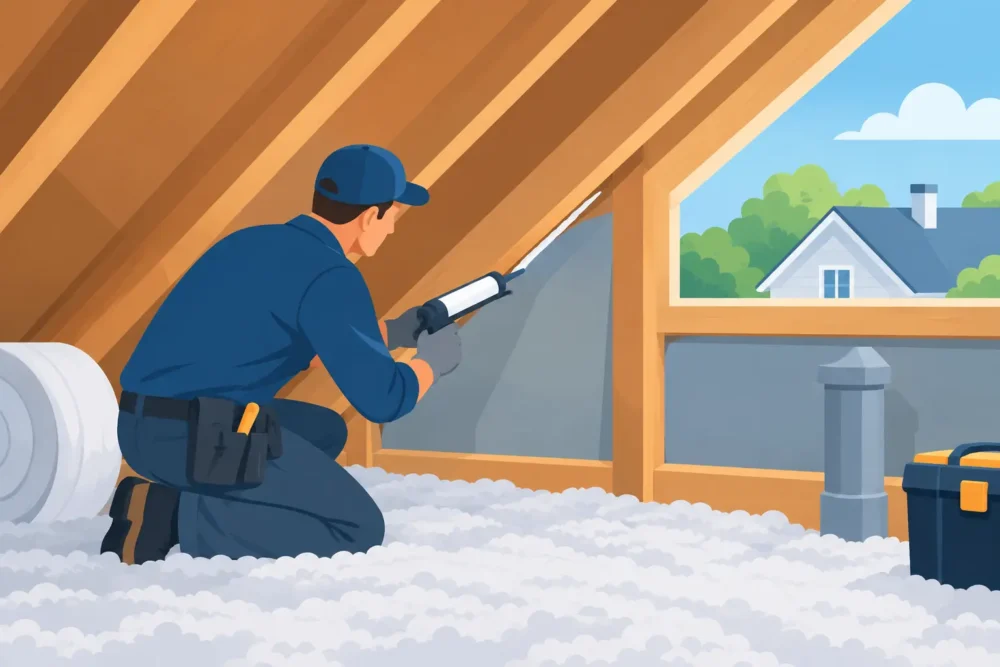
A cold upstairs bedroom, dusty rooms, and an air conditioner that seems to run nonstop can all point to the same hidden issue: air leakage at the attic floor. Chesterfield attic air sealing addresses the gaps that allow conditioned air to escape into the attic and outdoor air to enter the home. For many homeowners, sealing these leaks is one of the most practical ways to improve comfort before adding or replacing insulation.
Insulation slows heat transfer, but it cannot reliably stop moving air. If warm indoor air is finding openings around wiring, plumbing, light fixtures, framing, or ductwork, it can pass through or around insulation. That wasted heating and cooling can show up in utility bills, uneven temperatures, and rooms that never feel quite comfortable.
Why attic air leaks create bigger problems
Your attic sits directly above most of your living space, making it a major part of the home envelope. Small openings between the house and attic can add up quickly. In winter, heated indoor air rises and escapes through those openings. In summer, hot attic air and outdoor humidity can influence the air below, making your cooling system work harder.
Air leakage also affects more than energy use. Warm, humid indoor air entering a cold attic during winter can condense on roof sheathing, pipes, or other surfaces. Over time, excess moisture can contribute to staining, wood deterioration, or mold concerns. The risk and severity depend on the home’s ventilation, insulation levels, indoor humidity, roof design, and the size of the leaks, but ignoring obvious gaps is rarely a good long-term plan.
In Chesterfield, homeowners can experience humid summers, cold winter stretches, and quick weather swings in between. Those changes make weak points in an attic more noticeable. A home may feel drafty during January, then overly warm upstairs during July, even when the HVAC system is functioning properly.
Where professional attic air sealing focuses
The most significant attic leaks are often concealed beneath loose-fill insulation or hidden around structural transitions. A professional inspection looks beyond the insulation surface to identify the actual pathways air is using.
Common areas that may need attention include top plates along interior and exterior walls, openings around electrical wiring and plumbing stacks, recessed lighting, exhaust fan housings, attic access hatches, open wall cavities, and gaps around ducts. The chase surrounding a fireplace or flue can also be a major leak point, although it requires the right fire-rated materials and clearances. It should never be sealed casually with standard foam.
Attic access is frequently overlooked. A pull-down stair, knee-wall door, or attic hatch can act like a large hole in the ceiling if it is uninsulated, warped, or missing a reliable weather seal. Improving that access point can make a noticeable difference, especially in homes where the opening is located near a hallway or upstairs living area.
Duct penetrations deserve close attention as well. The area where ducts pass through the ceiling plane may allow air movement, while damaged or disconnected ducts can lose heated or cooled air into the attic. Air sealing the attic floor is not a substitute for repairing leaky ductwork, but the two measures often work well together.
The right materials depend on the opening
Not every gap should receive the same product. Smaller stationary cracks may be sealed with professional-grade foam or caulk, while larger openings may require rigid blocking and sealant. Areas near heat-producing fixtures, chimneys, and flues require approved fire-resistant approaches and proper safety clearances.
This is one reason attic air sealing is best treated as detail-oriented work rather than a quick layer of foam. The goal is to reduce unintended airflow without blocking required ventilation, interfering with combustion safety, or creating a moisture problem elsewhere in the assembly.
Air sealing and insulation work best as a system
Homeowners sometimes ask whether they need air sealing or new insulation. In many cases, the answer is both, completed in the right order. Air sealing should generally happen before insulation is installed or topped off. Otherwise, the insulation can conceal gaps and make thorough sealing more difficult.
If existing attic insulation is dry, relatively clean, and performing adequately, it may be possible to carefully pull it back, seal accessible leakage points, and reinstall or supplement it. If insulation is compacted, contaminated by rodents, wet, mold-affected, or far below recommended levels, removal and replacement may make more sense.
A full-service inspection helps clarify the best path. Better Home Insulation evaluates the condition of the attic as a whole, including insulation coverage, visible air leaks, moisture indicators, ventilation concerns, rodent activity, and accessible duct or framing issues. That makes it easier to recommend only the work that supports the home’s actual needs.
Do not confuse ventilation with air leakage
Attics need ventilation when the roof assembly is designed for it. Soffit vents, ridge vents, gable vents, and other approved venting components help manage attic heat and moisture. The ceiling plane below the attic, however, should be as air-tight as practical.
Those are two separate jobs. Ventilation moves air through the attic where appropriate. Air sealing prevents conditioned air from the house from leaking into that attic. Blocking soffit vents with insulation or sealing intentional roof ventilation is not a solution. A qualified contractor can help distinguish an intended vent opening from an energy-wasting bypass.
Signs your Chesterfield home may need attic air sealing
No single symptom proves that attic leakage is the only problem, but a pattern of issues is worth investigating. You may benefit from an attic inspection if you notice cold or hot spots near ceilings, persistent drafts, rising heating and cooling costs, unusually dusty rooms, or an upstairs area that feels harder to condition than the first floor.
Ice buildup along roof edges in winter, moisture staining in the attic, or insulation that looks dark and dirty in specific areas can also be clues. Dirty insulation does not always mean contamination, but it can indicate that air has been filtering through the material and carrying dust with it.
Rodent activity is another reason to look closely. Pests can disturb insulation, create entry holes, contaminate materials, and expose gaps that affect comfort and indoor air quality. In those cases, the right scope may include rodent proofing, insulation removal and disposal, sanitizing, air sealing, and new insulation rather than treating only one visible symptom.
What to expect from a professional inspection
A useful attic assessment starts with questions about your comfort concerns, utility costs, home age, and any known roof, moisture, or pest history. The attic is then inspected for insulation depth and condition, accessible penetrations, ventilation layout, evidence of moisture, and areas where outside air or indoor air may be moving where it should not.
Thermal imaging can be helpful in certain conditions because it may reveal temperature differences connected to missing insulation or leakage pathways. It is a diagnostic tool, not a stand-alone answer. Findings should be considered alongside a visual inspection and the home’s construction details.
After the inspection, a clear recommendation should explain what needs to be sealed, whether insulation should be removed or added, and whether related repairs deserve attention. The best solution is not always the biggest project. A newer home with one poorly sealed attic hatch may need a focused repair, while an older home with damaged insulation, open chases, and pest contamination may need a more complete remediation plan.
Why professional workmanship matters
Attics contain hazards and details that are easy to miss, including exposed wiring, low-clearance spaces, heat sources, fragile drywall ceilings, and hidden contamination. Professional technicians know how to work around these conditions while selecting materials appropriate for the location.
Quality also matters after the work is complete. Sealed gaps should be addressed without crushing insulation, blocking ventilation, or leaving access points difficult to use. If new insulation is recommended, it should be installed evenly and to the planned depth so it can do its job effectively.
Better Home Insulation provides free inspections and estimates for homeowners who want a clear view of what is happening above their ceilings. Licensed and insured service, customized recommendations, and a satisfaction guarantee help take the guesswork out of improving a home’s comfort and efficiency.
A well-sealed attic will not solve every comfort issue on its own. Windows, duct leakage, HVAC sizing, crawl space conditions, and wall insulation can all affect how a home feels. But when attic bypasses are part of the problem, addressing them can be a smart first step toward a quieter, cleaner, more consistently comfortable home.