
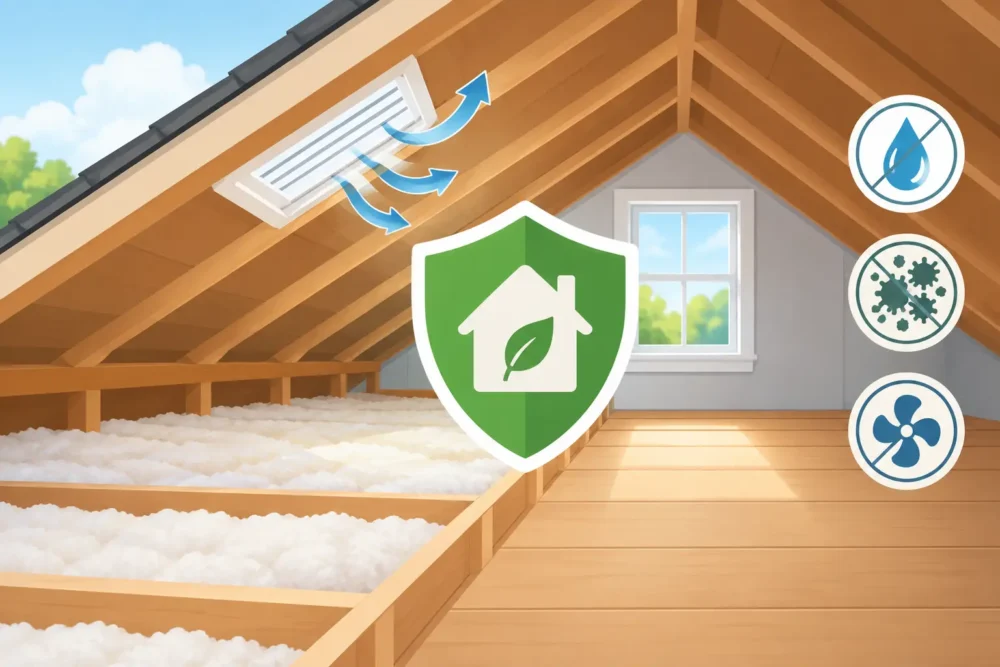
A faint musty odor upstairs, dark spotting on roof sheathing, or damp insulation can point to a problem that started long before mold became visible. Effective attic mold prevention is less about spraying a surface and more about controlling the moisture that reached the attic in the first place. For homeowners, that means looking at the roof, indoor air leaks, insulation, ventilation, and even bathroom exhaust ducts as one connected system.
Mold needs moisture, a surface to grow on, and time. An attic provides plenty of wood and dust, so the practical goal is to keep it dry. When the underlying moisture source is corrected early, homeowners can protect their framing, preserve insulation performance, and avoid a more involved cleanup later.
Why Attic Mold Forms
Attic mold is commonly blamed on poor ventilation alone. Ventilation matters, but it is often only part of the story. In many homes, warm, humid indoor air leaks through gaps in the ceiling plane and enters a cold attic during winter. When that air contacts cold roof decking or framing, condensation can form. Repeated wetting creates the conditions mold needs.
Common leakage paths include openings around recessed lights, plumbing stacks, electrical wiring, attic hatches, chimney chases, top plates, and gaps around ductwork. A bathroom fan that releases moist air into the attic instead of outdoors can add a surprising amount of moisture. Dryer vents, disconnected ducts, and unsealed whole-house fan openings can do the same.
Roof leaks are another clear cause, especially after wind-driven rain, damaged shingles, failed flashing, or ice damming. Unlike condensation, a roof leak may create staining or mold in a concentrated area. The distinction matters because the right repair depends on the source. Adding more insulation will not repair a roof leak, and adding roof vents will not stop humid air from escaping through dozens of ceiling gaps.
In the St. Louis area, the mix of humid summers and cold winter stretches can make attic moisture issues more noticeable. Homes with older insulation, unfinished air-sealing details, or recent remodeling are especially worth checking.
Attic Mold Prevention Starts With Moisture Control
The most reliable approach follows a simple order: stop bulk water, block indoor air leakage, manage vapor and humidity where appropriate, then confirm the attic can ventilate as designed. Each step supports the next.
Repair roof and flashing problems first
Look for missing shingles, damaged flashing around chimneys and vents, deteriorated pipe boots, clogged gutters, and signs of water intrusion near valleys or roof penetrations. If roof decking is wet after rainfall, a qualified roofing professional should identify and repair the leak before any mold treatment or insulation work begins.
Do not assume every dark mark is active mold or a current leak. Some roof sheathing has old staining, while some mold growth is light-colored or hidden behind insulation. A professional inspection can help distinguish between past conditions and an active moisture problem.
Air-seal the attic floor
Air sealing is one of the most valuable forms of attic mold prevention because it addresses the warm, moisture-laden air that rises from living spaces. The target is the attic floor, also called the ceiling plane, not simply the attic itself.
A thorough job seals penetrations and larger bypasses before insulation is added or restored. Particular attention should go to attic access doors, pull-down stairs, recessed fixtures not rated for insulation contact, plumbing and electrical openings, and open wall cavities that communicate directly with the attic. The attic hatch should also be weatherstripped and insulated so it does not become a weak spot in an otherwise well-sealed ceiling.
There is a trade-off to understand: air sealing should reduce unintended leakage, not eliminate needed mechanical ventilation inside the home. Homes still need properly designed fresh-air strategies, kitchen exhaust, and bathroom exhaust. The goal is controlled airflow, not trapping humidity indoors.
Send bath and dryer exhaust outdoors
Bathroom fans should terminate outside through a properly installed roof or wall vent, never into an attic, soffit cavity, or crawl space. The duct should be insulated when it runs through an unconditioned attic, sloped toward the exterior when practical, and connected tightly at both ends. This helps prevent condensation from collecting inside the duct and dripping back into the attic.
Dryer exhaust also needs a dedicated exterior termination. Flexible, crushed, or excessively long dryer ducts restrict airflow and may contribute to moisture and lint buildup. Because dryer vents involve both moisture and fire safety, they deserve prompt attention when damaged or disconnected.
Use insulation to keep surfaces warmer
Insulation does not remove moisture by itself, but it helps maintain a warmer, more stable ceiling surface and reduces heat loss from the living area. Proper attic insulation also makes a home more comfortable and can reduce heating and cooling costs.
The best insulation level depends on the existing assembly, local climate, attic access, and the condition of materials already in place. Insulation that is wet, compressed, contaminated by rodents, or heavily affected by mold may need removal rather than a new layer on top. Covering compromised insulation can conceal the source of the problem and leave odors, contamination, and poor performance in place.
For best results, air sealing comes before insulation installation. Otherwise, loose-fill or batt insulation can hide the gaps without stopping air movement through them.
Get Attic Ventilation Right
A vented attic typically relies on intake ventilation near the soffits and exhaust ventilation near the roof ridge or high on the roof. This pathway allows outdoor air to move through the attic and helps limit heat and moisture buildup. Blocked soffit vents, missing baffles, or poorly balanced intake and exhaust can reduce effectiveness.
However, more ventilation is not always better. Adding powered attic fans without addressing ceiling air leaks can pull even more conditioned, humid air from the house into the attic. Similarly, adding extra roof vents without enough intake may not deliver the result a homeowner expects. Ventilation should be evaluated as a system, alongside air sealing and insulation.
If an attic is designed as an unvented conditioned space, the approach is different. Spray foam or other roofline insulation systems must be designed and installed correctly to manage moisture at the roof deck. This is a case where a one-size-fits-all recommendation can create expensive consequences.
Watch for Early Warning Signs
A quick attic check twice a year, plus after a major roof event, can catch small issues before they spread. Use a flashlight and avoid stepping between ceiling joists. Look for water staining, damp wood, rusted nail tips, frosty roof sheathing in winter, compressed insulation, disconnected ducts, animal activity, or a persistent earthy odor.
Pay attention to rooms below the attic as well. Peeling ceiling paint, cold drafts around light fixtures, unexplained high humidity, and uneven temperatures can point to attic bypasses. A thermal imaging assessment can help locate hidden air leaks and insulation gaps that are not obvious during a visual inspection.
If mold is visible over a large area, insulation is contaminated, or the attic has recurring condensation, avoid treating it as a cosmetic cleaning project. Scrubbing surfaces without correcting moisture can spread spores and leave the actual cause untouched. A complete assessment should determine whether roof repair, air sealing, insulation removal, ventilation correction, sanitizing, or rodent proofing is needed.
When a Professional Attic Inspection Makes Sense
Professional help is especially worthwhile when you do not know whether the moisture comes from a roof leak, condensation, pests, or an exhaust duct. An experienced home-performance contractor can inspect the attic as part of the home envelope, identify the failure points, and recommend work in the right sequence.
Better Home Insulation provides inspections and customized attic solutions for homeowners who need more than another layer of insulation. The right plan may include air sealing, insulation removal and replacement, ventilation improvements, radiant barrier work, rodent proofing, and sanitizing based on the condition of the space. Licensed and insured technicians can explain what they find clearly, provide a transparent estimate, and focus on durable improvements to comfort and indoor conditions.
A dry attic is not just a cleaner attic. It protects the structure above your head, helps insulation do its job, and gives your home a better chance of staying comfortable through every season. If something looks or smells off, addressing the moisture source now is usually the simplest and most cost-effective next step.