
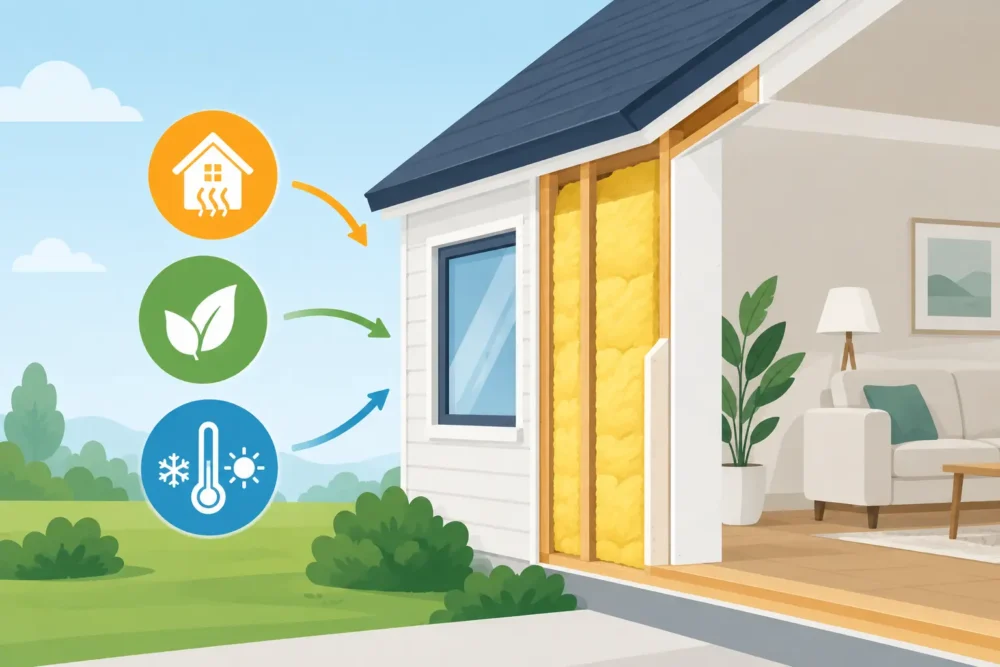
A cold bedroom over the garage, a living room that never seems to hold its temperature, or a wall that feels chilly to the touch in winter can point to the same issue: underperforming wall insulation. A wall insulation upgrade can make a meaningful difference in comfort and heating and cooling costs, but the right solution depends on what is actually inside the walls and what is causing the problem.
For many homeowners, adding insulation sounds simple. In an existing home, however, wall cavities may contain thin, settled, damaged, wet, or contaminated material. Air leaks around windows, wiring, plumbing, and exterior penetrations can also make a well-insulated wall perform poorly. A careful inspection helps separate the visible symptom from the real source of energy loss.
Signs Your Walls May Need More Insulation
Insulation problems are not always obvious from inside the house. The most common clue is uneven comfort. If certain rooms stay colder in winter or warmer in summer than the rest of the home, the walls may be losing or gaining heat too quickly.
High utility bills are another reason to look closer, especially when heating and cooling equipment seems to run constantly without delivering consistent comfort. Drafts near exterior walls, condensation on walls or windows, and noticeable outdoor noise can also suggest that wall assemblies need attention.
Homes built before modern energy standards are frequent candidates for an insulation evaluation. Some older homes have little or no insulation in exterior walls. Others have existing insulation that has settled over time, leaving open space at the top of the wall cavity. Renovated homes can have gaps where additions connect to original construction, while homes with past leaks or rodent activity may have insulation that is no longer clean, dry, or effective.
Thermal imaging can be especially useful here. It can help identify temperature differences across a wall surface that may indicate missing insulation, voids, or air leakage. It does not replace a physical assessment, but it gives homeowners and technicians a clearer picture of where further investigation is worthwhile.
What a Wall Insulation Upgrade Can Improve
The immediate benefit is usually more stable indoor temperature. Properly insulated exterior walls slow the movement of heat, so conditioned air stays inside longer and outdoor temperatures have less influence on individual rooms. This can reduce the hot-and-cold swings that make a home uncomfortable even when the thermostat is set correctly.
A wall insulation upgrade may also lower the workload on your furnace and air conditioner. Savings vary based on the home’s age, wall construction, existing insulation levels, attic conditions, duct location, and household energy use. No responsible contractor should promise a single savings number without inspecting the home. Still, reducing heat loss through poorly insulated walls can be a practical part of an overall energy-efficiency plan.
There are other benefits that matter day to day. Insulation can reduce sound transfer from traffic, neighbors, and outdoor activity. It can also make wall surfaces warmer in winter, which may reduce the chance of indoor condensation under the right conditions. If moisture is already entering a wall, though, insulation alone is not the remedy. The moisture source must be corrected first.
The Best Insulation Method Depends on Your Walls
Existing walls are not upgraded the same way as open walls during a remodel. The construction of the home, the condition of the cavities, and access from indoors or outdoors all affect the recommendation.
Dense-Pack Insulation for Enclosed Cavities
Dense-pack cellulose is often used to improve insulation in enclosed wall cavities. Installed at the proper density, it can fill many gaps around wiring and other obstructions more effectively than loosely adding material. Small access holes are typically made, filled, and repaired as part of the installation process.
This approach can work well when the wall cavities are dry and structurally sound. It is not the right first move if an inspection reveals an active roof leak, plumbing leak, deteriorated siding, or evidence of significant moisture damage. Insulation should never be used to cover up a building problem.
Spray Foam for Targeted Air Sealing
Spray foam insulation provides insulation and air sealing in one application. It can be valuable in certain wall areas, rim joists, additions, and locations with irregular framing or difficult-to-seal gaps. Different foam products have different properties, including how they manage moisture, so material selection should match the assembly.
Spray foam is not automatically the best choice for every home or every wall. It can cost more than other insulation options, and installation quality matters greatly. It is often most effective when used strategically alongside broader air-sealing and insulation work.
Insulation During Remodeling
If you are replacing drywall, renovating a room, or opening exterior walls for other repairs, that is an ideal time to improve wall insulation. Open cavities provide direct access, making it easier to remove damaged material, air seal gaps, address wiring or plumbing penetrations, and install the appropriate insulation without working through small access holes.
A renovation is also the time to consider whether the exterior wall needs better moisture management. Proper flashing, water-resistive barriers, and ventilation details are just as important as R-value. A high R-value will not protect a wall that is routinely exposed to water intrusion.
R-Value Matters, but So Does Air Sealing
R-value measures an insulation material’s resistance to heat flow. Higher R-values generally provide more insulating power, but the number alone does not tell the whole story. A wall with good insulation but multiple air leaks can still feel drafty and waste energy.
Air sealing addresses uncontrolled air movement through cracks, gaps, and openings. Around wall systems, common trouble spots include penetrations for pipes, electrical outlets, hose bibs, vents, window and door framing, and the connection between the wall and foundation or roof structure. Some of these areas are accessible from the attic, crawl space, basement, or exterior, rather than through the wall itself.
That is why a whole-home perspective is useful. Attic air leaks can pull conditioned air upward and draw outdoor air into lower levels of the home. Crawl space moisture or missing insulation can make floors cold and affect indoor conditions. Upgrading walls may help, but combining the work with attic sealing, crawl space improvements, or ventilation corrections may deliver better overall results.
Do Not Insulate Over Moisture, Mold, or Rodent Damage
A musty odor, staining, peeling paint, soft drywall, or pest droppings calls for investigation before insulation is added. Wet insulation loses performance, and moisture trapped inside a wall can lead to more serious damage over time. Rodents can compress insulation, create contamination, and use openings in the building envelope to enter the home.
The correct sequence is to identify and correct the cause, remove damaged or contaminated materials when necessary, sanitize affected areas, seal entry points, and then restore insulation. Taking shortcuts can leave the homeowner with a cleaner-looking wall but the same underlying problem.
This is particularly relevant in St. Louis-area homes, where humid summers, cold winter stretches, and aging housing stock can expose weak points in the home envelope. A recommendation should account for the home’s local conditions, not just a generic insulation target.
What to Expect From a Professional Assessment
A useful insulation assessment begins with your experience in the home. Which rooms are uncomfortable? When do you notice drafts? Have utility costs changed? Is there a history of roof, plumbing, pest, or moisture issues? These details help guide the inspection.
A technician may examine accessible attic, crawl space, basement, and exterior conditions; look for air leakage pathways; assess existing insulation; and use diagnostic tools when appropriate. The goal is not to sell the largest possible project. It is to identify the work that addresses the comfort issue while protecting the home from moisture and air-quality concerns.
Ask for a clear explanation of the proposed insulation material, access method, air-sealing work, expected repairs, and any conditions that should be corrected first. You should also understand whether the project affects a single problem room or is part of a larger home-performance improvement.
Better Home Insulation provides free inspections and estimates, with licensed and insured technicians who can evaluate insulation, air leakage, moisture exposure, and rodent-related damage as connected issues rather than isolated tasks.
Start With the Problem Room, Then Look Beyond It
A wall insulation upgrade is often a smart investment when a home has empty, settled, damaged, or inadequate wall insulation. Yet the best results come from diagnosing why the room is uncomfortable before choosing a material or method. The wall may be the main issue, or it may be one piece of a larger pattern involving attic leaks, crawl space conditions, windows, ventilation, or moisture.
If one room never feels right, trust that signal. A professional inspection can turn a vague comfort complaint into a practical plan for a quieter, healthier, more efficient home.