
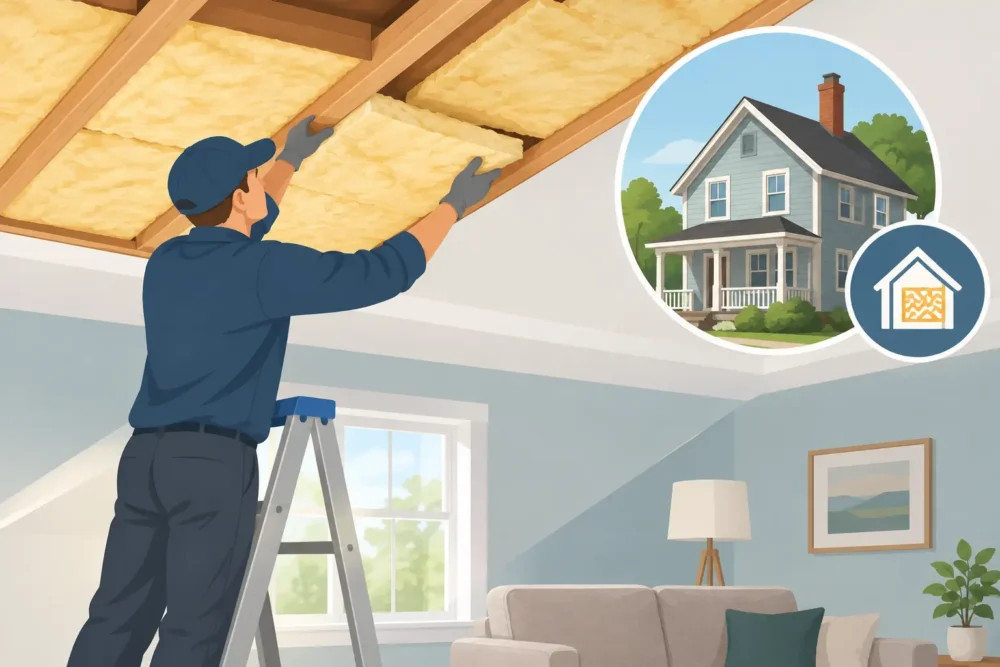
A cold upstairs bedroom, a stuffy second floor in summer, and utility bills that seem out of step with the weather are common signs that ceiling insulation for older homes needs attention. In many older houses, the insulation itself is only part of the problem. Air leaks, moisture, damaged ductwork, pests, and inadequate ventilation can all reduce comfort and make new insulation less effective.
The right solution starts with understanding what is above the ceiling, not simply adding more material. A professional inspection can identify where conditioned air is escaping, whether existing insulation is still usable, and what work should happen before new insulation is installed.
Why Older Homes Lose Heat Through the Ceiling
Heat naturally moves toward colder areas. During a Missouri winter, warm indoor air rises and often escapes through openings at the top of the home. In summer, a hot attic can transfer heat downward into living spaces, making upper rooms harder to cool.
Older homes are especially prone to this problem because many were built before current energy codes and modern air-sealing practices. Some have thin insulation, while others have insulation that has settled, become compressed, or been disturbed by storage, remodeling, rodents, or previous electrical work.
Even a ceiling that appears insulated can have major weak points. Recessed lights, attic hatches, plumbing stacks, wiring openings, chimney chases, and gaps around framing can allow large amounts of air to move between the house and attic. Insulation slows heat transfer, but it does not stop air movement on its own.
That distinction matters. Adding insulation over active air leaks can improve performance, but it may also leave comfort problems and energy waste unresolved.
Start With an Inspection, Not a Guess
Every older home has its own construction details. A 1920s home with plaster ceilings may need a different approach than a 1970s ranch with accessible attic space. Before recommending a material or R-value, a qualified insulation contractor should inspect the attic, ceiling plane, ventilation, and condition of existing materials.
The inspection should look for uneven or missing insulation, signs of water staining, mold or mildew concerns, rodent droppings, nesting, compressed areas, and exposed wiring. It should also identify whether the attic has adequate intake and exhaust ventilation. Ventilation does not replace insulation, but it helps manage attic heat and moisture when designed correctly.
Thermal imaging can be useful when conditions allow. It may reveal cold or hot areas that point to insulation gaps, hidden air leaks, or framing-related heat loss. This information helps homeowners avoid spending money on work that treats the symptom but misses the cause.
When Existing Insulation Can Stay
Old insulation does not automatically need to be removed. If it is dry, clean, evenly distributed, and free of pest contamination, it may be possible to air seal the attic floor and add new insulation over it. This is often an efficient way to improve thermal performance.
However, insulation that is wet, moldy, heavily contaminated, smoke-damaged, or filled with rodent waste should be removed and disposed of properly. Covering contaminated insulation can leave behind odors, allergens, and sanitation concerns. It also makes it harder to see or correct damage to the ceiling plane below.
Air Sealing Makes Ceiling Insulation Work Better
Air sealing is frequently the most valuable step in an older-home insulation project. Small gaps can add up to a significant pathway for heated or cooled air to escape. They can also pull humid air into the attic, where it may condense on cold surfaces during winter.
Common attic air-sealing locations include openings around plumbing and electrical penetrations, top plates, open wall cavities, attic access panels, and gaps around exhaust fan housings. Certain areas, especially around chimneys or heat-producing fixtures, require approved fire-safe clearances and materials. This is not a place for improvised fixes.
A properly sealed attic floor helps keep indoor air in the home where it belongs. It can reduce drafts, limit dust movement, improve room-to-room temperature consistency, and make the insulation layer more effective. For families dealing with allergies or noticeable attic odors, that improvement can be just as meaningful as lower heating and cooling costs.
Choosing the Right Insulation for an Older Ceiling
The best insulation material depends on the attic layout, access, existing conditions, and project goals. The objective is not simply to achieve the highest possible R-value. The insulation must be installed evenly, without gaps or compression, while preserving needed ventilation pathways and safe clearances.
Blown-in cellulose is a practical option for many older attics because it can cover irregular spaces and fill around obstacles. It is often used to build a consistent layer over existing insulation after air sealing is complete. Blown-in fiberglass can also provide effective coverage and may be appropriate depending on the home and homeowner preferences.
Batt insulation can work well in accessible areas with regular framing, but installation quality is critical. Batts that are cut poorly, tucked around obstructions, or compressed lose performance. Spray foam can provide air sealing and insulation in certain assemblies, but it is not the right answer for every attic. Roof design, moisture conditions, ventilation strategy, and future access all need careful consideration.
For most homes in the St. Louis area, attic insulation levels should be evaluated against current recommendations for the local climate zone. A professional can explain the target R-value in plain terms and show how the recommended depth translates to your particular attic.
Watch for Moisture, Ventilation, and Pest Problems
Older homes often have hidden conditions that can undermine a new insulation project. A roof leak, bathroom fan venting into the attic, unsealed ductwork, or poor attic ventilation can introduce moisture. Over time, moisture can damage wood, reduce insulation performance, and create conditions that support mold growth.
Rodents are another frequent concern. Mice, squirrels, and other pests can tunnel through insulation, leave waste behind, and damage wiring. If pest activity is active, it should be addressed before installing fresh insulation. Rodent proofing and sanitation work help protect the investment and support a cleaner attic environment.
This is why a complete approach is often more cost-effective than hiring separate providers to handle each issue. When removal, air sealing, insulation, ventilation improvements, pest exclusion, and sanitizing are coordinated, the finished system is more likely to perform as intended.
Signs Your Home May Need Ceiling Insulation Work
A few comfort issues do not always mean insulation is the sole problem, but they are worth investigating. Pay attention if your upstairs rooms are consistently hotter or colder than the rest of the house, you feel drafts near ceiling fixtures or attic access points, or your HVAC system runs for long periods without delivering consistent comfort.
Other warning signs include unusually high seasonal energy bills, visible attic moisture, ice dams in colder climates, musty odors, or insulation that looks flattened, sparse, or disturbed. If you have recently had a roof leak, pest issue, or major renovation, an attic inspection is especially worthwhile.
What Professional Installation Should Include
A quality ceiling insulation project should not feel like a mystery. You should receive a clear explanation of the attic’s current condition, the work recommended, and why each step matters. The estimate should distinguish between removal, air sealing, insulation installation, ventilation corrections, and any sanitation or pest-related work.
During installation, technicians should protect access areas, handle old materials safely, and avoid blocking soffit vents or burying equipment that requires service access. Afterward, the attic should have consistent insulation coverage and a plan for maintaining safe access to mechanical components.
Better Home Insulation provides inspection-led recommendations for homeowners who want to address the full source of attic and ceiling energy loss. Licensed and insured technicians can assess insulation condition alongside air leakage, moisture exposure, ventilation, and rodent damage, so the work is tailored to the house rather than based on a one-size-fits-all quote.
A more comfortable home often begins above the ceiling. If your older home has uneven temperatures, rising utility costs, or an attic that has not been evaluated in years, a professional inspection can provide a clear next step and help protect the comfort of every room below.