
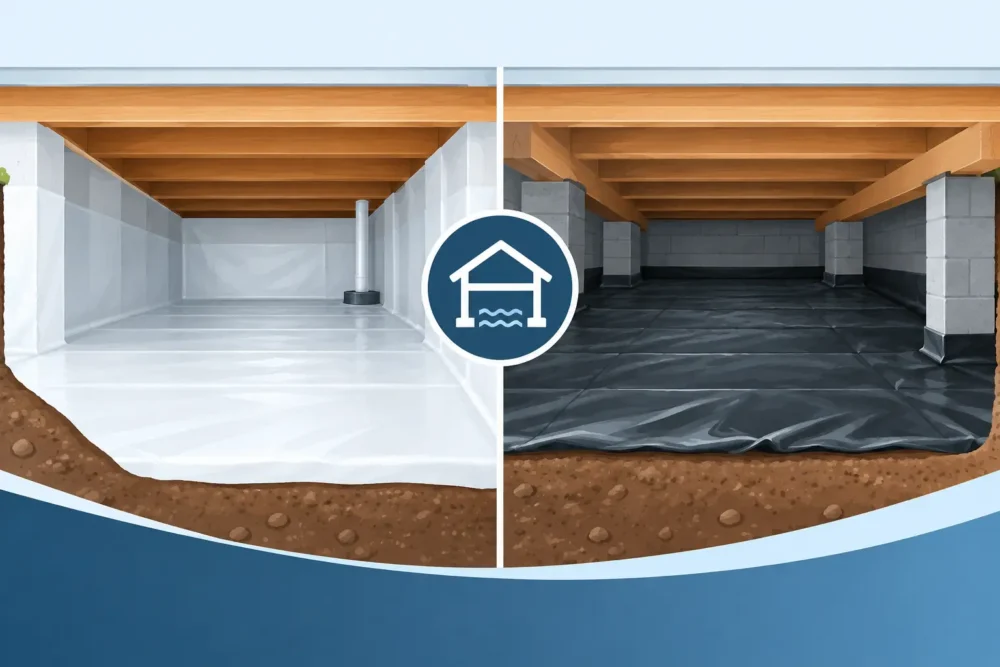
A damp, musty crawl space rarely stays a crawl space problem. Moisture can work its way into floor framing, insulation, and the air your family breathes upstairs. When homeowners compare encapsulation versus vapor barrier, the right answer depends on what is causing the moisture, how the crawl space is built, and how much protection the home needs.
A basic ground cover may be enough for a dry crawl space with minor seasonal humidity. A full encapsulation system can be the better long-term solution when moisture is persistent, insulation is damaged, odors are noticeable, or heating and cooling costs remain high. The key is treating the source of the problem rather than covering it up.
Encapsulation Versus Vapor Barrier: The Core Difference
A vapor barrier is a heavy plastic membrane installed over the crawl space soil. Its main job is to slow moisture vapor from rising out of the ground and into the crawl space. In many homes, the material is overlapped, sealed at the seams, and extended partway up the foundation walls.
Encapsulation is a more complete moisture-control system. It usually includes a sealed vapor barrier on the floor and walls, sealed seams and penetrations, and attention to crawl space vents, access doors, insulation, and air leaks. Depending on the home, encapsulation may also involve drainage improvements, a sump pump, a dehumidifier, or a conditioned air strategy.
Put simply, a vapor barrier manages one major source of moisture: evaporation from the soil. Encapsulation is designed to control ground moisture and limit humid outdoor air, unplanned airflow, and other conditions that allow a crawl space to stay damp.
When a Vapor Barrier May Be Enough
A professionally installed vapor barrier can be a practical, cost-conscious option when the crawl space is generally dry and structurally sound. It is often appropriate if there is no standing water, no visible mold growth, no strong musty smell, and no history of wet insulation or rotted wood.
For example, a homeowner may notice exposed soil beneath an older home but find that the framing is dry and the crawl space has only moderate humidity during the summer. Installing a properly sized, durable barrier can reduce the amount of water vapor entering from the ground. That can help protect insulation and make the space easier to maintain.
The quality of installation matters. Thin plastic that tears easily, loose seams, gaps around support piers, and uncovered edges leave paths for moisture to enter. A barrier should fit the space carefully and be secured so it continues doing its job after technicians leave.
A vapor barrier is not a cure for active water intrusion. If rainwater enters through foundation cracks, grading directs runoff toward the home, a plumbing line leaks, or groundwater collects below the crawl space, plastic alone will not solve the issue. Those conditions need to be addressed before or alongside barrier installation.
When Crawl Space Encapsulation Is the Better Choice
Encapsulation is usually worth considering when the crawl space has recurring moisture problems or when the area is affecting comfort and air quality inside the home. Because air naturally moves through a house, musty crawl space air can travel upward through gaps around plumbing, wiring, ducts, and framing.
Signs that a more comprehensive solution may be appropriate include persistent odors, wet or falling insulation, condensation on ducts or pipes, mold-like growth, wood damage, pest activity, and unusually high indoor humidity. Cold floors in winter and rooms that are difficult to cool in summer can also point to a crawl space performance issue.
A properly designed encapsulation system seals the ground and foundation walls with durable material, closes major air leaks, and creates a more controlled environment below the home. This can reduce moisture exposure to floor joists and subflooring while helping insulation perform closer to its intended R-value.
It may also improve energy efficiency. When outdoor humidity and unconditioned air are allowed into a crawl space, the floors above can become harder to heat and cool. Encapsulation does not guarantee a specific utility-bill reduction, but it can support lower heating and cooling demand when combined with appropriate insulation and air sealing.
Encapsulation Needs Moisture Management, Not Just Plastic
The word “encapsulation” is sometimes used loosely. Covering the floor alone is not necessarily a full encapsulation system. The details determine whether the work will provide meaningful protection.
Before sealing a crawl space, a contractor should look for bulk-water problems, drainage concerns, plumbing leaks, damaged ducts, pest entry points, and compromised insulation. If water is entering after storms, the home may need drainage correction or a sump system. If humidity remains high after sealing, a crawl-space-rated dehumidifier or a carefully planned conditioning approach may be needed.
This inspection-first approach prevents a common mistake: sealing moisture into a space that has not been properly dried or repaired. Wood framing, insulation, and surfaces should be evaluated before the barrier goes down.
How Insulation Fits Into the Decision
Moisture control and insulation work together, but they are not interchangeable. Insulation slows heat transfer. A vapor barrier or encapsulation system helps manage moisture and air movement. A crawl space can have plenty of insulation and still create comfort problems if that insulation is wet, contaminated, compressed, or exposed to humid airflow.
In a vented crawl space, insulation is often installed between floor joists. In an encapsulated crawl space, insulation may be installed along the foundation walls instead, depending on the design and local requirements. The best location depends on whether the crawl space becomes part of the home’s conditioned envelope.
Damaged insulation should not simply be covered and forgotten. Rodent nesting, droppings, water staining, and mold-like growth can reduce performance and create sanitation concerns. Removing contaminated insulation, addressing entry points, and installing the right replacement materials can make the entire moisture-control project more effective.
Factors That Affect the Right Solution
There is no one-size-fits-all answer because crawl spaces vary widely. A home in the St. Louis area may face humid summers, cold winters, heavy rain, and older construction details that all influence the recommendation.
The most useful evaluation considers the condition of the soil and foundation, the presence of standing water or condensation, existing vent locations, insulation type and condition, ductwork, plumbing, signs of pests, and the home’s indoor comfort concerns. The age of the house also matters. Older homes may have unsealed openings and aging materials that need attention before a barrier or encapsulation system can perform well.
Budget is part of the decision, too. A vapor barrier generally costs less because it involves less material and labor. Full encapsulation is a larger investment, but it can provide broader protection for homeowners dealing with chronic humidity, odors, damaged insulation, or repeated maintenance issues. The goal should be to choose the level of work that fits the actual condition of the home, not to pay for more than the crawl space needs.
Do Not Ignore Ventilation and Termite Considerations
Closing crawl space vents can be part of an encapsulation plan, but it should not be done casually. Traditional vented crawl spaces were built around the idea that outside airflow would dry the area. In humid weather, that outside air can introduce more moisture instead.
A professional should evaluate whether vent closure makes sense for the home and how the crawl space will be dried and maintained afterward. Local building requirements and termite inspection access may also affect material placement and wall coverage. These are details that deserve attention before installation, not after moisture problems return.
What to Expect From a Professional Inspection
A useful crawl space inspection should give you more than a quick recommendation for plastic sheeting. You should understand where moisture is coming from, whether water is entering during storms, how the current insulation is performing, and whether air leaks or pests are contributing to the problem.
At Better Home Insulation, that means looking at the crawl space as part of the whole home envelope. Recommendations can include vapor barrier installation, full encapsulation, crawl space insulation, air sealing, insulation removal, rodent proofing, and sanitation work when conditions call for it. A clear estimate should explain what is being corrected and why.
If your floors feel cold, your home smells musty, or your crawl space insulation has seen better days, start with an inspection rather than a guess. The right moisture-control plan can protect the structure below your home while helping the rooms above it feel cleaner, drier, and more comfortable.