
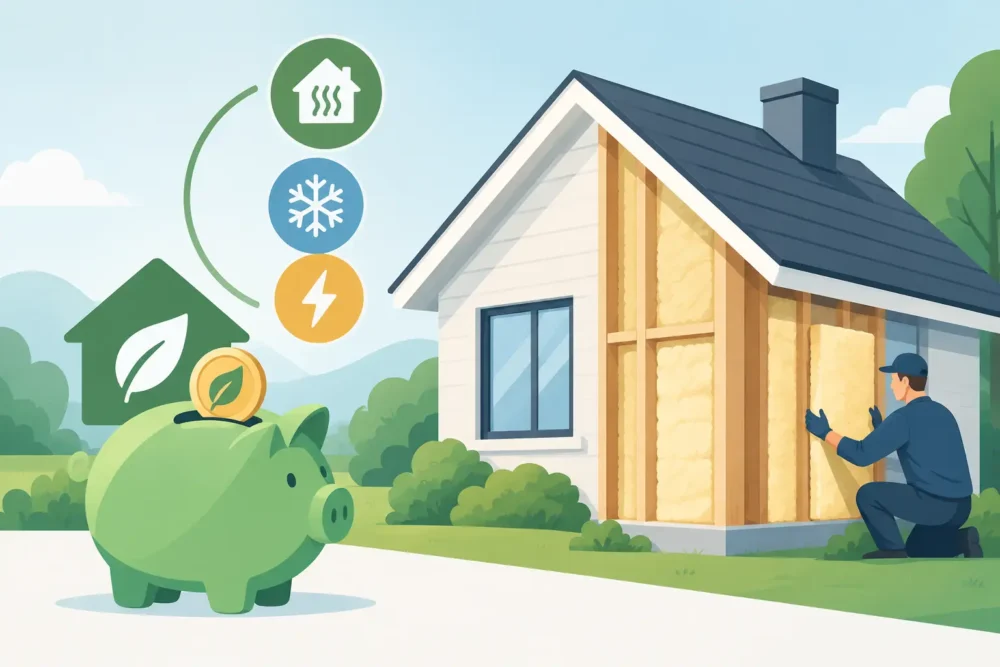
A cold upstairs bedroom, a drafty living room, and heating bills that keep climbing often point to the same issue: the home is losing conditioned air faster than it should. Energy rebates can help reduce the upfront cost of correcting those problems, particularly when insulation and air sealing are part of a larger effort to improve home efficiency.
The catch is that rebates are not one-size-fits-all discounts. Programs can vary by utility provider, location, household income, equipment type, insulation level, and even the order in which work is completed. Knowing how they work before starting a project can help you make better choices and avoid missing an incentive that could have lowered your costs.
What Are Energy Rebates?
Energy rebates are financial incentives that help homeowners pay for qualifying energy-efficiency improvements. They may be offered by a local utility company, a state or local program, or a manufacturer. Unlike a loan, a rebate does not need to be repaid. Unlike a tax credit, it is usually received as a direct payment, bill credit, or discount after approved work is completed.
For homeowners, the most relevant rebates often apply to upgrades that reduce heating and cooling demand. This can include attic insulation, crawl space insulation, air sealing, duct improvements, ventilation-related work, or high-efficiency heating and cooling equipment.
The goal is straightforward: when homes use less energy, utilities may avoid or delay costly infrastructure upgrades. Homeowners benefit from lower operating costs, better comfort, and in many cases, a healthier indoor environment.
Why Insulation and Air Sealing Are Often Eligible
A furnace or air conditioner cannot perform efficiently if the house around it leaks air or lacks adequate insulation. In winter, heated indoor air can escape through openings around attic penetrations, recessed lights, plumbing stacks, wall gaps, and framing connections. In summer, hot, humid outdoor air can enter through the same weak points.
Insulation slows heat transfer. Air sealing reduces uncontrolled air movement. These are different jobs, and the best results usually come from addressing both.
That distinction matters when looking at rebate programs. Some incentives are designed around specific insulation R-values, which measure resistance to heat flow. Others may require a home energy assessment or specify that air leaks be sealed before insulation is added. A program may also set standards for the area being upgraded, such as an attic, exterior wall, or crawl space.
Adding insulation over active leaks can still improve performance, but it may leave a major source of energy loss untouched. It can also make future leak repairs more difficult. A proper inspection helps identify whether the problem is thin insulation, contaminated insulation, air leakage, moisture, rodent damage, poor ventilation, or a combination of issues.
The Difference Between Rebates and Tax Credits
Homeowners often use the terms interchangeably, but rebates and tax credits work differently.
A rebate generally lowers your out-of-pocket project cost or returns money after the installation is approved. The program may require an application, paid invoice, product specifications, photos, or verification by a qualified contractor. Some utility programs offer an instant discount through participating contractors, while others ask the homeowner to submit paperwork after the work is finished.
A tax credit is claimed when filing your federal or state income taxes. It can reduce the taxes you owe, subject to the rules and limits that apply for that tax year. Tax credits and rebates may sometimes be used for the same project, but homeowners should confirm the current requirements rather than assume they stack automatically.
Because programs change, the safest approach is to treat incentives as a helpful part of your project budget, not the only reason to move forward. If your attic insulation is badly settled, your crawl space is damp, or rodents have contaminated existing material, the home performance issue still needs attention whether a particular rebate is available this month or not.
How to Find the Right Energy Rebates for Your Home
Start with the company that provides your electric or natural gas service. Many utilities offer seasonal or ongoing efficiency programs for customers in their service area. Look for current requirements, eligible measures, deadlines, application steps, and whether pre-approval is required.
For St. Louis-area homeowners, it is especially important to check the program tied to your own utility account. Eligibility can differ between neighboring communities, so a rebate available to one homeowner may not apply just a few miles away.
Before committing to work, ask these practical questions:
- Does the program cover attic, wall, or crawl space insulation, air sealing, or both?
- Is there a required insulation R-value or minimum square footage?
- Must the home receive an energy audit or inspection first?
- Does the contractor need to be approved by the program?
- Is pre-approval required before materials are installed or removed?
- What documentation must be submitted, and when is the deadline?
These details are not small print. Missing one requirement can mean losing a rebate after the project is already complete.
Plan the Work in the Right Order
The right upgrade is rarely just “add more insulation.” Homes have systems that affect one another. For example, an attic with dirty or rodent-damaged insulation may need removal and sanitation before new insulation is installed. A crawl space with moisture problems may need a vapor barrier and improved moisture control before insulation can perform as intended.
Air sealing should usually happen before new attic insulation is installed. Openings around plumbing, electrical wiring, attic hatches, and framing transitions are far easier to access before fresh material covers them. In certain homes, ventilation also needs evaluation so improvements do not worsen moisture conditions or trap heat where it should be exhausted.
Thermal imaging and a thorough visual inspection can help reveal uneven temperatures and hidden weak points. This kind of diagnostic work helps prevent the common mistake of paying for insulation while leaving the underlying source of discomfort in place.
A qualified contractor should explain what they found, why it matters, and which improvements should come first. The answer may be different for a 1950s home with little attic insulation than for a newer home with a damp crawl space or recurring rodent activity.
Keep Records From the Beginning
Rebate applications can be paperwork-heavy, but keeping organized records makes the process much easier. Save the written estimate, final invoice, proof of payment, before-and-after photos if available, material information, insulation R-value documentation, and any inspection reports.
Your invoice should clearly describe the work performed. A vague line item such as “home improvement” may not give a rebate administrator enough information to verify eligibility. Clear documentation of insulation type, installed location, square footage, air-sealing scope, and related remediation work can be useful for both incentives and future home records.
It is also wise to ask who will submit the rebate application. Some contractors assist with paperwork, while other programs require the homeowner to apply directly. Establish that responsibility before work begins, not after the final invoice is paid.
When a Rebate Should Not Drive the Decision
Rebates are valuable, but the cheapest qualifying option is not always the best long-term solution. A low rebate amount should not prevent you from fixing a serious air leak, contaminated attic insulation, or crawl space moisture concern. Likewise, a larger rebate should not push you into work that does not address your home’s actual problem.
Focus first on measurable improvements: more consistent room temperatures, fewer drafts, reduced strain on heating and cooling equipment, cleaner insulation conditions, and lower energy waste. The rebate should support a sound recommendation, not replace one.
Better Home Insulation helps homeowners identify the full cause of energy loss before recommending a solution. From attic air sealing and insulation replacement to crawl space barriers, rodent proofing, and sanitation, the goal is to improve comfort without overlooking the conditions that caused the problem.
If your home feels uneven from room to room or your utility costs no longer make sense, a free inspection and estimate can give you a clearer starting point. The best energy upgrade is the one that fits your home, solves the right problem, and continues paying you back in comfort long after the rebate is processed.