
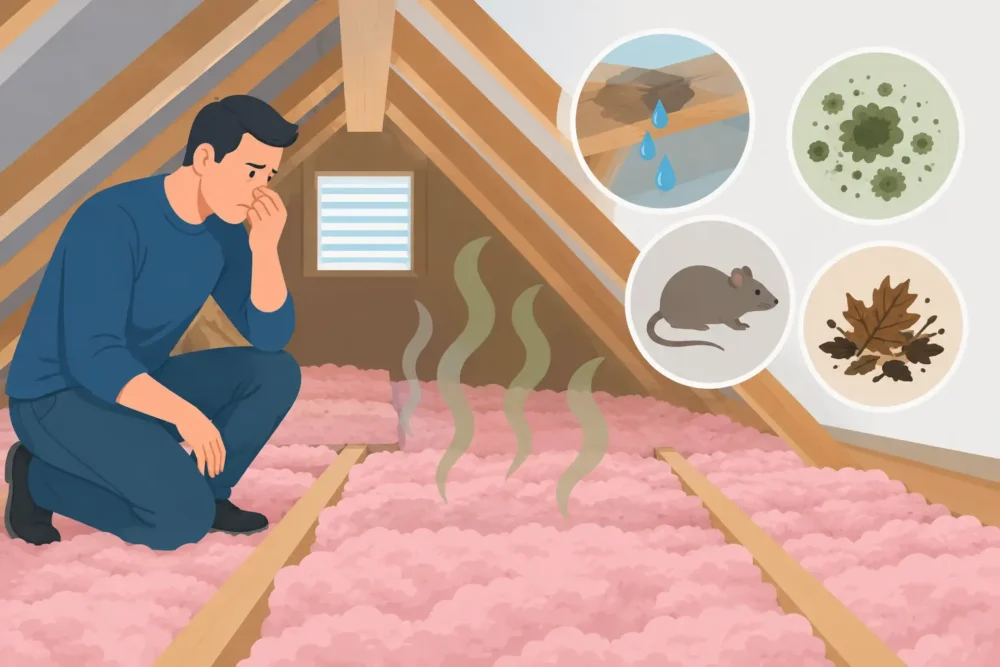
A strange odor near an upstairs hallway, ceiling register, or attic hatch can make the whole house feel less clean. If you are asking, why does attic insulation smell, the insulation may be holding onto odors from a separate problem – moisture, rodents, smoke, or air leaking from the home below. The smell itself is a useful clue, but it is rarely something to cover up with air freshener.
Attic insulation is designed to slow heat transfer, not sanitize the attic or block every odor. Once it becomes damp, contaminated, or exposed to strong fumes, its fibers or loose-fill material can absorb and retain the smell. Finding the source early can protect indoor air quality, preserve insulation performance, and prevent a small attic issue from becoming a costly repair.
Why Does Attic Insulation Smell in the First Place?
In many homes, the insulation is not the original source of the odor. It acts more like a sponge. Air movement through gaps around wiring, plumbing pipes, recessed lights, attic hatches, and duct openings can carry odors into the attic. If the attic is poorly air sealed, those same odors can travel back into living areas.
The type of smell matters. A musty odor points in a different direction than a sharp chemical smell or a strong animal odor. An inspection should look beyond the insulation itself to the roof, ventilation, HVAC system, plumbing penetrations, and signs of pests.
Musty odors usually mean moisture
A musty, earthy, or damp-basement smell is often associated with moisture. Roof leaks, condensation on cold surfaces, blocked soffit vents, bathroom fan ducts that terminate in the attic, and humid indoor air escaping through ceiling gaps can all introduce moisture where it does not belong.
Wet insulation loses effectiveness because water fills the air pockets that normally slow heat flow. Moisture can also support mold growth on wood framing, roof decking, dust, and organic materials such as cellulose insulation. Fiberglass does not provide food for mold on its own, but it can trap dust and moisture that allow mold to grow nearby.
A brief odor after a major storm may be an early warning. A persistent musty smell, visible staining, damp insulation, or dark growth should be professionally evaluated. Removing wet insulation without correcting the leak or humidity source only sets the stage for the problem to return.
Animal odors can contaminate insulation
Rodents, squirrels, bats, birds, and other animals can enter an attic through surprisingly small openings. Their urine, droppings, nesting materials, and occasional carcasses can create a sharp ammonia-like, sour, or decaying odor. In some cases, the smell becomes stronger when the attic heats up during summer.
Contaminated insulation is difficult to clean thoroughly in place. Spraying deodorizer over it may temporarily mask the odor, but it does not remove urine-soaked material, droppings, or disease-carrying debris. The dependable approach is to identify and seal entry points, safely remove contaminated insulation, sanitize affected surfaces, and install clean insulation after the attic is ready.
This work also has an energy-efficiency benefit. Rodent entry points are often air leaks, meaning the same repair can help reduce drafts and unnecessary heating and cooling loss.
Smoke and household odors can rise into the attic
Smoke from a past fire, cigarettes, cooking, or a malfunctioning appliance can drift upward through air leaks and settle in attic materials. Smoke odors are especially stubborn because the particles attach to dust, wood, insulation, and stored belongings.
If an odor resembles burning plastic, electrical insulation, hot wiring, or exhaust fumes, do not assume it is ordinary attic insulation smell. Turn off affected equipment if it is safe to do so, leave the area if fumes are strong, and contact the appropriate qualified professional promptly. Electrical or combustion-related odors can indicate a safety concern.
New insulation can have a temporary material odor
Some newly installed materials have a short-term odor. Fiberglass insulation may smell dusty after installation, while foam products can release noticeable odors during and shortly after application. Cellulose can have a mild paper-like or borate-related scent.
A light odor that fades with ventilation is usually different from an intense chemical smell that persists, causes headaches, or becomes stronger indoors. Installation conditions, product type, curing time, and ventilation all matter. If the smell remains after the expected curing or settling period, an inspection can determine whether the material, installation, or another attic condition is responsible.
How to Tell Whether the Odor Requires Action
Start by paying attention to timing and location. Does the smell get worse after rain, on humid days, when the heat or air conditioner runs, or during hot afternoons? Does it seem strongest at the attic hatch, in one upstairs room, or near a ceiling vent? These details help narrow down the cause.
A careful visual check from the attic opening may reveal obvious clues, such as displaced insulation, water stains, animal trails, droppings, or damaged ductwork. Do not walk across exposed ceiling drywall, disturb droppings, or handle suspicious insulation without proper protection. Attics can contain unsafe footing, low-clearance hazards, exposed wiring, and contaminated materials.
Professional assessment is especially worthwhile when you notice any of the following:
- A musty odor that returns after rain or high humidity
- Visible water staining, wet insulation, mold-like growth, or roof deck discoloration
- Rodent droppings, nesting, chewed wiring, or strong urine odors
- A dead-animal smell that does not fade
- Burning, exhaust, or persistent chemical odors
- Uneven temperatures, high utility bills, or noticeable drafts along with the odor
These combinations can indicate that odor, comfort, and energy waste are connected through the same attic air leaks or moisture problem.
The Right Fix Depends on the Cause
Odor removal is most effective when it follows a source-first plan. For a roof leak, that means repairing the leak, drying the affected area, evaluating damaged insulation, and checking whether ventilation or air sealing contributed to condensation. For pest contamination, it means exclusion and removal before new insulation goes in.
Air sealing is often a key part of the repair. Small openings between the conditioned home and attic can allow humid air, odors, and heated or cooled air to move freely. Sealing these bypasses before adding insulation helps the new insulation perform closer to its intended R-value. It also helps keep attic odors from being pulled into bedrooms and hallways.
Ventilation may be part of the solution, but it is not a cure-all. An attic needs a balanced path for outside air to enter and exit when the roof design supports it. Adding more ventilation without addressing air leakage from the home below can fail to solve moisture problems. Each attic should be evaluated based on roof layout, existing vents, insulation depth, duct location, and the source of moisture.
When insulation is heavily soiled, wet, compressed, smoke-damaged, or contaminated by animals, removal and disposal are often the practical choice. Eligible materials may be recycled, while contaminated insulation must be handled appropriately. After removal, the attic deck can be inspected, sanitized where needed, air sealed, and reinsulated to the correct level for the home.
Do Not Mask an Attic Odor
Scented sprays, odor absorbers, and fogging products can make an attic smell less noticeable for a short time. They cannot repair wet roof decking, remove pest waste, or stop attic air from entering your living space. In some cases, heavy fragrances make it harder to recognize a worsening moisture or electrical issue.
The goal is not simply an attic that smells better. It is a cleaner, drier, better-sealed space that supports healthy indoor air, steady temperatures, and efficient heating and cooling. A qualified insulation contractor can assess the full picture rather than treating insulation as an isolated layer.
For homeowners in the St. Louis area, Better Home Insulation can inspect odor concerns alongside insulation condition, air leakage, rodent damage, moisture exposure, and ventilation needs. A clear diagnosis makes it easier to choose the right repair instead of paying for a temporary cover-up.
If an attic smell has become part of daily life, trust that it is worth checking. The right correction can make your home feel cleaner and more comfortable while protecting the insulation and energy performance you rely on every season.