
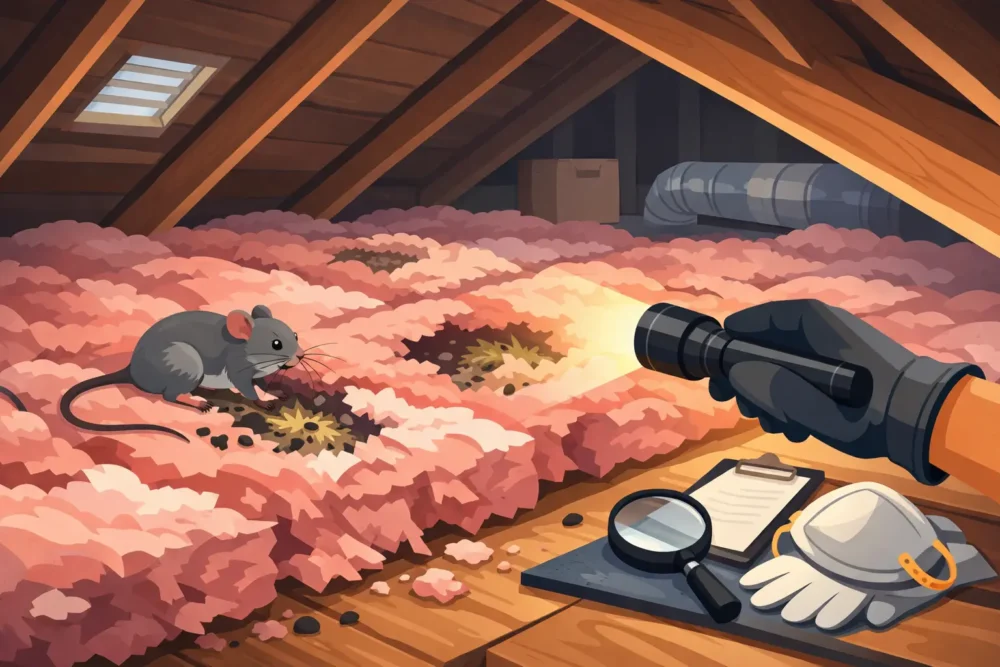
You usually do not notice rodent damaged attic insulation the moment it happens. What you notice first is the bedroom that stays too hot in summer, the room over the garage that never warms up in winter, or a musty smell that seems to come and go. By the time those comfort problems show up, rodents may have already torn through insulation, nested in it, and left contamination behind.
That is why this issue needs more than a quick cleanup. When insulation has been used as bedding, chewed apart, or soaked with droppings and urine, the attic is no longer just underperforming. It can also become a source of odors, airborne particles, and hidden energy loss. The right fix protects comfort, indoor air quality, and the efficiency of the whole home.
Why rodent damaged attic insulation is a bigger problem than it looks
Insulation works best when it stays dry, evenly distributed, and full of trapped air. Rodents ruin all three conditions. They tunnel through blown insulation, compress fiberglass, tear batts apart, and create gaps where heat can move more freely. Even a small area of disturbed insulation can lower performance, but in many homes the damage spreads farther than expected because rodents travel along framing, wiring, and duct runs.
The contamination side is just as serious. Droppings, urine, nesting debris, and food scraps do not stay neatly in one corner. They spread through traffic paths and settle into the insulation itself. Once that happens, keeping the old material in place often means keeping the source of the problem in place too.
There is also a practical issue many homeowners miss. If rodents got into the attic once, there is usually an entry point somewhere in the home envelope. Replacing insulation without addressing access points and air leaks can lead to repeat problems.
Signs your attic insulation has rodent damage
Some homes make the diagnosis obvious. You hear scratching at night, spot droppings near the attic hatch, or find chewed material around stored items. In other cases, the signs are indirect and easy to dismiss.
Higher heating and cooling bills are common because damaged insulation cannot hold the line between indoor and outdoor temperatures. Uneven room temperatures are another clue, especially in upper-floor rooms. You may also notice stale or unpleasant odors when the attic heats up during the day.
A proper attic inspection often reveals the full picture: matted or displaced insulation, dark staining, nesting areas, chewed wiring, and visible pathways through the material. In some homes, thermal imaging can also help show where insulation performance has dropped, although the visual and sanitary condition of the insulation is often enough to justify action.
Can you keep any of the insulation?
It depends on the type of damage, how widespread it is, and what type of insulation is in the attic.
If there is a very limited disturbance in one isolated area, partial removal may be possible. But that is not the most common outcome when rodents have been active for a while. Loose-fill insulation is especially difficult to salvage because contamination spreads through it easily. Fiberglass batts can sometimes look intact on the surface while hiding urine staining, nesting material, and compressed sections underneath.
For many homeowners, full removal is the cleaner and more dependable approach. It allows the attic floor to be properly inspected, sanitized, and sealed before new insulation goes in. That matters because an attic is a system, not just a layer of material. If the old insulation stays, hidden contamination and entry issues can stay with it.
The risks of waiting too long
Delaying repairs usually makes the project bigger, not cheaper. Rodents do not just damage insulation once and stop. They continue nesting, contaminating, and widening travel routes. Seasonal weather then magnifies the impact. In summer, attic heat pushes harder against weakened insulation. In winter, warm indoor air escapes more easily through gaps and bypasses.
There is also the potential for moisture trouble. Warm air leaking from the house into the attic can carry moisture with it. If the attic has damaged insulation and poor air sealing, that moisture can contribute to staining, musty odors, and in some cases mold growth. Add in rodent waste and the attic can become both an energy problem and a sanitation problem.
For families with allergies or asthma concerns, this is one reason professional cleanup matters. Disturbing contaminated insulation without the right containment and removal methods can spread particles instead of solving the issue.
How rodent damaged attic insulation should be fixed
The best results come from treating the cause, the contamination, and the insulation performance together.
1. Inspect the full attic, not just the obvious damage
A thorough inspection should look beyond the nest you can see. The goal is to identify the extent of insulation damage, signs of contamination, potential entry points, ventilation concerns, and any air leakage that may be helping attract pests or waste energy. This is where experience matters. Rodent activity often follows hidden paths along soffits, top plates, plumbing penetrations, and duct chases.
2. Remove contaminated insulation safely
When insulation is soiled, compacted, or spread with droppings and nesting debris, removal is often the right next step. Professional removal helps protect the living space from airborne contamination and gives technicians a clean surface to inspect below. It also prevents new insulation from being installed over old problems.
3. Sanitize and address the attic floor
Once the damaged material is out, the attic can be cleaned and sanitized as needed. This stage is important because odors and residue can remain even after the visible insulation is gone. It is also the best time to check for staining, damage to framing, and evidence of moisture issues.
4. Seal access points and key air leaks
Rodent proofing and attic air sealing often go hand in hand. Small gaps around penetrations, vents, utility lines, and framing transitions can let in outside air and create opportunities for pests. Closing those gaps helps reduce both future rodent access and ongoing energy loss.
5. Install new insulation to the right level
After cleanup and sealing, the attic needs new insulation installed to the proper depth and coverage for the home. The best material depends on the attic design, existing conditions, and performance goals. What matters most is even coverage, correct R-value, and a clean installation over a properly prepared attic floor.
Why replacing insulation alone is not enough
This is where homeowners sometimes get shortchanged. If a contractor simply adds new insulation on top of rodent activity, the attic may look improved for a while, but the underlying problem remains. Contamination is still there. Gaps are still there. Entry points may still be open.
A complete solution combines insulation removal, sanitation, air sealing, and rodent proofing where needed. In some homes, ventilation improvements also make sense, especially if heat and moisture have been building up in the attic. The exact scope depends on the condition of the space, which is why a real inspection is more valuable than a one-size-fits-all quote.
What homeowners in the St. Louis area should keep in mind
In the St. Louis region, attics take a beating from seasonal extremes. Hot, humid summers and cold winters put damaged insulation under constant pressure. When rodents have compromised attic performance, homeowners often feel it quickly in the form of uncomfortable second floors and rising utility bills.
Older homes can be especially vulnerable because they may already have air leakage, aging insulation, or previous patchwork repairs in place. In those homes, rodent damage is often the event that exposes a broader attic performance problem. Fixing it thoroughly can make a noticeable difference in comfort and monthly energy use.
When to call a professional
If you suspect rodent damaged attic insulation, it is worth having the attic inspected before deciding on a cleanup plan. A professional can tell you whether the insulation is salvageable, how far the contamination extends, and whether there are related issues such as air leaks, ventilation problems, or entry points that need attention.
This kind of work is not just about putting insulation back. It is about restoring the attic to a clean, effective part of the home envelope. That means safer removal, better diagnosis, and a repair plan built around long-term results instead of a temporary patch.
For homeowners who want a cleaner attic, more stable indoor temperatures, and lower heating and cooling waste, the smartest next step is a thorough inspection and a clear scope of work. Better Home Insulation approaches these projects that way because solving the hidden cause is what brings the comfort back.