
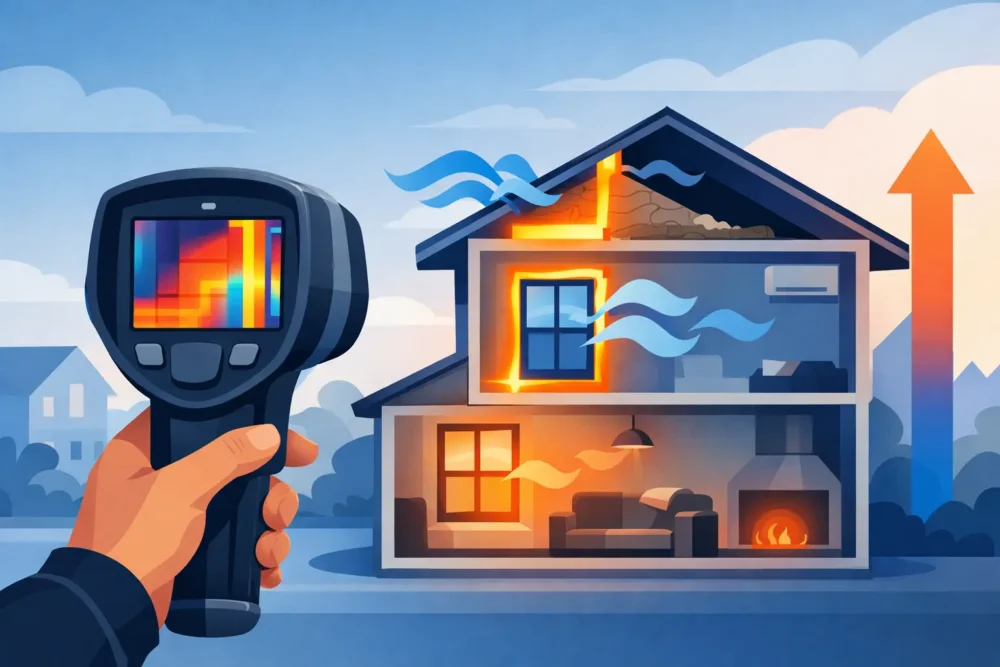
If one room in your home always feels colder than the rest, even when the heat is running, there is usually a reason hiding behind the drywall or above the ceiling line. Homeowners often ask, can thermal imaging find air leaks? The short answer is yes, but the most useful answer is a little more specific: thermal imaging can help locate the temperature patterns that often point to air leakage, especially when it is used by an experienced insulation and home performance professional.
That distinction matters. A thermal camera does not literally see moving air. It sees surface temperature differences. When outside air slips into your attic hatch, recessed lights, wall gaps, rim joists, window framing, or duct connections, it changes the temperature of nearby materials. Those changes can show up on an infrared scan as cooler or warmer areas, depending on the season. In the right conditions, that gives homeowners a very clear picture of where comfort and energy are being lost.
How thermal imaging helps find air leaks
Infrared technology works by reading heat signatures on surfaces. During a home inspection, a technician scans ceilings, walls, floors, around doors and windows, attic access points, and other likely leakage areas. If outside air is entering the home in winter, the affected surfaces may appear cooler than surrounding areas. In summer, when hot outdoor air is pushing inward, those same surfaces may appear warmer.
This is why thermal imaging is so useful for home performance work. It helps narrow down hidden trouble spots without opening up walls or relying on guesswork. In many homes, the biggest leaks are not where homeowners expect them to be. The problem may not be the window itself, for example, but the framing around it. A cold patch on the ceiling may not mean missing insulation alone. It may indicate attic air leakage around a fixture, wiring penetration, or top plate.
For homeowners dealing with high utility bills, uneven temperatures, or drafty rooms, thermal imaging can save time and help target the real cause.
Can thermal imaging find air leaks on its own?
It can point to them very effectively, but it is not a standalone answer in every case. That is the honest answer.
Thermal imaging is best viewed as a diagnostic tool, not a final diagnosis by itself. A camera may reveal a suspicious cold pattern along a wall, but that pattern could be caused by an air leak, missing insulation, moisture, or even a framing member conducting temperature differently than the surrounding cavity. An experienced technician interprets the image in context instead of assuming every dark or bright area means the same thing.
That is why professional inspections often combine thermal imaging with a visual assessment, building knowledge, and sometimes additional testing. When used this way, it becomes much more powerful. It does not just show that a room feels uncomfortable. It helps explain why.
Where air leaks commonly show up on an infrared scan
In residential homes, air leakage often follows predictable paths. Warm air rises and escapes through upper levels, while outside air gets pulled in through lower areas to replace it. That stack effect creates a lot of hidden movement through the building envelope.
A thermal scan may reveal air leaks around attic pull-down stairs, can lights, bath fan housings, plumbing and wiring penetrations, knee walls, wall-to-ceiling connections, and chimney chases. Lower in the home, it may show leakage at rim joists, crawl space penetrations, sill plates, duct boots, and around older windows and doors.
Homes in the St. Louis area also deal with a wide swing in seasonal temperatures, which can make comfort issues more obvious. A room over the garage that is hard to heat in winter or cool in summer often has a combination of insulation and air sealing problems. Thermal imaging helps identify whether the issue is isolated or part of a larger home envelope problem.
What thermal imaging can reveal besides air leaks
One reason homeowners find infrared inspections so valuable is that the camera may uncover more than one issue at the same time.
A temperature pattern might indicate missing or settled insulation in an exterior wall. It may show thermal bridging in areas where framing transfers heat more readily than insulated sections. In attics and crawl spaces, it can help reveal areas affected by moisture, damp insulation, ventilation imbalances, or disconnected ductwork. In some cases, rodent-damaged insulation also creates noticeable temperature irregularities.
This broader view is important because air leakage and insulation performance are closely connected. Sealing leaks without addressing insulation gaps can leave comfort problems behind. Adding insulation without sealing major air pathways can reduce the benefit of the upgrade. The best results usually come from treating the home as a system.
When thermal imaging works best
Infrared inspections are most effective when there is a meaningful temperature difference between indoors and outdoors. Without that contrast, potential leaks are harder to spot clearly.
In many cases, a technician will schedule scanning during weather conditions that help create stronger readings. Winter often provides excellent contrast when heated indoor air is escaping through colder exterior assemblies. Summer can work well too, particularly when cooled indoor air is being affected by hot attic or outdoor air.
Wind conditions, HVAC operation, sunlight exposure, and the time of day can also influence what the camera sees. A west-facing wall heated by afternoon sun may look very different from a shaded wall, even if both are well insulated. That is another reason interpretation matters. Good equipment helps, but experience is what keeps the inspection accurate.
Limits homeowners should know about
If you are asking can thermal imaging find air leaks, it is also fair to ask where it falls short.
First, it does not measure airflow volume. It may show that leakage is likely present, but it does not tell you exactly how much air is moving unless it is paired with other diagnostic methods. Second, it cannot see through walls in the way many people imagine. It reads surface temperatures, not hidden cavities directly.
Third, thermal patterns can be influenced by things unrelated to leakage. Moisture intrusion, missing insulation, duct temperature, framing layout, and radiant heat from sunlight can all affect the image. Finally, some leaks are too small or too temperature-neutral to stand out clearly during a quick scan.
None of that makes thermal imaging less useful. It just means homeowners should see it as one part of a careful inspection process, not a magic camera that answers every question instantly.
Why pairing thermal imaging with air sealing makes sense
The real value of finding leaks is being able to fix them correctly.
Once leakage points are identified, targeted air sealing can help reduce drafts, improve room-to-room comfort, and lower heating and cooling waste. In many homes, the biggest gains come from attic air sealing because small openings at the ceiling level can add up to major heat loss. Crawl space and rim joist sealing can also make a noticeable difference, especially in older homes.
This is where homeowners benefit from working with a contractor who understands both diagnostics and remediation. If the company inspecting the problem also understands attic insulation, crawl space conditions, ventilation, contamination issues, and insulation removal when needed, the recommendations are more likely to fit the home instead of treating only one symptom.
Is thermal imaging worth it for homeowners?
For many homeowners, yes, especially when the house has ongoing comfort or efficiency problems that have not been clearly explained.
If your utility bills feel high for the size of your home, if some rooms stay hot or cold no matter what you do, or if you suspect your attic, walls, or crawl space are underperforming, thermal imaging can provide a more informed starting point. It is particularly worthwhile in homes with older insulation, previous remodels, known draft issues, or signs of rodent or moisture damage.
It may be less useful if the concern is already obvious and accessible, such as a visibly damaged door sweep or a missing section of attic insulation in plain sight. But when the problem is hidden, intermittent, or spread through multiple parts of the home, infrared scanning can turn a vague complaint into a practical plan.
What to expect from a professional inspection
A thorough inspection should do more than show you colorful images. The goal is to connect those images to clear next steps.
A technician should explain what the scan suggests, where the likely leakage paths are, and whether the issue appears to involve insulation, air sealing, moisture, ventilation, or a combination of factors. The best recommendations are specific to your home and prioritize the areas likely to produce the biggest comfort and energy improvements first.
That homeowner education matters. Most people do not need a lesson in building science terms. They need to know why the bonus room is uncomfortable, why the HVAC runs so much, and what work is actually worth doing.
Better Home Insulation approaches thermal imaging that way – as part of a larger effort to make homes more comfortable, more efficient, and easier to live in every day.
If your home has been telling you something through drafts, cold spots, or rising utility costs, thermal imaging can help translate the message. The next smart step is making sure the right fix follows the scan.