
That cold floor in the winter and musty smell after a humid week often point to the same hidden problem – poor crawl space insulation. Homeowners usually notice the symptoms upstairs first: rooms that never feel quite right, rising utility bills, and air that feels damp or stale. The crawl space is easy to ignore, but when it is under-insulated, wet, or contaminated, it can affect comfort, energy use, and indoor air quality throughout the house.
A crawl space is not just empty space under the home. It is part of the building envelope, and it can either help the house perform better or quietly work against it. The right insulation approach depends on how the crawl space is built, how much moisture is present, whether outside air is getting in, and whether existing materials are still doing their job.
Why crawl space insulation matters
Many homes lose conditioned air through the floor system and the gaps around plumbing, wiring, vents, and framing connections. If the crawl space is vented, humid summer air and cold winter air can move freely below the home. If insulation is missing, sagging, or damaged, the rooms above are more exposed to those temperature swings.
That translates into real day-to-day issues. Floors feel colder. HVAC systems run longer. Some rooms become harder to heat or cool. In homes with moisture problems, insulation can also trap water, support mold growth, and create conditions that attract pests.
This is why crawl space insulation is rarely just about adding material between floor joists. A reliable solution often includes moisture control, air sealing, and sometimes removal of old insulation that has been compromised by rodents, dirt, or water.
Not every crawl space should be insulated the same way
This is where a lot of homeowners get mixed messages. One contractor says to insulate the floor. Another says to seal and condition the crawl space. Both approaches can be correct in the right situation.
In a traditional vented crawl space, insulation is often installed under the floor to reduce heat transfer into the living area above. That can help, but only if the insulation stays dry, remains in contact with the floor system, and is protected from air movement. If the crawl space has ongoing moisture intrusion or open vents bringing in humid air, floor insulation alone may not solve the bigger problem.
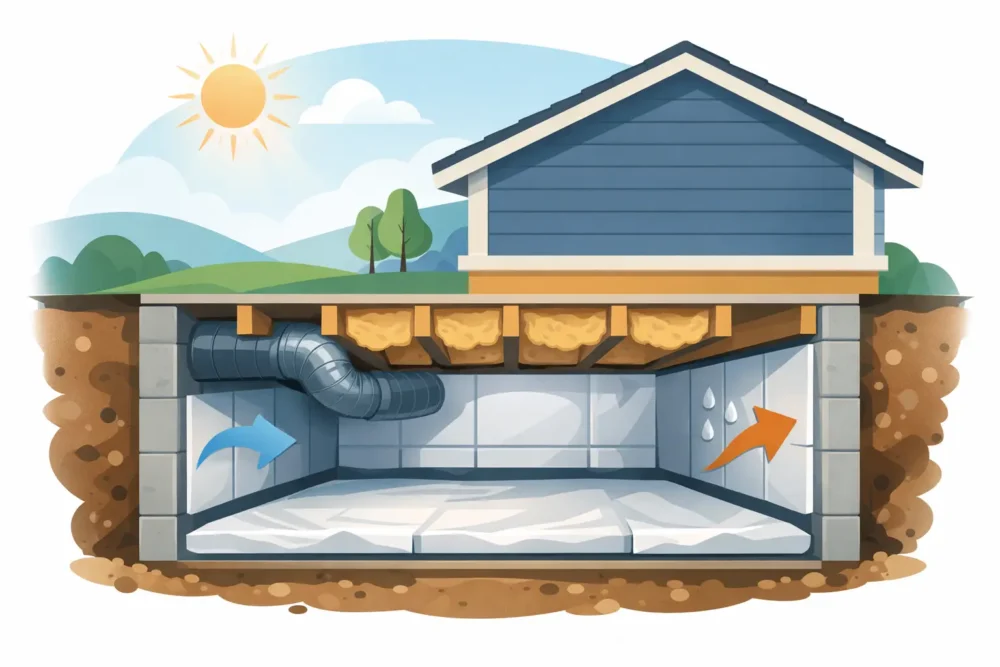
In many cases, a sealed crawl space performs better. That approach typically involves closing off outside air pathways, installing a vapor barrier, air sealing penetrations, and insulating the crawl space walls rather than the floor above. The result is a cleaner, more controlled space that puts less stress on the home.
The best option depends on the house. Age, layout, drainage, existing ventilation, duct location, and signs of contamination all matter. That is why an inspection-first approach is so important.
Signs your crawl space insulation is failing
Some warning signs are obvious, while others are easy to brush off for years. If floors feel cold even when the heat is running, insulation may be missing or no longer effective. If your utility bills seem high compared to the season, the crawl space may be part of the reason.
A musty odor is another common clue. That smell often points to excess moisture, wet insulation, or organic debris sitting in a dark enclosed area. You may also notice sagging insulation, visible rodent activity, condensation on surfaces, or uneven temperatures from room to room.
In older homes, the insulation itself may be the problem. Material can fall down, compress, absorb moisture, or become contaminated over time. Once that happens, keeping it in place does not save money – it can make the space less sanitary and less efficient.
What good crawl space insulation looks like
A good system does three jobs at once. It reduces heat transfer, limits unwanted air movement, and helps manage moisture. If one of those pieces is missing, the overall result suffers.
Insulation should fit the assembly it is installed in and match the needs of the home. R-value matters, but so does proper placement. An insulation product with a high rating will not perform well if it is installed loosely, left exposed to damp air, or paired with major air leaks.
Moisture control is just as important. If ground moisture is rising into the crawl space, a vapor barrier may be necessary. If humid outside air is entering through open vents or gaps, sealing those openings may be part of the fix. If there are signs of water intrusion, drainage issues may need to be addressed before new insulation goes in.
This is also where sanitation becomes part of energy performance. If insulation has been affected by rodents or other contamination, removal and replacement are often the smarter long-term choice. Clean, dry, properly installed materials simply work better.
Crawl space insulation and moisture control go together
Homeowners sometimes focus on insulation because it feels like the direct path to lower utility bills. That benefit is real, but moisture problems can cancel it out fast. Wet or damp insulation loses effectiveness, and trapped moisture can damage wood framing over time.
A crawl space with exposed soil, torn plastic sheeting, air leaks, and old insulation is a common combination. Adding more insulation without fixing the moisture source usually leads to disappointing results. The space may still smell musty, the floor may still feel cold, and the new material may not last as long as it should.
A better approach looks at the whole area. Vapor barriers help reduce ground moisture. Air sealing helps stop humid outside air and unconditioned air from moving where it should not. In some homes, ventilation adjustments are also needed. When these pieces work together, the insulation has a much better chance of performing as intended.
When old insulation should be removed first
There is a point where adding new insulation over existing material does more harm than good. If the old insulation is falling down, dirty, moldy, compressed, or contaminated by pests, it should usually come out before any new work begins.
Removal is not just about appearance. Damaged insulation can hide leaks, hold odors, and make it harder to inspect the structure below the home. It can also spread particulates into the air if disturbed. Starting with a clean crawl space makes the final result more dependable and easier to maintain.
For homeowners in the St. Louis area, this matters because seasonal humidity can be hard on crawl spaces. Materials that looked acceptable years ago may no longer be protecting the home the way they should.
Why professional installation usually pays off
Crawl spaces are tight, dirty, and full of details that affect performance. Plumbing lines, ductwork, wiring, rim joists, support piers, and access limitations all create installation challenges. Small mistakes can lead to big gaps in coverage or ongoing moisture issues.
Professional installers know how to evaluate the full condition of the space, not just the visible insulation level. They can identify where air sealing is needed, whether a vapor barrier should be replaced, and whether insulation belongs at the floor, the walls, or both in a coordinated system.
That matters because the goal is not simply to add insulation. The goal is to improve comfort, reduce energy waste, and create a healthier area under the home. A licensed and insured contractor can also spot conditions that deserve attention before they become more expensive repairs.
What homeowners can expect from a proper inspection
A worthwhile inspection should answer more than one question. It should identify the current insulation condition, signs of moisture, air leakage points, contamination, and any related issues affecting the home envelope.
Homeowners deserve a clear explanation of what is happening and why. In some homes, the recommendation may be straightforward. In others, the best path may involve insulation removal, vapor barrier installation, air sealing, and new insulation as part of one coordinated project. That kind of customized plan usually delivers better results than a one-size-fits-all quote.
If you are dealing with cold floors, musty odors, high energy bills, or a crawl space that has not been inspected in years, it is worth taking a closer look. The problem under the house does not usually stay under the house. When crawl space insulation is done correctly, the payoff shows up where you actually live – in cleaner air, steadier comfort, and a home that feels easier to heat and cool every day.