
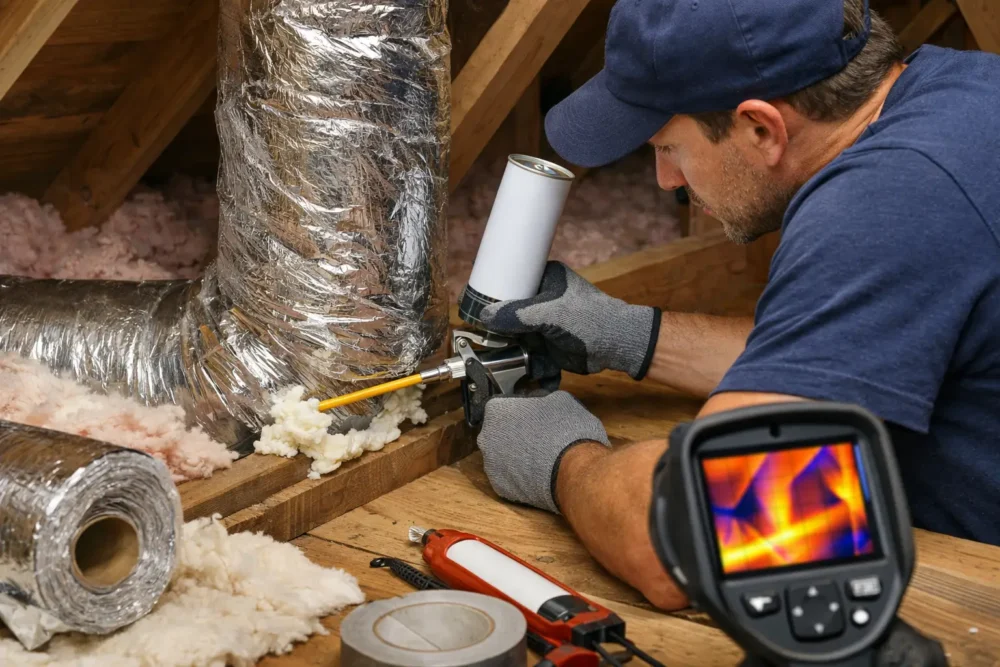
If your upstairs rooms are hard to cool in summer, your furnace seems to run nonstop in winter, or the house feels drafty even with insulation in place, the problem may not be the insulation alone. Knowing how to seal attic air leaks is one of the most effective ways to improve comfort and reduce wasted heating and cooling, because small openings between the living space and attic can let a surprising amount of conditioned air escape.
Many homeowners assume insulation handles everything. It does not. Insulation slows heat transfer, but it does not stop air movement. If warm indoor air is leaking into the attic in winter, or hot attic air is finding pathways into the home in summer, even good insulation can underperform. That is why air sealing and insulation work best together, not as separate fixes.
Why attic air leaks matter more than most homeowners expect
Your attic sits at the top of the stack effect. In plain terms, air naturally moves upward through a house, especially when there is a temperature difference between indoors and outdoors. That means any gaps around ceiling penetrations, framing joints, wiring holes, duct chases, and recessed fixtures can become escape routes.
The result is more than higher utility bills. Air leakage can create uneven temperatures from room to room, make HVAC equipment work harder, and allow attic dust, insulation particles, or moisture-laden air to move where it should not. In some homes, those leaks also contribute to indoor air quality concerns and moisture problems around framing.
This is where homeowners sometimes face a trade-off. A quick fix on one obvious opening may help, but if the attic has widespread leakage, spot sealing alone may not deliver the result you want. A full inspection often reveals that the biggest air leaks are hidden under existing insulation or around areas most people never think to check.
How to seal attic air leaks without missing the real problem
The right approach starts with finding the boundary between the conditioned space below and the unconditioned attic above. Anywhere that boundary has a gap, air can move.
In practical terms, that usually means pulling back insulation and inspecting penetrations carefully. Common leak points include top plates of interior walls, plumbing vent openings, electrical wire penetrations, bath fan housings, dropped soffits above cabinets, attic access hatches, chimney chases, and can lights. In older homes especially, these gaps can be larger and more numerous than expected.
A professional inspection can help because not every opening should be sealed with the same material. Some need caulk, some need foam, and some require metal flashing or other heat-safe blocking. If a house has knob-and-tube wiring, active moisture issues, damaged ductwork, or contaminated insulation, those conditions should be addressed before sealing work moves forward.
The most common places attic leaks happen
Small penetrations are the usual culprits, but larger bypasses often cause the greatest energy loss. A gap around a single pipe matters. A wide open soffit over a kitchen cabinet or a wall cavity exposed to the attic matters much more.
Recessed lights are another frequent issue. Older non-IC-rated fixtures can leak a lot of air, but they also create safety concerns if insulation is packed too closely around them. Bathroom fan housings and duct connections are also worth close attention. If a fan is venting poorly or dumping moist air into the attic instead of outside, sealing around it is only part of the solution.
Attic access points deserve special attention too. Pull-down stairs and simple hatch covers often leak air around the perimeter, even in homes that otherwise have decent insulation levels. Weatherstripping and a properly insulated cover can make a noticeable difference.
Materials matter – and so does fire safety
Caulk works well for smaller, stable gaps. Expanding foam is useful for irregular openings and penetrations, though it needs to be applied carefully to avoid overfilling or interfering with finishes. Larger openings may need rigid blocking first, then sealant. Around flues, chimneys, or other heat-producing components, standard foam is not the right answer. These areas typically require noncombustible materials and proper clearance.
This is where attic air sealing becomes less of a simple weekend task and more of a building performance job. The goal is not just to fill holes. It is to seal them in a way that is durable, safe, and compatible with the rest of the attic system.
Air sealing before adding insulation
If you are planning to upgrade attic insulation, seal leaks first. This order matters. Once new insulation is installed, those bypasses become harder to access, and covering them without sealing them first can leave the main problem untouched.
Homeowners are often disappointed after adding insulation because the house still feels drafty. Usually, that means air leakage was the bigger issue. Insulation helps with thermal resistance. Air sealing controls movement. When both are done correctly, the results are far more noticeable.
There is also a cleanliness benefit. Sealing gaps helps reduce the movement of dusty attic air into living areas. In homes with older, compacted, or rodent-affected insulation, this can be especially important. If insulation is contaminated, damaged, or compressed, removal and replacement may make more sense than sealing around material that no longer performs well.
When a DIY approach can work – and when it usually falls short
Some homeowners can handle basic attic air sealing around simple penetrations if the attic is accessible, lighting is decent, and there are no safety concerns. Sealing a small wiring gap, weatherstripping an attic hatch, or caulking a minor crack can be worthwhile.
But full attic air sealing is often tougher than it sounds. You may be working in tight spaces, around electrical components, near ductwork, or over uneven ceiling framing. It is easy to miss hidden bypasses under insulation or misjudge which materials are safe to use near heat sources. In a hot Missouri attic, even the physical demands can become a real factor.
That is why many homeowners choose professional service, especially when comfort issues have persisted for years. A trained crew can identify leakage patterns, protect existing systems, and pair the sealing work with insulation, ventilation, or remediation if needed. That produces a more complete result than patching a few visible gaps and hoping for the best.
What homeowners in older Missouri homes should watch for
In the St. Louis area and surrounding communities, many homes have a mix of old construction details and newer upgrades layered on top. That can create odd transitions in the attic where one part of the building envelope was improved and another part was left open.
For example, a home may have newer blown insulation but still have major bypasses around plumbing walls, soffits, or mechanical penetrations. Or the attic may have signs of past rodent activity, disconnected bath fan ducts, or insulation that has settled unevenly over time. In those cases, learning how to seal attic air leaks is less about one product and more about identifying the whole chain of issues affecting performance.
Thermal imaging and attic inspection can be helpful here because they show where heat loss and leakage are actually occurring. That keeps homeowners from spending money in the wrong place first.
What kind of results should you expect?
A well-sealed attic can help lower heating and cooling loss, improve indoor comfort, and make upper floors feel more stable throughout the day. Many homeowners also notice fewer drafts, less temperature swing between rooms, and better overall HVAC performance.
The exact savings depend on the home. A newer house with minor leakage will not see the same improvement as an older home with open bypasses and deteriorated insulation. Ventilation design, duct condition, insulation depth, and moisture issues all affect the outcome. That is why honest recommendations matter. Sometimes attic air sealing is the main fix. Sometimes it is one part of a larger improvement plan.
For homeowners who want measurable results without guessing, working with a licensed and insured insulation contractor can save time and avoid repeat work. A company that can inspect, air seal, remove damaged insulation when needed, and recommend the right insulation and ventilation upgrades provides a clearer path to lasting comfort.
If your home still feels uncomfortable no matter how much the thermostat runs, the next step may not be another HVAC adjustment. It may be finding the places where your house is quietly leaking air into the attic and fixing them the right way, so the comfort you pay for actually stays where it belongs.