
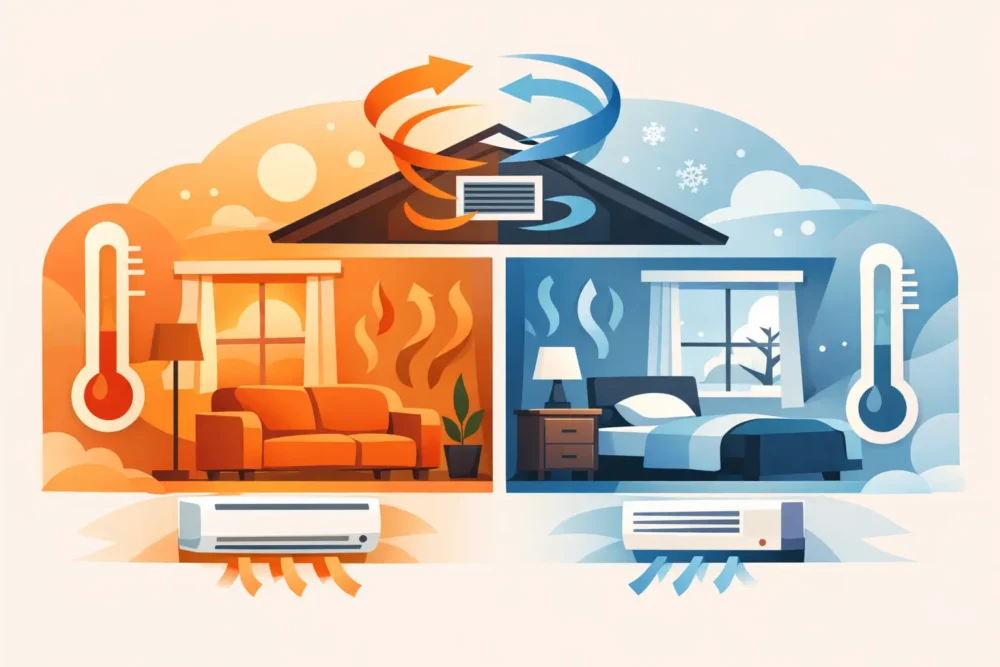
You set the thermostat to one temperature, but the house tells a different story. One bedroom feels stuffy, the living room stays comfortable, and a room over the garage is either freezing in winter or hot in summer. If you have been wondering what causes uneven room temperatures, the answer is usually not one single problem. In most homes, it is a mix of insulation gaps, air leakage, duct issues, ventilation imbalances, and the way the home was built.
That is why quick fixes do not always last. Closing a vent or adjusting the thermostat might help a little, but if the root cause is hidden in the attic, crawl space, walls, or duct system, the discomfort keeps coming back. The good news is that uneven temperatures are usually fixable once the actual source is identified.
What causes uneven room temperatures in a house?
Uneven temperatures happen when rooms gain or lose heat at different rates, or when conditioned air is not delivered evenly throughout the home. That can sound technical, but the idea is simple. If one room is better protected from outdoor heat and cold than another, or if it receives more consistent airflow, it will feel different.
Homes are full of variables that affect comfort. Sun-facing rooms warm up faster. Bonus rooms over garages often struggle because they are exposed on multiple sides. Older homes may have settled insulation, hidden air leaks, or ductwork that was never balanced properly. Even newer homes can have comfort issues if insulation was installed unevenly or key gaps were left unsealed.
Insulation problems are one of the biggest causes
When insulation is missing, damaged, compressed, or installed unevenly, certain rooms become more vulnerable to outdoor temperatures. In summer, heat moves in faster. In winter, warmth escapes more quickly. The result is a room that never seems to match the thermostat setting.
Attics are often a major part of the problem. If attic insulation is too thin or inconsistent, rooms below can heat up or cool down much faster than the rest of the house. This is especially noticeable in upstairs bedrooms and hallways. Wall and ceiling insulation also matter, particularly in older homes where insulation may be minimal or deteriorated.
Crawl spaces can create the same issue from below. Floors over an uninsulated or poorly sealed crawl space often feel cold in winter, and that temperature difference can affect the whole room. If moisture has been present, insulation in the crawl space may also sag or lose effectiveness over time.
Air leaks can make a well-insulated home feel uncomfortable
Insulation helps slow heat transfer, but it does not stop moving air. That is where air sealing comes in. Small gaps around attic penetrations, recessed lights, top plates, plumbing openings, wiring paths, windows, doors, and wall connections can allow outside air to enter and conditioned air to escape.
This matters more than many homeowners realize. A room can have decent insulation and still feel uncomfortable if there are enough hidden leaks. Hot attic air can seep into upper-level rooms in summer. Cold outside air can sneak into wall cavities and floor areas in winter. Drafts are the obvious sign, but many leaks are subtle and show up more as uneven comfort than as a noticeable breeze.
In homes around the St. Louis area, where summers are humid and winters can be cold, these air leaks create a year-round comfort problem. They also force the HVAC system to run longer, which often leads to higher energy bills without solving the temperature imbalance.
Ductwork problems often hide behind the walls and attic
Sometimes the issue is not heat loss from the room. It is the fact that the room is not getting enough conditioned air to begin with. Leaky, disconnected, kinked, or poorly designed ducts can reduce airflow to specific rooms, especially those farthest from the HVAC equipment.
This is common in rooms at the end of a duct run, upstairs spaces, and additions that were tied into an existing system without proper redesign. A room may technically have a vent, but if the airflow is weak, that room will never heat or cool as effectively as the rest of the home.
Return air is another piece of the puzzle. Supply vents push conditioned air into a room, but return pathways help pull air back to the system. If a room lacks enough return air or gets pressure imbalances when the door is closed, temperatures can drift. The room may feel stale, stuffy, or difficult to keep comfortable even when the HVAC system is working hard.
Ventilation and attic conditions can affect room comfort
Attic ventilation is not the same thing as air conditioning, but it still affects how hot or cold rooms feel below the attic. When attics trap excessive heat, that heat radiates downward into ceilings and upper rooms. If insulation and air sealing are not doing their job, those rooms feel the impact quickly.
Poor attic ventilation can also contribute to moisture buildup, which affects insulation performance over time. Wet or compressed insulation does not work the way it should. In some cases, homeowners are dealing with a combination of low insulation levels, air leakage, and attic ventilation issues all at once.
Radiant heat is another factor. Roof surfaces absorb solar heat, and that heat can build up dramatically in the attic during summer. In some homes, radiant barrier improvements can help reduce that load, but they work best as part of a larger strategy, not as a standalone cure for every comfort problem.
Windows, sun exposure, and room location matter too
Not every uneven room temperature problem starts in the attic or crawl space. Sometimes the home’s layout plays a major role. Rooms with large windows, west-facing exposure, or little shade naturally gain more heat during the day. Corner rooms have more exterior wall area, so they often lose or gain heat faster than interior rooms.
Rooms over garages are a classic example of a location-based comfort problem. They are often exposed above, below, and on multiple sides. If the garage ceiling, adjacent walls, or knee walls are under-insulated or leaky, the room above will struggle in every season.
This is where diagnosis matters. If a room is hot every afternoon because of direct sun, the solution may involve insulation and air sealing, but window performance and solar gain may also be part of the conversation. Real comfort improvements come from looking at the full picture.
Why thermostat adjustments usually do not solve it
When one room is uncomfortable, it is tempting to keep changing the thermostat. The problem is that the thermostat reads conditions in one location, not throughout the house. Lowering it to cool one hot room may overcool the rest of the home. Raising it to help one cold room can make other rooms too warm.
That is why uneven temperatures are often building performance issues rather than thermostat issues. The HVAC system can only do so much if the house is losing conditioned air, gaining heat through under-insulated areas, or distributing air unevenly.
The right fix depends on the real cause
There is no universal repair for uneven room temperatures. Some homes need attic insulation upgrades. Others need attic air sealing first because adding insulation without sealing leaks leaves performance on the table. In some homes, crawl space insulation or a vapor barrier is the missing piece. In others, duct repairs, ventilation improvements, or contaminated insulation removal are more urgent.
That is also why guessing can get expensive. Homeowners sometimes replace HVAC equipment when the real issue is in the building envelope. A larger system may heat and cool faster, but it will not correct the hidden leaks or missing insulation causing the imbalance.
A proper inspection can reveal what is happening behind the surfaces. Thermal imaging, airflow evaluation, and a close look at the attic and crawl space often tell a much clearer story than the thermostat ever will. For homeowners in older homes or houses with additions, this step is especially valuable because comfort problems often come from multiple small defects rather than one obvious failure.
What homeowners should look for first
If you are trying to understand what causes uneven room temperatures in your home, start by noticing patterns. Is the problem upstairs only? Does it affect one side of the house? Is it worse in extreme weather? Does closing a bedroom door make it more uncomfortable? Do floors feel cold, or do rooms get hot in late afternoon sun?
Those details help narrow down the source. A hot upstairs level often points to attic-related issues. A cold floor may suggest crawl space problems. One isolated room may indicate duct, insulation, or air sealing defects specific to that area.
The most effective next step is to have the home evaluated as a system, not just as a collection of rooms. That approach is how comfort problems get solved in a lasting way. Better Home Insulation works with homeowners to identify the hidden reasons rooms feel different and recommend practical solutions that improve comfort, energy efficiency, and day-to-day livability.
A house should not make you choose between one comfortable room and another. When the real causes are addressed properly, the whole home starts to feel more consistent, and that is when lower utility bills and better comfort finally show up together.