
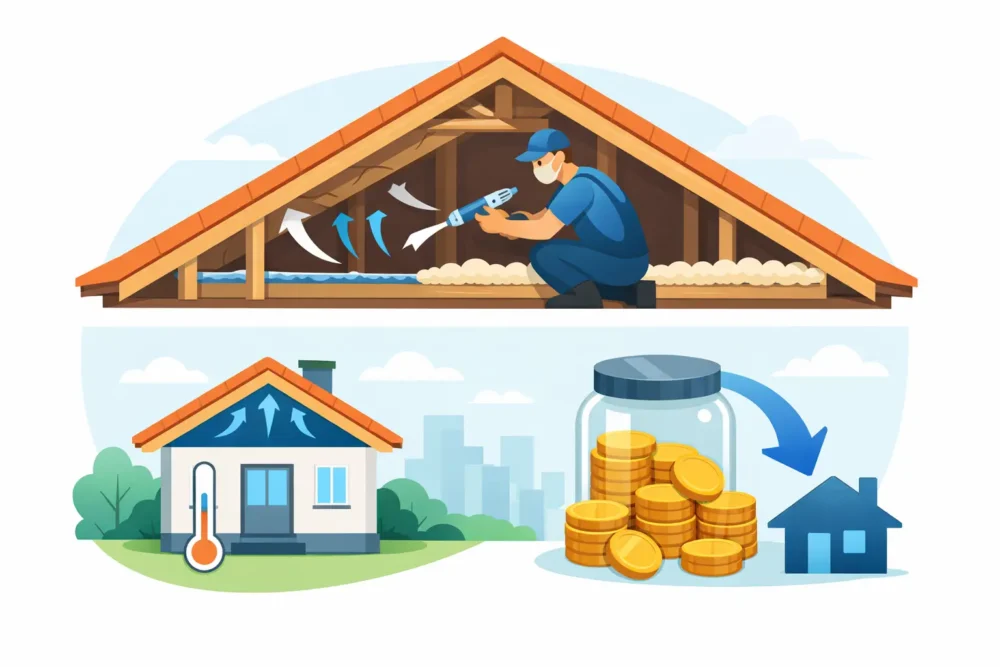
If your upstairs rooms are hard to cool in summer, or your furnace seems to run nonstop in winter, the attic may be costing you more than you realize. Homeowners often ask, does attic air sealing save money, and the short answer is yes – but the real value goes beyond one lower utility bill. Air sealing helps stop conditioned air from escaping through gaps around wiring, plumbing, recessed lights, top plates, and attic access points, which can make your home more comfortable and efficient year-round.
Why attic air leaks cost more than people think
Most homeowners think of insulation first when they notice high energy bills. Insulation matters, but insulation alone does not stop moving air. If warm or cool air is leaking into the attic, your HVAC system has to work harder to keep indoor temperatures steady.
That is where attic air sealing makes a difference. It closes the hidden openings that let indoor air escape and outside air enter. In winter, warm air rises and can leak into the attic, a process often called the stack effect. In summer, hot attic air can influence the rooms below, especially when the attic floor has open bypasses and poorly sealed penetrations.
The result is wasted energy, uneven temperatures, and more strain on your heating and cooling equipment. That is why the answer to does attic air sealing save money is usually yes, especially in homes with older insulation, visible attic gaps, or persistent comfort issues.
Does attic air sealing save money enough to justify the cost?
In many homes, yes. The amount you save depends on the age of the home, how leaky the attic is, local utility rates, and whether the sealing is paired with the right insulation levels. A newer home with good construction details may see modest savings. An older home with obvious air leakage can see a much stronger return.
What makes attic air sealing cost-effective is that it addresses a root problem. If your attic has open chases, unsealed can lights, gaps around vent pipes, or a poorly weatherstripped attic hatch, your paid-for conditioned air is escaping. Fixing those leaks can reduce heating and cooling loss every day your system runs.
There is also a compounding effect. When air sealing is done before adding or replacing attic insulation, the insulation can perform closer to its intended R-value. That means you are not just adding material – you are improving how the whole attic system works.
Where the savings usually show up
The most obvious benefit is lower monthly heating and cooling costs. Homes that leak a lot of air often lose comfort fast, which forces the HVAC system to cycle more often and for longer periods.
But savings show up in other ways too. Better attic air sealing can help reduce hot and cold spots, which may mean less reliance on space heaters, fans, or constant thermostat adjustments. It can also reduce wear on your furnace and air conditioner by cutting unnecessary runtime.
Some homeowners notice another financial benefit that is easy to miss: fewer moisture-related problems. Warm indoor air leaking into a cold attic can contribute to condensation. Over time, that can affect insulation performance and even create conditions for mold or material damage. Preventing that kind of issue can protect you from repair costs later.
When attic air sealing delivers the best return
Not every home gets the same result. The best return usually comes when a house has clear signs of attic leakage and poor thermal control.
You may be a strong candidate if your energy bills feel high for the size of your home, rooms near the ceiling are uncomfortable, insulation looks disturbed or dirty, or you have noticed drafts even when windows and doors are closed. Older homes in the St. Louis area often have a mix of aging insulation, bypasses around attic penetrations, and ventilation or moisture issues that all work together to reduce efficiency.
That is why a proper inspection matters. A contractor who understands the full home envelope can tell whether attic air sealing alone will help or whether it should be combined with insulation upgrades, insulation removal, ventilation improvements, or rodent proofing if contamination is part of the problem.
Air sealing vs. insulation: which saves more?
This is one of the most common points of confusion. Insulation slows heat transfer. Air sealing stops uncontrolled airflow. You need both, but if the attic is leaky, air sealing often deserves priority.
Think of it this way: insulation is less effective when air is moving through or around it. If you add more insulation without sealing major attic leaks, you may still have comfort issues and unnecessary energy loss. That does not mean insulation is optional. It means the order and combination matter.
A practical approach is to seal first, then make sure insulation levels are appropriate for the home. In many cases, this delivers better performance than simply topping off existing insulation and hoping for the best.
What gets sealed in an attic
Professional attic air sealing is more detailed than most homeowners expect. The biggest leaks are often not obvious until insulation is moved aside and the attic floor is inspected carefully.
Common trouble spots include wiring penetrations, plumbing stacks, open wall tops, dropped soffits, duct chases, bath fan housings, attic access openings, and recessed lights that are not properly sealed or rated for insulation contact. In some homes, disconnected ductwork or poorly sealed duct boots also contribute to the problem.
The right materials depend on the size and type of gap. Small cracks may be sealed with caulk or spray foam. Larger openings often need rigid blocking materials combined with sealant. Good work here is not about speed. It is about finding the hidden pathways where air is actually moving.
The trade-offs homeowners should know
Attic air sealing is usually a smart investment, but there are a few realities worth understanding.
First, savings are not identical from house to house. If your attic is already relatively tight, the energy reduction may be noticeable but not dramatic. Second, attic sealing is not a cure-all. If your home also has old windows, leaky ductwork, crawl space issues, or inadequate insulation in walls and floors, those may still affect comfort and efficiency.
There is also the ventilation factor. A well-sealed attic still needs proper ventilation in the right places. Air sealing the attic floor is not the same thing as trapping moisture in the attic. In fact, the goal is to keep indoor air out of the attic while supporting healthy attic ventilation. That balance is one reason professional evaluation matters.
How to tell if your attic is leaking money
A few signs tend to show up together. If your second floor is uncomfortable, your utility bills spike in extreme weather, insulation looks compressed or contaminated, or your home gets dusty quickly, attic leakage may be part of the picture.
You may also notice that certain rooms never seem to match the thermostat setting. That does not always mean the HVAC equipment is failing. Sometimes it means the house is losing conditioned air through the top of the building envelope.
Thermal imaging and attic inspection can help confirm what is happening. Instead of guessing, you get a clearer picture of where energy loss is occurring and which improvements are most likely to pay off.
Why professional air sealing often pays off more than DIY
Some attic gaps are easy to spot, but many are hidden under insulation or located in areas that are difficult to access safely. DIY sealing can help with obvious areas like an attic hatch, but full attic air sealing requires more than a can of foam and a free weekend.
A trained crew knows how to identify bypasses, choose the correct materials, and avoid creating problems around lighting, combustion safety, or ventilation. If the attic also has rodent activity, damaged insulation, or contamination, that needs to be handled before or during the air sealing process.
For homeowners who want measurable results, a professional inspection and scope of work usually lead to better long-term value. Better Home Insulation approaches attic work as part of the whole home system, which helps homeowners avoid partial fixes that leave money on the table.
So, does attic air sealing save money?
For many homeowners, yes – especially when the attic has significant leakage, aging insulation, or related comfort problems. The energy savings are real, but the bigger benefit is that your home starts working the way it should. Rooms feel more consistent, the HVAC system does not have to fight the house as much, and problems tied to moisture or contaminated insulation are easier to address at the source.
If you suspect your attic is part of the reason your energy bills stay high, the smartest next step is not to guess. It is to have the space evaluated, understand where air is escaping, and choose improvements that fit your home instead of a one-size-fits-all fix. A tighter attic often means a more comfortable house every day after.