
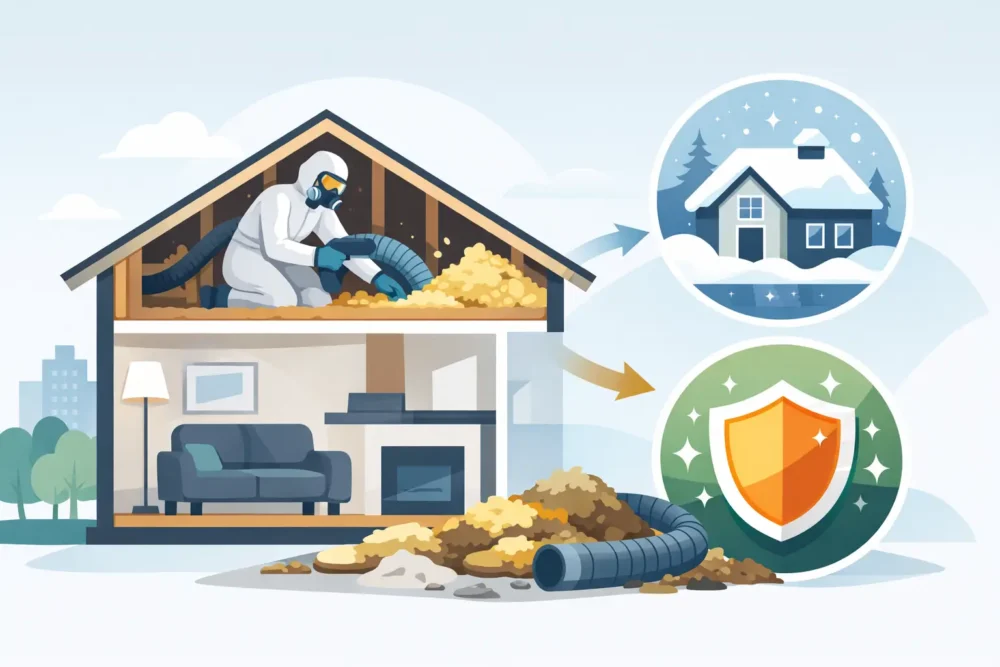
If your attic smells musty, your rooms never seem to hold a steady temperature, or you have signs of rodent activity overhead, adding more insulation is not always the first fix. In many homes, insulation removal services are the smarter starting point because damaged, contaminated, or compressed material can keep the house uncomfortable no matter how much new insulation gets added on top.
That is the part many homeowners do not see right away. Insulation sits behind ceilings, under floors, and across attic framing, so problems can build quietly for years. By the time utility bills are climbing or certain rooms feel hot in summer and cold in winter, the insulation may already be wet, dirty, pest-damaged, or simply too old to perform the way it should.
Why homeowners schedule insulation removal services
There is a common assumption that old insulation can just stay in place forever. Sometimes that is true. If the material is dry, clean, properly installed, and still doing its job, removal may not be necessary. But when insulation has been compromised, keeping it can work against the rest of the home.
Rodent activity is one of the biggest reasons removal is recommended. Once mice or rats get into an attic or crawl space, they leave behind droppings, urine, nesting debris, and contaminated insulation. Even after the pests are gone, the material can still hold odors and unhealthy particles. In that case, leaving it in place is not a clean fix.
Moisture is another major issue. A roof leak, condensation problem, or crawl space humidity can soak insulation and reduce its effectiveness. Wet insulation often loses its loft, and that means it loses much of its ability to slow heat transfer. It can also contribute to mold growth or persistent odors.
Age and poor installation matter too. In older homes, insulation may be thin, uneven, or settled to the point that it no longer covers the space properly. Sometimes the material itself is not the only problem. Air leaks around penetrations, recessed lights, top plates, and ductwork may be letting conditioned air escape. Removal creates access, and that access is often what allows a contractor to solve the real problem instead of covering it up.
What happens during insulation removal services
Homeowners often picture a messy, disruptive job, but professional insulation removal services are designed to be controlled and methodical. The first step should always be an inspection. That matters because the right approach depends on where the insulation is located, what type of material is present, and why it needs to come out.
In an attic, removal often involves commercial vacuum equipment that extracts loose-fill or damaged material efficiently while helping contain debris. In crawl spaces, the work may be more hands-on, especially if insulation is stapled between floor joists or if the area has moisture damage. Either way, the goal is not just to remove material but to leave the space ready for correction and replacement.
This is where a full-service approach makes a real difference. Once the old insulation is out, the home can be evaluated for air leakage, moisture entry, ventilation issues, and pest access points. If those conditions are not addressed, new insulation may end up facing the same problems as the old insulation.
For example, an attic with contaminated insulation may also have open gaps around plumbing stacks, bath fan penetrations, and electrical openings. A crawl space with sagging insulation may also need a vapor barrier or moisture control improvements. Removal is often the first step in a larger repair strategy, not the finish line.
When removal is better than adding more insulation
There are situations where adding insulation over existing material is perfectly reasonable. If the insulation is clean, dry, and still structurally sound, increasing depth can improve energy performance. But there are also situations where layering over old material creates a false sense of progress.
If the insulation smells, has visible droppings, shows signs of mold, or has been flattened by moisture, it usually makes more sense to remove it. The same goes for insulation that has shifted badly or no longer provides consistent coverage. New material cannot correct contamination or solve hidden air leakage underneath.
This is also true when homeowners want a healthier indoor environment. Dust, allergens, rodent residue, and moisture-related contamination in attic or crawl space insulation can affect the air moving through the home. While insulation is not always the direct cause of indoor air quality complaints, it can be a contributing factor. Removing compromised material gives the house a cleaner starting point.
The benefits go beyond energy savings
Most people first think about utility bills, and that is fair. Poor insulation can absolutely make heating and cooling costs higher than they should be. But the benefits of professional removal and replacement often show up in more noticeable day-to-day ways.
Comfort is usually the first one. Rooms may feel more even from one end of the house to the other, and upstairs areas may stop overheating as quickly. HVAC equipment may not need to run as long to maintain the thermostat setting. Homes can also feel less drafty once insulation work is paired with air sealing.
Cleanliness and peace of mind matter too. If you know there has been rodent activity or moisture exposure in your attic or crawl space, removing affected insulation can help you feel more confident about the condition of the home. That is especially important for families dealing with odors, recurring pest concerns, or renovation plans.
There is also a practical maintenance benefit. Once the old material is gone, it is easier to inspect the structure, identify leaks, locate entry points, and make targeted repairs. In that sense, insulation removal is not just cleanup. It is access to the truth of what is happening inside the home envelope.
What to look for in an insulation removal company
This is not a job to hand to the cheapest bidder without asking questions. Removal work can expose contamination, hidden damage, or ventilation problems, so experience matters. A contractor should be able to explain what they found, why removal is or is not necessary, and what should happen next.
Look for a company that offers inspection-led recommendations rather than a one-size-fits-all sales pitch. Licensed and insured crews are important, but so is the ability to connect removal with related solutions like attic air sealing, crawl space vapor barriers, rodent proofing, sanitizing, and insulation replacement. When one provider can handle the full scope, the process is usually more efficient and the results are more consistent.
It is also worth asking how removed material is handled. Disposal should be done responsibly, and when eligible materials can be recycled, that is a meaningful plus. Homeowners in the St. Louis area often deal with a mix of older housing stock, seasonal humidity, and attic heat buildup, so local experience with these conditions is valuable.
Insulation removal services and the bigger picture
A house is a system. That phrase gets used a lot in home performance work because it is true. Insulation affects comfort, but it also interacts with air leakage, moisture movement, ventilation, and even pest activity. If one part is failing, the symptoms can show up somewhere else.
That is why insulation removal services should never be treated like a stand-alone cleanup job unless the situation is very simple. In many homes, the real value comes from what removal makes possible afterward – sealing bypasses, correcting ventilation, replacing damaged sections, and rebuilding the space so it performs the way it should.
For homeowners, the goal is not just to get old insulation out. The goal is to make the home cleaner, more comfortable, and less expensive to heat and cool over time. A careful inspection can tell you whether removal is necessary or whether your existing insulation still has life left in it. Either answer is useful if it is honest.
If your attic or crawl space has signs of damage, contamination, or long-term performance issues, it is worth having it checked before spending money on a quick fix. The right solution is not always more insulation. Sometimes it starts with removing what is no longer helping and making room for the work that will.