
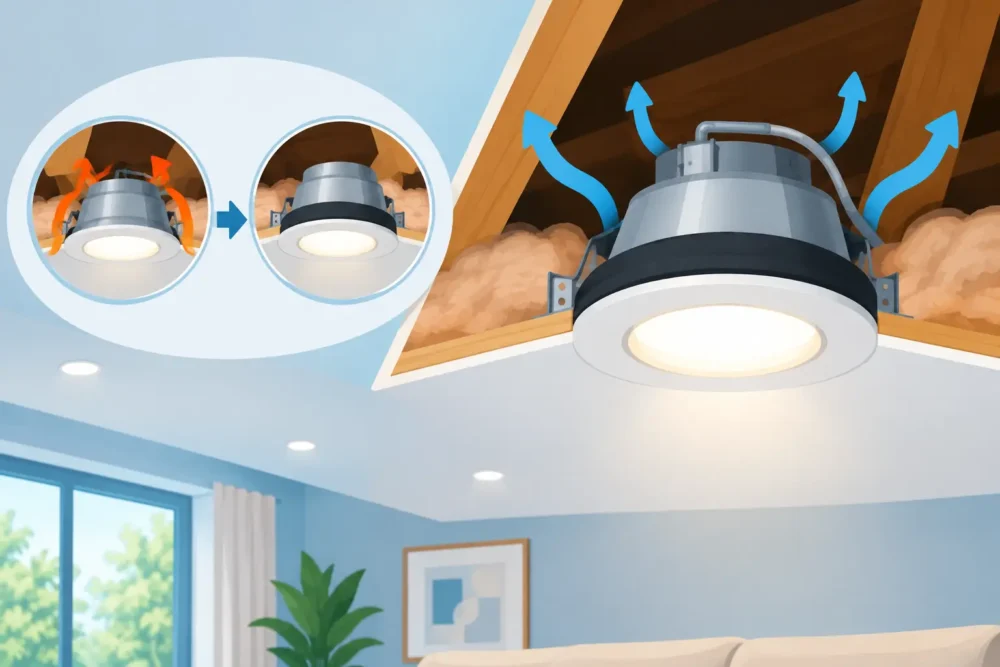
A row of recessed lights can make a room feel bright and finished, yet each fixture may also create a direct pathway between conditioned living space and a hot or cold attic. Recessed light sealing addresses that hidden gap, helping prevent drafts, energy waste, and insulation contamination around ceiling fixtures.
For many Missouri homes, this work is part of a larger attic air-sealing plan. It is rarely the single biggest opening in an attic, but several unsealed cans can add up, especially in homes with older lighting, thin attic insulation, or rooms that are difficult to keep comfortable.
Why recessed lights can leak air
A recessed fixture sits inside a hole cut through the ceiling drywall. With older models, the metal housing often has vents, seams, and openings for wiring. Warm indoor air can rise through those openings during heating season. In summer, attic heat and humid air can move down through gaps around the fixture and trim.
The result may be more than a higher utility bill. Air moving into the attic carries moisture. During cold weather, that moisture can condense on roof sheathing or framing, contributing to staining, mold conditions, or damp insulation over time. Homeowners may also notice chilly spots below upstairs ceilings, dusty rings around light trim, or rooms that never seem to hold a steady temperature.
Not every recessed light is a major leak. Newer airtight fixtures are designed to limit airflow, and a properly installed LED retrofit can improve performance. The condition, age, and rating of the fixture determine the right approach.
The first question: What type of fixture is overhead?
Before sealing or adding insulation, identify the fixture’s label. The markings are usually found inside the housing after removing the bulb and trim, although older units may require an attic-side inspection.
IC-rated vs. non-IC-rated fixtures
An IC-rated fixture is approved for direct contact with insulation. That rating matters because insulation placed against an unapproved fixture can trap heat and create a fire hazard. Some IC-rated fixtures are also labeled airtight, often marked “AT.” Those are generally the best candidates for a well-insulated ceiling, though the penetration around the housing and electrical cable may still need attention.
A non-IC-rated fixture requires clearance from insulation. Its housing needs room to release heat, so simply burying it under cellulose or fiberglass is not a safe solution. These fixtures often need a correctly sized protective cover that maintains clearance, followed by air sealing around the cover. The cover must be made of a material and installed in a way that is appropriate for the fixture and local safety requirements.
Older fixtures deserve extra caution
Many homes in St. Louis County and surrounding communities have recessed lights installed decades ago, when airtight construction was not a standard expectation. A loose socket, brittle wiring, damaged junction box, or old incandescent bulb changes the conversation. In some cases, replacing the fixture with an airtight IC-rated LED unit is more practical and safer than building a workaround around an aging can.
A qualified electrician should handle electrical repairs, fixture replacement, or any concern involving damaged wiring. Air-sealing work should never interfere with a fixture’s required clearances, wiring connections, or access to its junction box.
How recessed light sealing is done correctly
The goal is to create a continuous air barrier at the ceiling plane without compromising fixture safety. A professional starts in the attic, where the real leakage paths are visible. Insulation may need to be gently moved aside so the housing, drywall opening, wiring penetrations, and nearby framing can be evaluated.
For an airtight, IC-rated fixture in good condition, the work may involve sealing small gaps at the drywall and around approved penetrations with compatible caulk or low-expansion foam. Larger openings, such as an oversized drywall cutout or a gap near framing, may require a durable patching material before sealing.
For a non-IC-rated fixture, the process is different. The installer first creates and secures an approved clearance barrier around the fixture. Then the barrier is sealed to the ceiling drywall so air cannot pass around it. Insulation can be installed around the outside of that barrier while keeping the required open space around the light.
Afterward, insulation is restored or improved to the recommended depth for the attic. This order matters. Insulation slows heat transfer, but it cannot stop air flowing through ceiling penetrations. Sealing first gives the insulation a better chance to do its job.
Why spray foam is not a universal answer
Spray foam is useful in many parts of a home’s air barrier, but it is not a material to apply indiscriminately around recessed lights. Foam can violate required clearances, obscure labels, make future electrical service difficult, and create risk when used on the wrong fixture.
The same warning applies to stuffing fiberglass insulation into gaps. Fiberglass is not an air seal. It may reduce heat loss somewhat, but air can still move through and around it. It also does not solve the clearance issue for non-IC-rated housings.
A dependable solution matches the material and method to the fixture type. That takes a close inspection, not a one-size-fits-all repair.
Signs your recessed lights may need attention
A visual inspection from the room below can reveal useful clues. Dark smudges around the trim may indicate air movement carrying dust through a gap. A noticeable draft near a light on a cold or windy day is another warning sign. If an upstairs room is too warm in summer, too cold in winter, or expensive to heat and cool, attic leaks around recessed fixtures may be contributing.
Other signs are found in the attic. Insulation pulled away from fixtures, exposed housings, moisture staining on nearby wood, or animal debris can point to broader attic performance problems. Recessed lights are commonly located near other openings, including top plates, plumbing vents, duct chases, bath fan housings, and electrical penetrations. Addressing all of these areas together usually produces a more meaningful improvement than treating one light at a time.
When an attic inspection is worth it
Recessed light sealing is especially worthwhile before adding attic insulation, after removing contaminated insulation, or during a renovation that opens access to the ceiling. It also makes sense when a homeowner is considering radiant barrier work, attic ventilation changes, or an energy-efficiency upgrade. These projects affect the same attic environment, and a coordinated plan avoids covering hidden defects with fresh insulation.
Thermal imaging can help identify temperature differences around fixtures and ceiling penetrations, particularly when used alongside a hands-on attic inspection. It does not replace direct evaluation of the fixture’s rating and condition, but it can help show where comfort is being lost.
At Better Home Insulation, the focus is on finding the complete cause of attic energy loss, not just adding more material. A free inspection and estimate can clarify whether recessed lights need sealing, protective covers, fixture replacement by an electrician, improved insulation, or a combination of measures.
A small ceiling detail with a larger payoff
Properly sealed recessed lights can reduce drafts, help protect attic insulation from moisture-laden indoor air, and support more even temperatures from room to room. The savings vary with the number and type of fixtures, attic conditions, insulation levels, and the rest of the home’s air leakage, so honest recommendations should reflect those differences.
If your ceiling lights sit below a neglected attic, treat them as part of the home’s protective envelope rather than a minor cosmetic detail. A careful inspection can turn a hidden source of discomfort into one more step toward a cleaner, more comfortable, and more efficient home.