
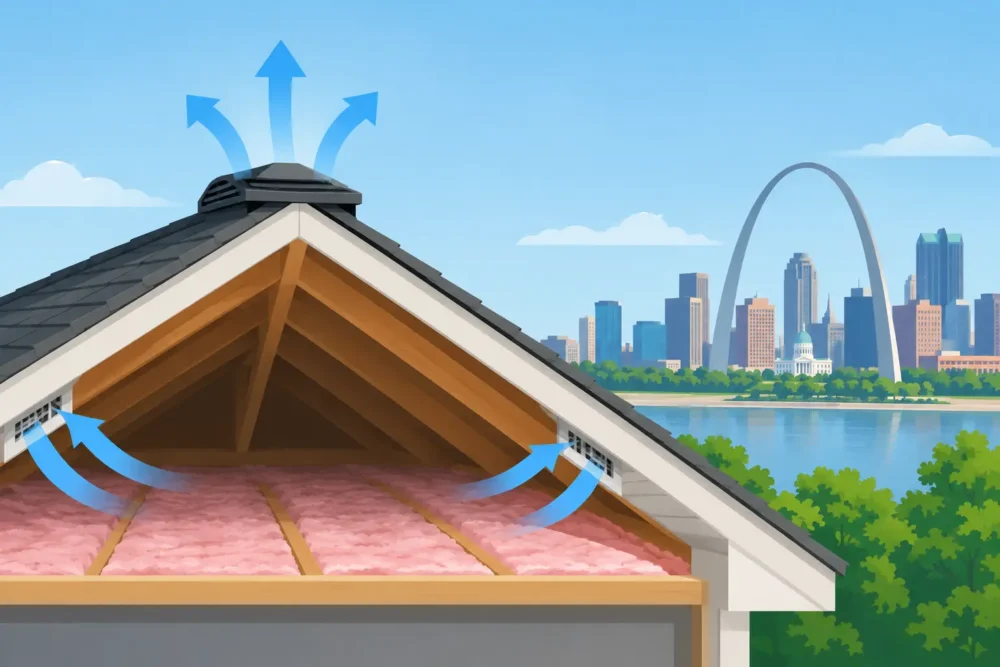
A St. Louis ventilation retrofit is not simply about adding more vents to the roof. It is about helping your attic release excess heat and moisture while protecting the insulation, framing, and living spaces below. When airflow is out of balance, homeowners often notice the effects first: upstairs rooms that stay hot, rising cooling costs, musty odors, or insulation that looks damp, compressed, or contaminated.
For many Missouri homes, ventilation problems are tied to aging insulation, blocked soffits, attic air leaks, or changes made during a past roof replacement. The right retrofit starts with an inspection of the full attic system, not a one-size-fits-all recommendation.
What a St. Louis Ventilation Retrofit Should Address
An attic needs a clear path for outside air to enter low and exit high. In a typical setup, intake vents near the soffits bring in cooler outdoor air, while ridge vents, roof vents, or other exhaust vents allow warmer, moisture-laden air to escape. This natural movement helps keep attic conditions closer to the outdoor temperature and reduces trapped humidity.
Problems develop when one part of that path is missing or restricted. Insulation may be pushed tightly against soffit vents. Painted-over or undersized vents may not provide enough airflow. A powered fan may pull conditioned air from the house through ceiling gaps instead of drawing air through the soffits. Even a well-vented roof can underperform when attic air sealing has been ignored.
A professional retrofit looks at intake, exhaust, air sealing, insulation depth, and moisture conditions together. The goal is balanced airflow that supports the home envelope instead of working against it.
Ventilation Does Not Replace Air Sealing
This distinction matters. Attic ventilation manages the attic itself, while air sealing limits the movement of heated or cooled household air into that attic. Gaps around recessed lights, plumbing penetrations, attic hatches, duct chases, and wiring openings can allow expensive conditioned air to escape.
If those leaks remain open, warm indoor air can enter the attic during winter and carry moisture with it. In summer, attic fans can sometimes increase the problem by drawing more air from the home. Sealing accessible leaks before adding or replacing insulation is often one of the most effective comfort improvements a homeowner can make.
Signs Your Attic May Need Better Airflow
A hot attic on a July afternoon is normal. An attic that stays excessively hot, holds moisture, or contributes to poor indoor comfort may need attention. The warning signs are often subtle at first, especially in homes with older insulation.
Look for uneven temperatures between floors, unusually high summer cooling bills, frost or condensation on attic surfaces during cold weather, mildew odors, rusted nail tips, stained roof decking, or insulation that is matted and damp. Ice dams can also point to heat escaping into the attic, although the underlying cause may be air leaks and insufficient insulation rather than ventilation alone.
Outside, curling shingles or premature roof wear can raise questions about attic heat, but roofing issues have several possible causes. A ventilation assessment should be part of the conversation, not an automatic assumption. The same is true of bathroom fans that terminate in the attic. Those fans should vent outdoors, because no amount of passive attic ventilation is designed to handle regular showers of humid indoor air.
Why Ventilation Needs to Match the Home
There is no single vent layout that fits every house in St. Louis County or the surrounding area. Roof shape, attic size, insulation type, soffit design, existing vent locations, and local building requirements all affect the appropriate solution.
A home with continuous soffits may be a good candidate for continuous intake ventilation paired with a ridge vent. Another home may have limited soffit access, multiple roof lines, or a finished upper floor that changes how the attic can be reached. Older homes can present special challenges, including enclosed eaves, low-slope roof sections, and insulation that has settled into ventilation pathways.
More exhaust ventilation is not always better. Too much exhaust without adequate intake can reduce effectiveness and may encourage the system to pull air from unintended places. Mixing several types of exhaust vents on the same roof can also create competing airflow patterns. The best approach depends on what the inspection shows, not on adding the most visible hardware.
Powered Attic Fans Require Careful Evaluation
Powered attic ventilators may help in certain situations, but they are not a universal answer to a hot home. If the attic floor has air leaks, a strong fan can pull air-conditioned indoor air upward, increasing energy use rather than lowering it. It may also create pressure conditions that interfere with combustion appliances in some homes.
Before recommending a powered solution, a contractor should evaluate air leakage, intake capacity, electrical needs, and the rest of the attic assembly. In many cases, proper soffit intake, balanced roof exhaust, attic air sealing, and sufficient insulation offer more dependable results with less risk of unintended air loss.
The Connection Between Insulation and Ventilation
Insulation and ventilation are often discussed separately, but they depend on each other. Insulation slows heat transfer between the attic and the rooms below. Ventilation helps manage the heat and moisture that still collect in the attic. If insulation blocks soffit vents, airflow is restricted. If ventilation is poor, insulation may be exposed to conditions that reduce its performance or contribute to moisture damage.
During a retrofit, insulation baffles are commonly installed near the eaves to keep a channel open from the soffit into the attic. These baffles prevent loose-fill insulation from drifting into the intake area while allowing the attic floor to be insulated correctly. They are small components, but they can make the difference between a vent that exists and a vent that actually works.
A complete inspection should also check whether existing insulation is clean and usable. Rodent activity, water damage, mold-like growth, or heavily compacted material may call for removal and remediation before new insulation is installed. Covering a problem with fresh material does not correct the cause.
What to Expect From a Professional Assessment
A useful ventilation inspection begins inside the attic, not from the driveway. The technician should examine existing intake and exhaust vents, look for blocked pathways, assess insulation coverage, and identify obvious air leaks or signs of moisture. Thermal imaging can help reveal temperature irregularities, while a visual review can identify contaminated insulation, pest damage, and roof-deck staining.
From there, recommendations should be specific. You may need soffit baffles and air sealing before insulation is topped off. You may need a new vapor barrier in a crawl space if moisture is entering the home from below. Or you may need targeted ventilation improvements after a roofing project altered the attic’s existing airflow.
That individualized approach is especially valuable in the St. Louis area, where humid summers and cold winter swings put different demands on the same attic throughout the year. A recommendation should explain what is causing the problem, what work is proposed, and what result you can reasonably expect.
Improve Comfort Without Guesswork
A ventilation retrofit can support cooler upstairs rooms, healthier attic conditions, and better insulation performance, but results depend on the entire home envelope. It is not a shortcut around major air leaks, inadequate insulation, roof leaks, or moisture sources that have not been corrected.
Better Home Insulation helps homeowners identify those connected issues through inspection-led recommendations and practical attic solutions. Licensed and insured technicians can address ventilation, air sealing, insulation, contaminated material removal, and related concerns in a coordinated plan, with a free estimate and a 100% satisfaction guarantee.
If your attic feels like it is working against your home, start with a clear diagnosis. The right improvements can make each season more comfortable while helping protect one of the most overlooked spaces in the house.