
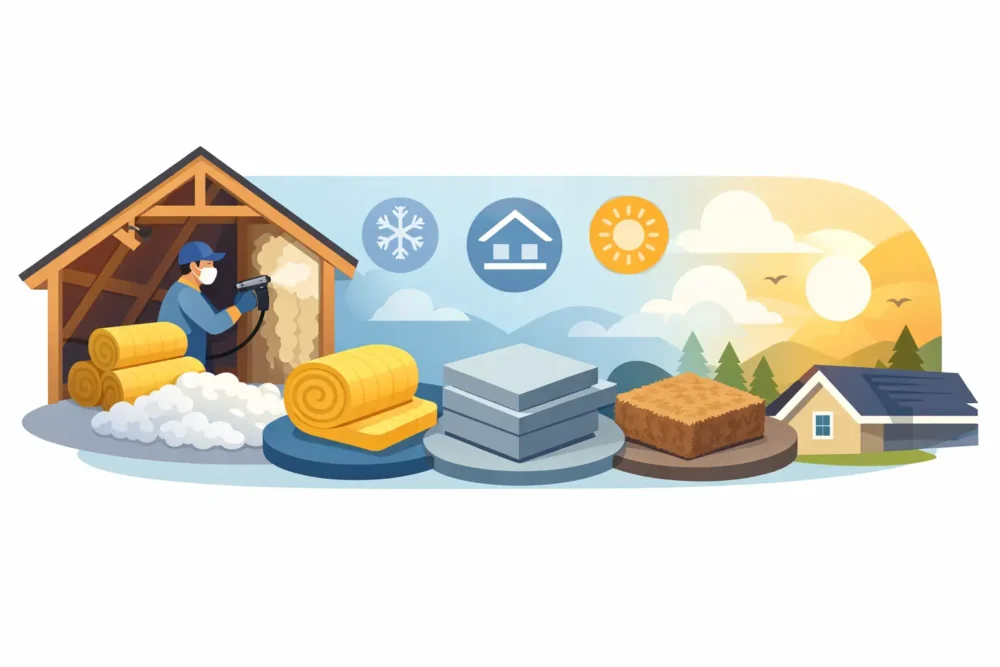
If your upstairs is hard to cool in summer, your furnace seems to run nonstop in winter, or some rooms never feel quite right, the attic is usually part of the story. Choosing the best attic insulation materials can make a noticeable difference in comfort, utility costs, and even indoor air quality – but the right choice depends on more than just price per bag or roll.
An attic is not a simple box where you add insulation and call it done. The condition of the existing insulation, the amount of air leakage, signs of moisture, ventilation performance, and even rodent activity all affect what material will work best. That is why the best results usually come from treating the attic as part of the whole home envelope, not as a standalone project.
What makes one attic insulation material better than another?
Homeowners often hear about R-value first, and it does matter. R-value measures resistance to heat flow. In general, a higher R-value means better insulating performance for the same thickness. But material choice also affects how well the insulation fits around wiring and framing, how it handles air movement, whether it traps moisture, and how long it keeps its shape.
A material that looks good on paper may underperform in a real attic if it is installed over air leaks, compressed under storage boards, or exposed to moisture. That is why the best attic insulation materials are not always the most expensive or the highest R-value per inch. They are the ones that match the attic’s conditions and are installed correctly.
Best attic insulation materials for most homes
Blown-in fiberglass
Blown-in fiberglass is one of the most common attic insulation choices, especially for open attic floors. It performs well, installs quickly, and works well for topping off underinsulated attics. Because it is blown in, it can cover large areas evenly and fill around ceiling joists and other irregular surfaces better than batt insulation.
For many homes, this is a practical middle-ground option. It is typically more affordable than spray foam and less labor-intensive than cutting and fitting batts across an entire attic. It also does not absorb moisture as readily as cellulose, which can be an advantage in attics with a history of humidity problems.
The trade-off is that blown-in fiberglass does not air seal on its own. If the attic floor has gaps around can lights, pipe penetrations, top plates, or attic hatches, warm or cool air can still escape through those openings. In those cases, air sealing should happen before insulation is added.
Blown-in cellulose
Blown-in cellulose is another strong option and is often chosen for its density and ability to reduce air movement through the insulation layer better than fiberglass alone. It is made largely from recycled paper products treated for fire and pest resistance. When installed at the proper depth, cellulose can provide excellent thermal performance and good coverage around framing and obstacles.
Cellulose is especially useful when homeowners want to improve an attic with uneven existing insulation or lots of small gaps and irregular spaces. It settles into voids well and can help create a more consistent blanket across the attic floor.
Still, cellulose is not ideal for every situation. It can hold moisture more readily than fiberglass, so if an attic has roof leaks, ventilation problems, or high humidity, those issues need to be corrected first. If not, the insulation can become heavy, lose effectiveness, and contribute to odor or contamination issues.
Fiberglass batts
Fiberglass batt insulation is familiar to many homeowners because it is sold in pre-cut rolls or sections. In the right setting, it can work well, especially in attics with open framing, minimal obstructions, and no major performance problems. It can be a straightforward option for new construction or areas where installers have easy access and can fit the batts carefully.
The challenge is that attic spaces are rarely perfect. Batts lose effectiveness when they are compressed, gapped, or installed around wiring and pipes without careful fitting. Even small voids can lower performance more than homeowners expect. In older homes, this makes batt insulation less forgiving than blown products.
Batts also do not solve air leakage. If your attic has drafts, comfort issues, or dusty insulation from air movement, batts alone may not deliver the results you want.
Spray foam insulation
Spray foam is different from the other materials because it insulates and air seals at the same time. That makes it one of the highest-performing options in the right application. It is often used along the roof deck in conditioned attics or in targeted problem areas where air leakage is severe.
For homes with difficult comfort issues, complex rooflines, ductwork in the attic, or major air leakage, spray foam can be a powerful solution. It can help reduce temperature swings, limit outside air infiltration, and improve overall efficiency more dramatically than insulation alone.
The trade-off is cost. Spray foam is usually the most expensive attic insulation option, and it is not always necessary for every home. It also requires careful planning because attic ventilation strategy may need to change depending on where the foam is installed. This is one area where a professional assessment matters.
Which attic insulation material is best for your situation?
The answer depends on what is happening in your attic now. If the main issue is low insulation depth and the attic is otherwise dry and reasonably tight, blown-in fiberglass or cellulose may be the most cost-effective improvement. If the bigger problem is air leakage, insulation alone will not fix it, and air sealing needs to come first.
If your attic has old, dirty, rodent-damaged, or flattened insulation, removal may be the right first step before any new material is installed. Adding fresh insulation over contaminated material can leave odors, allergens, and hidden performance issues in place. In homes across the St. Louis area, this comes up more often than many homeowners expect, especially in older attics that have seen years of settling, pest activity, or moisture exposure.
If your HVAC ducts run through the attic and your second floor struggles to stay comfortable, the best solution may include more than insulation. Air sealing, duct evaluation, ventilation adjustments, and radiant barrier work may all be part of the recommendation depending on the attic design.
Why air sealing matters as much as insulation
One of the biggest mistakes homeowners make is focusing only on insulation depth. Insulation slows heat transfer, but it does not stop moving air unless the material is designed to air seal. If conditioned air is escaping through recessed lights, wiring holes, plumbing penetrations, or attic access points, you can lose a surprising amount of energy no matter which insulation you choose.
That is why many of the best attic insulation material upgrades start with sealing leaks first. Once those openings are closed, the insulation can do its job more effectively. This also helps with dust, comfort, and indoor air quality because the home is less likely to pull hot, cold, or contaminated attic air into living spaces.
Cost, performance, and long-term value
Homeowners naturally want to compare materials by upfront price, but long-term value matters more. A cheaper material that is installed poorly or used in the wrong attic may lead to disappointing results. A slightly higher investment in the right insulation, paired with air sealing and corrective work, usually pays off better in comfort and energy savings.
This is also where a full-service approach helps. When an insulation contractor can assess contamination, moisture, ventilation, and hidden bypasses before recommending a product, the final result is more reliable. Better Home Insulation takes that inspection-first approach because attic problems are rarely just about adding more material.
How to choose with confidence
If you are trying to narrow down the best attic insulation materials, start with the attic’s condition, not the material name. Ask whether the current insulation is clean, dry, and properly installed. Find out whether air leaks are present. Check whether ventilation is balanced and whether there are signs of pests or moisture.
From there, the right material usually becomes much clearer. Blown-in fiberglass is a solid fit for many attics. Cellulose can be a strong performer when moisture is controlled. Batts work best where framing is open and installation can be precise. Spray foam makes sense when air sealing and high performance are top priorities.
The best attic upgrade is the one that solves the actual problem in your home, not the one with the most marketing behind it. A well-insulated attic should help your house feel steadier, cleaner, and less expensive to heat and cool. If your home is still struggling, the next smart step is not guessing – it is getting the attic evaluated so the fix matches the cause.