
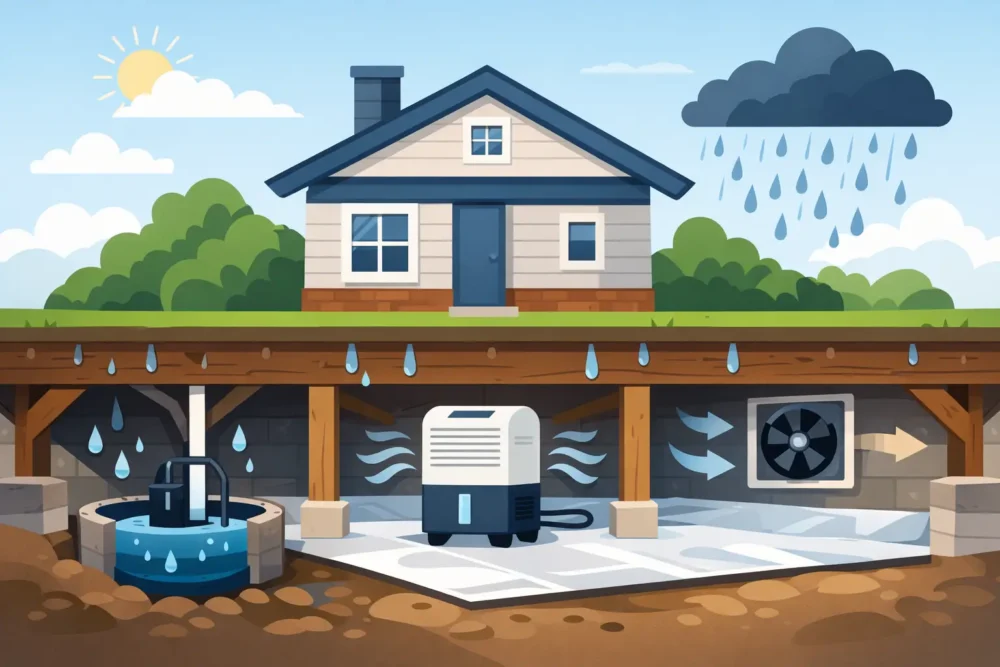
A damp crawl space rarely stays a crawl-space-only problem. Moisture below your floors can contribute to musty odors, cold rooms, higher utility bills, damaged insulation, pest activity, and unhealthy indoor air. The best crawl space moisture solutions address where the water is coming from first, then protect the space from future humidity and ground moisture.
For homeowners, the right fix is not always one product or one quick repair. A vapor barrier can be highly effective, for example, but it cannot correct standing water caused by poor drainage. Insulation can improve comfort, but wet or contaminated insulation may need to be removed before new material is installed. A careful inspection helps separate the symptoms from the source.
Start by Identifying the Source of Moisture
Crawl spaces collect moisture in several ways. Rainwater may flow toward the foundation because of clogged gutters, short downspouts, or soil that slopes toward the home. Groundwater can enter through foundation walls or the crawl space floor. Plumbing leaks, unsealed vents, and humid outdoor air can add moisture as well.
The timing of the problem often provides useful clues. If the crawl space becomes wet after heavy rain, exterior drainage and groundwater control should be the first concern. If it feels damp all summer without visible puddles, humid air and exposed soil may be driving the issue. A persistent wet area near pipes may point to a plumbing leak.
Homeowners should not assume that a musty smell is normal in an older home. Air from a crawl space can move upward into living areas through gaps around plumbing, wiring, ducts, and floor framing. That means a moisture issue below the house can affect comfort and air quality above it.
The Best Crawl Space Moisture Solutions, Matched to the Problem
A complete moisture-control plan may include several measures. The best combination depends on the crawl space condition, local soil and weather patterns, foundation design, and whether the area is vented or enclosed.
Improve exterior drainage first
Water should move away from the foundation, not collect beside it. Cleaning gutters, repairing damaged sections, and extending downspouts away from the home can reduce the amount of water reaching the crawl space. Regrading the soil so it slopes away from the foundation may also be necessary.
This work is especially valuable for homes in the St. Louis area, where heavy storms and changing seasonal conditions can expose drainage weaknesses quickly. If water continues to enter despite exterior improvements, an interior drainage system and sump pump may be appropriate. These systems collect water at the crawl space perimeter and move it safely away from the foundation.
A sump pump is a strong solution for recurring groundwater or standing water, but it should be installed with a reliable discharge path. In areas with frequent outages, a battery backup can provide added protection when the pump is needed most.
Install a properly sealed vapor barrier
A crawl space vapor barrier limits moisture evaporating from bare earth into the air. It is typically a heavy polyethylene material installed across the floor, with seams overlapped and sealed. For a more complete moisture-control system, the barrier may extend up foundation walls and be sealed around piers and penetrations.
Thin plastic laid loosely on the ground is not the same as a professionally installed barrier. Loose material can tear, shift, trap debris, and leave gaps where ground moisture still enters. Proper preparation and sealing make a substantial difference in performance and durability.
Vapor barriers are often one of the most cost-effective crawl space improvements when exposed soil is the main source of humidity. However, they are not designed to stop active water entry. If the crawl space floods or has wet foundation walls, drainage corrections should come before or alongside barrier installation.
Encapsulate when humidity control needs to be stronger
Crawl space encapsulation is a more comprehensive approach. It generally includes a durable sealed vapor barrier on the floor and walls, air sealing of outside vents and gaps, and controlled moisture management. The goal is to separate the crawl space from damp soil and humid outdoor air.
Encapsulation can improve conditions under the home, protect framing and insulation, and reduce the amount of humid air entering the house. It may also help make floors feel less cold during winter and reduce the strain on heating and cooling equipment.
There is a trade-off: sealing a crawl space without a plan for moisture control can create problems instead of solving them. The enclosed area may need a crawl-space-rated dehumidifier or a carefully designed source of conditioned air. A professional evaluation can determine whether encapsulation is the right fit and how the space should be managed afterward.
Use a dehumidifier for ongoing humidity control
A dehumidifier removes moisture from the crawl space air and can be an excellent addition after drainage, air sealing, and vapor-barrier work. It is particularly useful in humid climates, during wet seasons, or in crawl spaces that remain damp even after the obvious water sources have been addressed.
The equipment should be sized for the space and installed with a dependable drain line. A unit that is too small may run constantly without lowering humidity enough, while an improperly drained unit can create another water problem. In many homes, maintaining crawl space humidity below 60% helps discourage mold growth and protects wood framing.
A dehumidifier is not a substitute for fixing a leak, flooding, or bare-soil moisture. Think of it as the system that maintains dry conditions after the building and drainage issues are corrected.
Remove damaged insulation and install the right replacement
Fiberglass insulation between crawl space floor joists can sag, absorb moisture, hold odors, and become a nesting material for pests. Once insulation is wet, moldy, or contaminated, drying it in place is rarely a lasting solution. Removal may be the healthier and more practical choice.
After moisture is under control, the replacement insulation strategy should fit the crawl space design. In a sealed or encapsulated crawl space, insulating foundation walls is often more effective than insulating the floor above. In other situations, properly supported floor insulation may still make sense. Air sealing gaps around penetrations and rim joists is equally important because insulation alone does not stop air movement.
The right insulation approach can improve floor comfort, reduce energy loss, and keep humid crawl space air from reaching the home. It also protects the investment in moisture remediation by helping maintain more stable temperatures below the house.
Do Not Overlook Pests, Mold, and Structural Warning Signs
Moisture and pest issues often arrive together. Rodents and insects are drawn to damp, protected areas, while wet insulation can provide nesting material. Before sealing a crawl space, entry points should be identified and addressed so pests are not sealed inside or given another route into the home.
Visible mold, rotted wood, or significant standing water calls for prompt professional attention. Surface staining may be limited, but widespread growth or deteriorated framing can indicate a more serious issue. A qualified contractor can assess the condition of insulation, vapor barriers, ventilation openings, and moisture pathways without guessing at the cause.
Watch for these common signs that a crawl space inspection is worthwhile:
- Musty odors near floors, closets, or supply vents
- Condensation on ductwork, pipes, or foundation walls
- Sagging, wet, or fallen insulation
- Cupped hardwood floors or unexplained indoor humidity
- Pest droppings, damaged vapor barriers, or chewed insulation
Why a Whole-Home Inspection Produces Better Results
Crawl space moisture affects more than the foundation area. It can influence HVAC performance, indoor humidity, insulation effectiveness, and the condition of flooring above. That is why the most dependable recommendations look at the home as a connected system rather than treating one wet spot in isolation.
A professional inspection can reveal whether the priority is drainage, vapor-barrier installation, insulation removal, air sealing, dehumidification, or a combination of services. It also prevents common mistakes, such as installing new insulation over wet materials or closing vents before water entry has been controlled.
Better Home Insulation provides inspection-led crawl space recommendations for homeowners who want practical answers, not one-size-fits-all repairs. Licensed and insured technicians can help identify hidden moisture exposure, damaged insulation, air leaks, and pest-related concerns, then explain the options clearly before work begins.
A dry crawl space protects far more than the area beneath your home. Addressing the cause early can help preserve your insulation, improve everyday comfort, and give you confidence that the air moving through your home is cleaner and drier.