
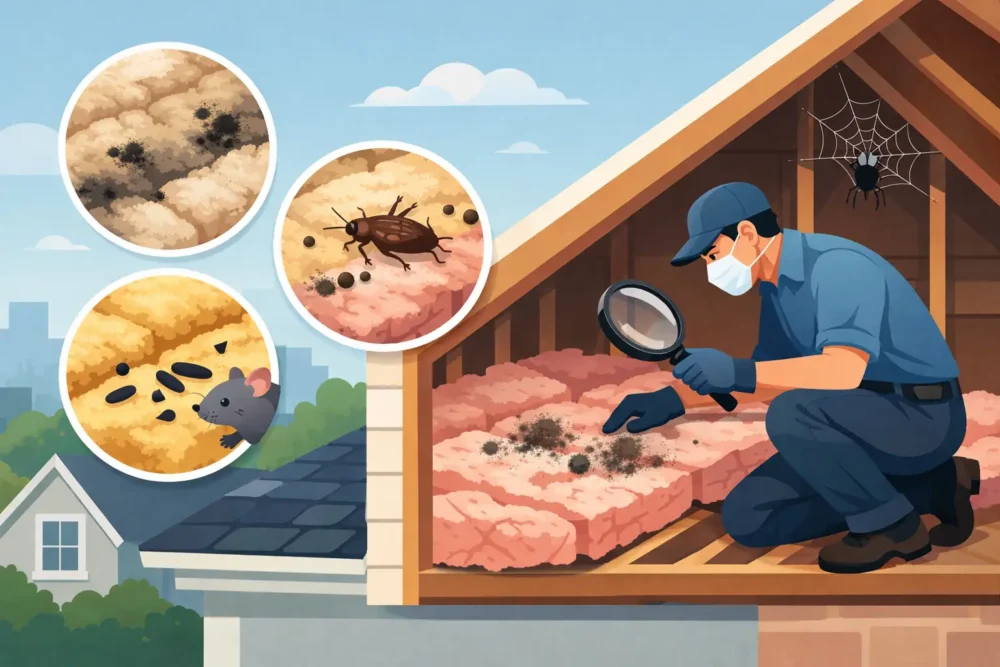
A musty odor near an attic hatch, a sudden rodent smell in a bedroom, or insulation that looks matted and stained can point to a problem above or below your living space. Knowing how to spot insulation contamination helps you protect your home’s comfort, indoor air quality, and heating and cooling costs before a hidden issue grows.
Insulation is not meant to last forever under every condition. It can absorb moisture, collect animal waste, hold dust and debris, or lose its shape after repeated pest activity. The right response depends on what caused the contamination, how widespread it is, and whether the insulation can still perform as intended.
What Insulation Contamination Means
Contaminated insulation is insulation that has been affected by a substance or condition that makes it unsafe, unsanitary, damaged, or less effective. In many homes, the most common causes are rodent or wildlife activity, roof or plumbing leaks, condensation, mold growth, and heavy dust buildup.
Contamination does not always mean every inch of insulation must be removed. A small, dry stain from an old repair may not require full replacement. But insulation that is wet, moldy, packed down, urine-soaked, or filled with droppings should not be treated as a cosmetic issue. It can create odor problems, reduce R-value, and allow the underlying cause to continue damaging the home.
How to Spot Insulation Contamination: Key Warning Signs
Most homeowners do not need to walk across attic joists or crawl into a tight crawl space to recognize an issue. Start with the signs you can safely see, smell, and notice in daily life.
Persistent musty, urine, or animal odors
A damp, earthy smell can indicate moisture exposure or microbial growth. A sharp ammonia-like smell often points to rodent urine, especially if it becomes stronger near an attic access door, wall opening, or crawl space entry.
Odors can travel through gaps around wiring, ceiling fixtures, duct penetrations, and attic hatches. If the smell seems to worsen when the HVAC system runs or after rain, that timing provides a useful clue about the source.
Droppings, nesting material, and disturbed insulation
Rodents often tunnel through loose-fill insulation and flatten it into pathways. Look for small dark droppings, shredded paper or fabric, seeds, chewed materials, and areas where insulation has been pushed aside or compressed.
Mice, rats, squirrels, and other wildlife can contaminate more than the visible spot where they nest. Urine may spread into nearby insulation, and pests can use the same travel routes repeatedly. The insulation may appear gray, matted, or noticeably thinner along those routes.
Wet, matted, or unusually heavy insulation
Dry insulation should generally look fluffy or uniform for its material type. When it is wet, it can clump, sag, darken, or become heavy and compressed. Fiberglass batts may slump between framing members, while cellulose may form dense, crusted sections.
Moisture can come from a roof leak, plumbing leak, disconnected bathroom exhaust duct, ice damming, or condensation caused by poor attic ventilation and air leakage from the home below. Replacing wet insulation without correcting the moisture source only delays the same problem.
Stains, discoloration, or visible growth
Brown or yellow staining may suggest water exposure. Black, green, or white spotting can be associated with mold or other microbial growth, although appearance alone cannot identify a specific substance.
Check nearby wood framing, roof decking, and drywall as well. If those materials show staining or visible growth, the problem may extend beyond the insulation. Avoid disturbing suspected moldy material, since movement can release particles into the air.
Uneven temperatures and rising energy bills
Contamination often has a performance cost. Compressed, wet, or displaced insulation cannot resist heat flow as effectively as clean, properly installed insulation. You may notice rooms that are harder to heat or cool, drafts near ceilings, or utility bills that rise without a clear change in usage.
These symptoms do not prove contamination on their own. Air leaks, insufficient insulation depth, duct leakage, and HVAC issues can cause similar discomfort. A professional inspection can separate the symptoms from the actual cause.
Where to Check Safely
The attic is a common trouble spot because it is exposed to roof leaks, outdoor temperature swings, and pest entry points. From a safe position near the attic opening, use a bright flashlight to look for obvious pathways, stains, droppings, dampness, or low areas in the insulation. Do not step on insulation or ceiling drywall. If you must enter an attic, use secure walk boards and avoid contact with electrical hazards.
Crawl spaces deserve equal attention. A damaged or missing vapor barrier, damp soil, plumbing leaks, and foundation openings can create the conditions for contaminated crawl space insulation. Warning signs include a lingering damp smell indoors, wet insulation hanging from floor joists, visible pest activity, or elevated floors that feel cold in winter.
Exterior clues matter, too. Gaps around rooflines, vents, utility penetrations, crawl space openings, and siding transitions can give pests a way in. A contamination problem is rarely solved for good until those access points and moisture pathways are addressed.
What Not to Do When You Find a Problem
Do not sweep, vacuum with a standard household vacuum, or shake out insulation that contains rodent droppings or suspected mold. These actions can stir dust and contaminants into the air. Do not compress soiled insulation into trash bags without proper protective equipment and disposal practices.
Avoid using fragrance sprays to cover an attic or crawl space odor. They do not sanitize the area or restore insulation performance. Likewise, adding fresh insulation over wet or animal-contaminated material can trap the problem below and make future cleanup more difficult.
Older homes require extra caution. If you find vermiculite insulation, stop work and arrange for professional evaluation before disturbing it. Some vermiculite insulation may contain asbestos, and it cannot be identified safely by sight alone.
When Insulation Removal Is Usually the Better Choice
Removal is often the practical recommendation when insulation has widespread rodent waste or urine, is saturated from a leak, shows substantial mold-related damage, or has lost its loft from contamination and compression. It may also be appropriate after a long-term pest infestation, even when the visible evidence seems limited.
A complete solution should go beyond removal. The work may include controlled extraction and disposal, sanitizing affected surfaces, sealing rodent entry points, repairing moisture sources, improving ventilation, air sealing gaps, and installing new insulation to the appropriate depth and R-value. Each step addresses a different part of the problem.
For example, an attic with mouse contamination may also have open utility penetrations that allow warm indoor air into the attic. That air can carry odors, waste energy, and create condensation risks. Removing the damaged insulation without air sealing and rodent proofing leaves the home vulnerable to another cycle of damage.
Why a Professional Inspection Can Save Time and Cost
A qualified inspection helps determine whether a stain is old or active, whether odors originate in insulation or another building material, and whether the problem is localized or widespread. Thermal imaging can also help identify missing insulation, moisture-related temperature patterns, and air leakage that a visual check may miss.
For homeowners in the St. Louis area, Better Home Insulation can assess the insulation itself along with related attic or crawl space conditions. That broader view matters because comfort, sanitation, moisture control, and energy efficiency are closely connected. A clear inspection and written recommendation let you choose the right scope of work without guessing.
If you suspect contamination, limit unnecessary access to the area and address the source promptly. Clean, dry, properly installed insulation works quietly in the background – helping your home feel healthier, more comfortable, and easier to heat and cool every day.