
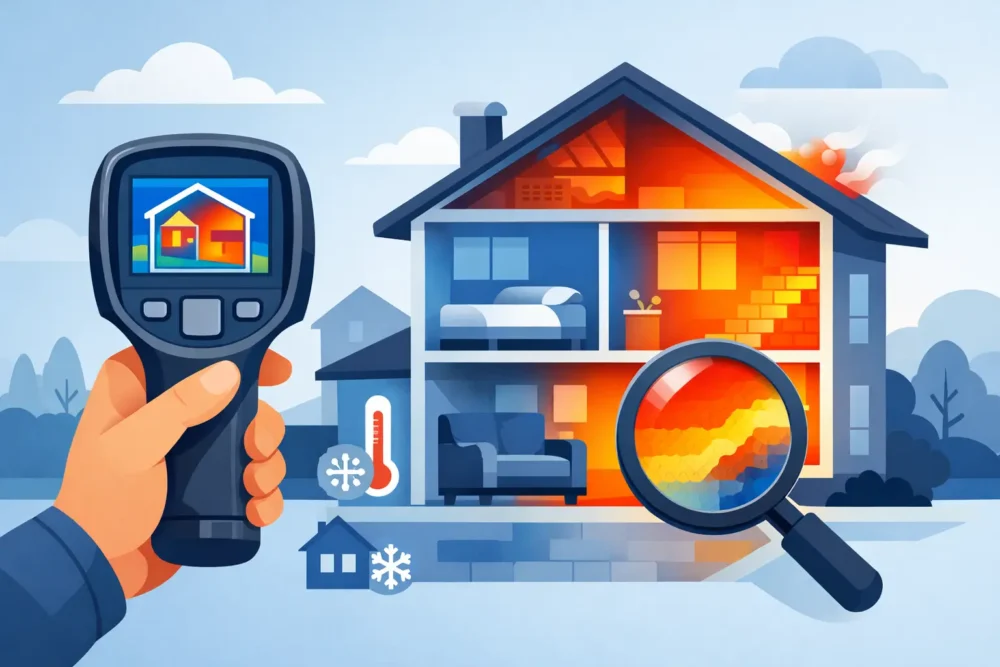
A bedroom that stays cold even when the thermostat is set correctly is rarely a mystery to the homeowner living with it. The same goes for a second floor that overheats every summer, a draft near an exterior wall, or utility bills that keep climbing without an obvious explanation. Thermal imaging for insulation problems helps show where a home is losing conditioned air and where the building envelope may need attention.
A thermal camera does not see through walls or measure insulation R-value directly. What it does reveal is surface-temperature variation. When used by an experienced insulation professional, that information can point to missing insulation, air leaks, moisture concerns, poorly sealed attic openings, and other hidden performance issues that deserve a closer look.
What Thermal Imaging Can Reveal in Your Home
Every home has areas that transfer heat more easily than others. In winter, those areas often appear cooler on interior thermal images because heat is escaping. In summer, they may appear warmer as outside heat moves inward. The color pattern itself is not the diagnosis. It is evidence that helps a trained technician determine where to investigate.
Thermal imaging is especially useful because many insulation and air-sealing problems are concealed behind drywall, ceilings, flooring, or attic materials. Instead of guessing which upgrade will make a difference, an inspection can help narrow the work to the areas creating the greatest comfort and energy concerns.
Common findings include uneven or compressed attic insulation, gaps around recessed lights and attic hatches, unsealed plumbing and wiring penetrations, poorly insulated knee walls, and air movement around windows or exterior-wall connections. In crawl spaces, a scan may also help identify cold floors above unconditioned areas, missing insulation, or locations affected by moisture.
Insulation Gaps and Settling
Insulation can look adequate from a distance while still leaving important sections underprotected. Older fiberglass batts may be disturbed, compressed, or missing around edges. Loose-fill insulation can settle over time, reducing its effective depth. Wall cavities can contain voids that are not visible during a standard walkthrough.
A thermal pattern can help identify where these conditions are likely. The next step may involve checking attic depth, examining accessible wall or crawl space areas, or confirming the issue with additional diagnostic methods. This prevents homeowners from treating every room exactly the same when the home may have a few concentrated weak points.
Air Leaks That Make Insulation Work Harder
Insulation slows heat transfer, but it cannot stop moving air. A small opening between the attic and living space can allow heated or cooled air to escape continuously. That means your HVAC system works longer, and insulation near the leak cannot perform as intended.
Thermal imaging often makes these leakage paths easier to locate, particularly when there is a meaningful temperature difference between indoors and outdoors. Attic access doors, top plates, duct penetrations, dropped soffits, chimney chases, and openings around pipes are frequent trouble spots. Proper air sealing before adding insulation is often one of the most valuable improvements a homeowner can make.
Moisture Clues and Damaged Materials
Moisture can change the temperature of building materials, which means a thermal camera may reveal unusual areas that warrant further evaluation. A cool patch is not automatically a roof leak, plumbing leak, or mold issue. It could be air leakage, a missing insulation section, or a temperature effect caused by framing.
That distinction matters. A responsible inspection does not treat a thermal image as proof by itself. The technician should consider the home’s construction, weather conditions, visible signs, moisture readings when appropriate, and the location of plumbing, ducts, and exterior surfaces. If insulation has been wet, contaminated, or damaged by rodents, removal and sanitation may be needed before replacement.
Why Timing Matters for Thermal Imaging for Insulation Problems
Thermal imaging works best when indoor and outdoor temperatures are noticeably different. During a St. Louis winter, for example, warm indoor air against cold outdoor conditions can make heat-loss patterns easier to detect. Hot summer weather can also provide useful contrast when the home is air conditioned.
A scan performed during mild weather can still provide information, but the findings may be less defined. Wind, direct sunlight, recent rain, HVAC operation, furniture against walls, and closed blinds can all affect surface temperatures. This is why experienced interpretation matters more than simply pointing a camera around a room.
For air-leak testing, a professional may also use a blower door to create pressure differences inside the home. When paired with thermal imaging, this approach can make hidden leakage paths stand out more clearly. It is a more targeted way to identify where air sealing will deliver results.
What a Professional Inspection Should Include
A useful thermal inspection starts with the homeowner’s concerns. Which rooms are uncomfortable? When does the problem occur? Are energy bills unusually high? Has there been a roof leak, rodent activity, remodeling project, or insulation work in the past? These details help connect the scan to real conditions in the house.
The technician should then inspect accessible areas such as the attic, crawl space, basement rim joists, exterior walls, windows, and ceiling transitions. Thermal findings should be explained in plain language, along with the recommended next step. In some homes, the answer is additional attic insulation. In others, the better solution is air sealing first, replacing contaminated insulation, correcting crawl space moisture conditions, or improving ventilation.
A complete recommendation also accounts for safety. Insulation cannot be installed carelessly around heat-producing fixtures, chimneys, electrical components, or ventilation pathways. Attic ventilation, vapor control, duct condition, and pest entry points can all influence how well an insulation project performs over time.
The Difference Between a Scan and a Real Solution
A thermal image can be compelling because it gives homeowners a visual explanation for a problem they have felt for years. But the camera is a diagnostic tool, not the repair. The value comes from using its findings to make the right improvements in the right order.
For example, adding more insulation over a major attic air leak may improve the situation somewhat, but it can leave energy waste and drafts unresolved. Sealing leaks without addressing thin, damaged, or contaminated insulation may also fall short of the comfort improvement you expect. The best plan depends on what the inspection uncovers and how the home was built.
This is where a full-service approach is helpful. A home may need attic air sealing and insulation, crawl space vapor barrier work, insulation removal, rodent proofing, or ventilation adjustments as part of one coordinated project. Addressing the underlying cause protects the investment and supports healthier indoor conditions.
When to Schedule an Inspection
Consider a thermal inspection if one or more rooms are consistently hotter or colder than the rest of the house, your heating and cooling costs have increased, or your HVAC system runs longer than expected. It is also worthwhile after a roof leak, pest infestation, water event, major renovation, or when purchasing an older home with uncertain insulation history.
Homeowners planning to add attic insulation can benefit as well. A scan and attic assessment can help identify air leaks and problem areas before new material is installed. That gives the project a better chance of delivering lower energy use and more even temperatures rather than simply adding another layer over unresolved issues.
Better Home Insulation provides inspection-led recommendations for homeowners who want clear answers instead of a one-size-fits-all quote. Licensed and insured technicians can evaluate the parts of the home that affect comfort most, then explain practical options for correcting them.
If your home has been telling you something through cold floors, stubborn drafts, or rooms that never seem to match the thermostat, a professional thermal inspection can turn that frustration into a clear path forward.