
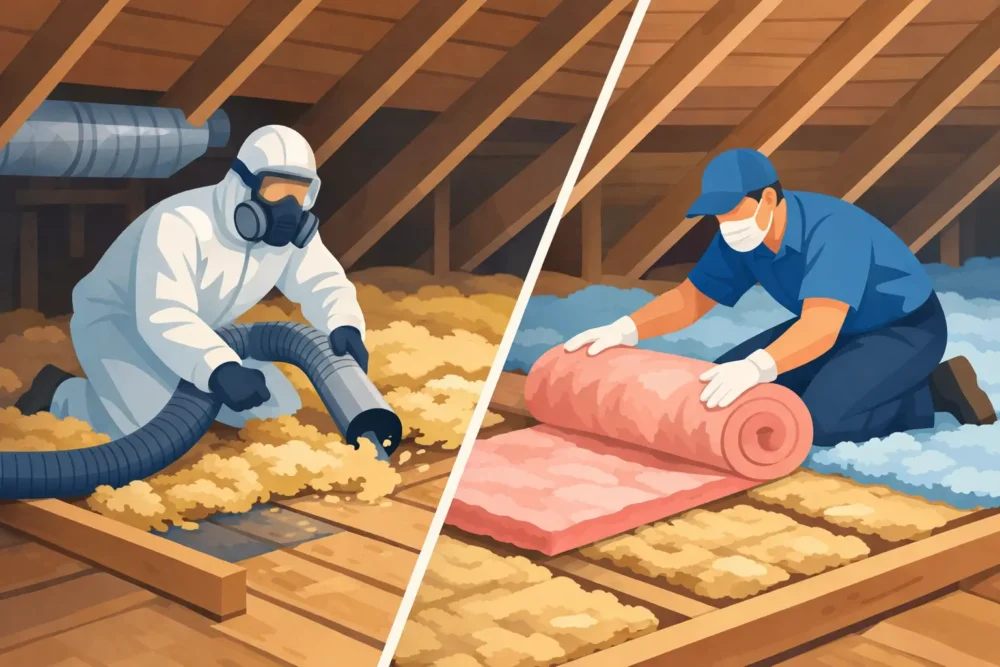
A homeowner may see old attic insulation and assume the simplest answer is to add more on top. Sometimes that is the right call. But insulation removal versus insulation over old material is not just a question of cost or convenience. The condition of the existing insulation can affect your energy bills, indoor air quality, pest control, moisture risk, and the performance of every new inch installed above it.
For a clean, dry attic with insulation that is still performing reasonably well, adding material can be an efficient upgrade. When the insulation is contaminated, compressed, wet, moldy, or hiding air leaks and rodent activity, removal is often the smarter long-term investment. A professional inspection helps separate a straightforward insulation top-up from a problem that needs to be corrected first.
When Adding Insulation Over Old Material Makes Sense
Adding new insulation over existing material is common in homes with aging but otherwise clean attic insulation. Fiberglass batts and blown-in cellulose do not automatically need replacement simply because they have been in place for years. If the material is dry, free of animal contamination, and evenly distributed, it may still provide useful thermal resistance.
This approach can improve R-value without the added labor and disposal costs of full removal. R-value measures how well insulation resists heat flow. In a St. Louis-area home, increasing attic R-value can reduce unwanted heat gain during humid summers and heat loss during cold winter weather. The result can be more consistent temperatures from room to room and less demand on your heating and cooling system.
Layering insulation can be especially practical when an attic is under-insulated but has no underlying health or moisture concerns. For example, a home with a thin, settled layer of blown insulation may benefit from additional material after air leaks are sealed. The existing insulation remains part of the thermal barrier, while the new layer brings the attic closer to the recommended performance level.
There are limits, though. New insulation cannot fix problems beneath it. If gaps around wiring, plumbing penetrations, recessed lights, duct chases, or attic hatches are left open, conditioned air can still escape into the attic. Air sealing should generally happen before new insulation is added, because it is much harder to access those areas later.
When Insulation Removal Is the Better Choice
Removal is usually recommended when the old insulation has been damaged or contaminated. Insulation works best when it is clean, dry, and fluffy enough to hold air. Once it has absorbed moisture, been compressed by traffic, or been contaminated by pests, simply covering it may leave the actual problem in place.
Rodent Droppings, Nesting, and Odors
Rodents often use attic insulation for nesting. Droppings, urine, and damaged materials can create persistent odors and introduce unhealthy particles into the home, particularly if there are air leaks between the attic and living space. Adding fresh insulation over contaminated material does not remove the source.
A more complete approach includes removing affected insulation, cleaning and sanitizing the attic where needed, sealing potential entry points, and then installing new insulation. This helps protect the investment in the new material and reduces the chance of repeat pest damage.
Moisture, Mold, or Roof Leaks
Wet insulation loses much of its insulating ability. It can also hold moisture against framing and sheathing, creating conditions that support mold growth and wood deterioration. A roof leak, bathroom exhaust vent that terminates in the attic, or poor attic ventilation can all contribute to moisture issues.
Before replacing insulation, the moisture source must be identified and corrected. Otherwise, even premium new insulation can be damaged again. Thermal imaging and a detailed attic inspection can help identify cold spots, moisture patterns, and areas where the home envelope is not performing as it should.
Heavy Settling, Compression, or Mixed Materials
Blown-in insulation settles over time, which reduces its depth and R-value. Minor settling can often be addressed by adding more material. Severe settling, uneven coverage, or insulation that has been flattened under stored items may call for removal or significant reworking.
Mixed materials deserve a closer look as well. An attic may contain old fiberglass batts, loose-fill insulation, debris, construction leftovers, and sections that were added during past renovations. A clean installation is easier to inspect, air seal, and bring to a consistent depth than a patchwork of aging materials.
The Cost Trade-Off: Lower Upfront Price vs. Lasting Results
Adding insulation over old material generally costs less upfront because it avoids vacuum removal, bagging, hauling, disposal, and cleaning. For an attic that is clean and dry, that savings is real and sensible.
Removal costs more because it is more involved, but the value can be greater when hidden conditions are affecting comfort or sanitation. It gives technicians access to the attic floor, where air leaks, rodent pathways, wiring gaps, and other issues are often found. It also prevents new insulation from covering contamination that could continue affecting the home.
The best decision is not always the least expensive option on day one. It is the option that solves the conditions causing heat loss, odors, drafts, or high utility bills. Covering damaged insulation can feel like a quick fix, while removal and remediation can prevent repeat work later.
A Professional Inspection Changes the Decision
Most homeowners cannot fully evaluate attic insulation from the access opening. The visible surface may look acceptable while the material underneath is damp, contaminated, or thin in key areas. A proper inspection considers more than insulation depth.
A qualified insulation professional should look for signs of roof leaks and condensation, rodent activity, disconnected ducts, blocked soffit vents, bathroom fans venting into the attic, and gaps in the attic floor. They should also evaluate whether the insulation is appropriate for the space and whether the attic needs air sealing, ventilation improvements, or radiant barrier work alongside insulation.
This whole-home perspective matters because insulation is only one part of the home envelope. If attic air leaks are left open, adding insulation alone may not deliver the comfort improvement you expect. If crawl space moisture is affecting floors below, the attic may not be the only area that needs attention.
Questions to Ask Before You Cover Existing Insulation
Before approving an insulation top-up, ask whether the current material is dry and free of pest contamination, whether there are signs of mold or odors, and whether air sealing will be completed first. Also ask how the contractor will verify final insulation depth and R-value.
If removal is recommended, ask what caused the damage and how that cause will be addressed. For example, rodent removal without entry-point sealing is incomplete. Replacing wet insulation before repairing a leak is incomplete. The goal should be a clean attic that stays clean and performs as intended.
At Better Home Insulation, homeowners can receive an inspection and estimate designed around the actual condition of the attic, not a one-size-fits-all sales pitch. Licensed and insured technicians can help determine whether your existing insulation is worth keeping, what should be removed, and which improvements will make the most measurable difference.
Choose the Fix That Protects the Home Below
If your insulation is clean, dry, and evenly distributed, adding new material may be a cost-effective way to improve comfort and reduce heating and cooling costs. If it has been compromised by moisture, pests, mold, or major settling, removal creates the clean foundation needed for a lasting upgrade.
Your attic affects every room beneath it. A careful inspection now can help you avoid covering a hidden problem and move forward with insulation work that supports a healthier, more comfortable home for years to come.