
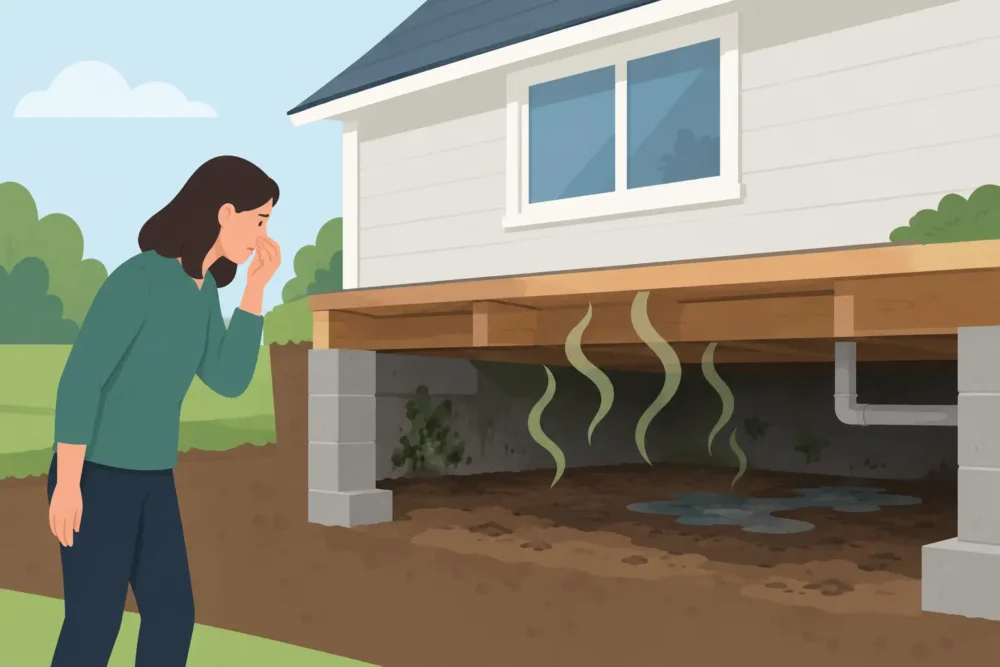
A musty smell that appears when the heat or air conditioner turns on is easy to dismiss as an old-house quirk. But crawl space odors often have a clear source below the floor – and that source can affect indoor comfort, insulation performance, and air quality throughout the home.
Because a home naturally pulls air upward, air from a damp or contaminated crawl space can move into living areas through gaps around plumbing, ductwork, wiring, and flooring. The odor may be strongest near a first-floor room, but the cause is rarely in that room. Finding and correcting the source is more effective than masking the smell with sprays, candles, or air fresheners.
Common Causes of Crawl Space Odors
A crawl space should be dry, reasonably clean, and protected from outside moisture and pests. When one of those conditions changes, odors can develop quickly or build gradually over several seasons.
Moisture and microbial growth
The familiar earthy or musty smell most homeowners associate with a crawl space usually points to excess moisture. It may come from groundwater, poor exterior drainage, plumbing leaks, high humidity, or humid outdoor air entering through open vents. Damp wood, soil, insulation, and debris create conditions where mold and mildew can grow.
Not every musty odor means there is widespread mold growth, and a smell alone cannot identify the type or extent of contamination. Still, it is a reason to inspect the area promptly. Moisture that is left in place can lead to wood deterioration, damaged insulation, and higher humidity inside the home.
Wet or contaminated insulation
Fiberglass insulation can absorb moisture, sag away from the floor system, and hold odors long after the original water issue has occurred. Older insulation may also collect dust, animal waste, and airborne contaminants over time. Once insulation is wet, compressed, or soiled, adding more material on top rarely solves the problem.
Removal and proper disposal may be the better option when insulation has been heavily contaminated or no longer performs as intended. The space can then be cleaned, dried, air sealed where appropriate, and reinsulated with materials suited to the crawl space conditions.
Rodents, insects, and animal remains
Rodents often use crawl spaces as sheltered nesting areas. Their urine, droppings, nesting material, and damaged insulation can create a persistent ammonia-like or stale odor. A dead animal may cause a much sharper smell that becomes more noticeable during warm weather.
Removing an animal without addressing the entry point is only a temporary fix. Effective rodent control includes identifying access gaps, sealing likely entry areas, removing contaminated materials when needed, and sanitizing affected surfaces. Insects, including termites and other wood-damaging pests, also thrive where moisture is present, which is another reason odor problems deserve attention.
Plumbing, drain, or sewer issues
Some crawl space odors smell more like sewage, sulfur, or rotten eggs. These can be associated with a leaking drain line, a failed pipe connection, a dry or damaged drain trap, or a sewer line problem. Natural gas has a sulfur-like odorant as well, so a suspected gas smell should be treated as an urgent safety concern. Leave the area, avoid switches or open flames, and contact the gas utility or emergency services as appropriate.
A plumbing professional may need to repair the leak, but moisture cleanup and insulation replacement can still be necessary afterward. Simply repairing the pipe does not automatically remove soaked material or the conditions that allowed odor to linger.
Why Crawl Space Smells Reach Living Areas
Many homeowners assume a crawl space is separate from the rest of the house because it is below the floor. In practice, the boundary is often far from airtight. Small openings around pipes, ducts, recessed framing, and utility penetrations can allow air to travel between the crawl space and the home.
This movement is often driven by the stack effect. Warm air rising and escaping through leaks near the attic can create lower pressure in the home, drawing replacement air from below. In winter, this can pull damp, musty crawl space air upward. In summer, air conditioning and duct leakage can influence airflow in different ways. The exact pattern depends on the house, its HVAC system, and the season.
That is why a crawl space odor should be evaluated as a home-performance issue, not just a cleaning issue. Better air sealing and insulation can improve comfort and energy efficiency, but the moisture or contamination source must be corrected first. Sealing in a wet crawl space can make the problem worse.
How Professionals Diagnose the Real Problem
A thorough crawl space inspection starts with the basics: visible water, standing moisture, soil conditions, drainage patterns, vapor barrier coverage, insulation condition, pest evidence, and plumbing leaks. Technicians also look for open penetrations, damaged ductwork, wood staining, and areas where outside air enters freely.
The best recommendation depends on what the inspection reveals. A home with minor ground moisture may benefit from a properly installed vapor barrier and targeted air sealing. A crawl space with recurring water intrusion may need drainage corrections or plumbing repairs before insulation work begins. Where rodent contamination is extensive, removal, sanitation, rodent proofing, and new insulation may be the appropriate sequence.
Thermal imaging can help identify temperature irregularities associated with missing or damaged insulation, though it does not replace a visual inspection or moisture assessment. The goal is to create a complete picture rather than selling a one-size-fits-all fix.
Effective Solutions for Persistent Crawl Space Odors
The most reliable odor solution is source control. Once the origin is identified, the work may involve drying the space, removing contaminated insulation or debris, repairing leaks, installing a vapor barrier, improving air sealing, and addressing pest entry points. In some homes, ventilation changes are appropriate. In others, reducing uncontrolled outside air and managing humidity is more effective.
Vapor barriers are particularly valuable when soil moisture is contributing to the problem. For best results, the material should be installed continuously across the ground with properly sealed seams and edges. A loose sheet of plastic tossed over damp soil may reduce some evaporation, but it will not deliver the same protection as a carefully installed barrier.
Sanitizing can help after rodent activity, mold-related cleanup, or water damage, but it is not a substitute for removing the source. Likewise, deodorizing products may offer short-term relief, yet odors usually return if wet insulation, animal waste, or a plumbing leak remains below the home.
What Homeowners Can Do Before an Inspection
If it is safe to enter the crawl space, avoid disturbing suspicious material or walking on sagging insulation. Take note of when the odor is strongest, whether it changes after rain, and whether you see signs of water, pests, or damaged ductwork. Check exterior gutters and downspouts as well. Water discharged too close to the foundation is a common contributor to crawl space moisture.
Do not rely on bleach as a general crawl space treatment. It does not solve groundwater, leaks, wet insulation, or pest contamination, and it can create unpleasant fumes in a confined space. A clean, dry, protected crawl space requires a plan that matches the actual conditions under your home.
For homeowners in the St. Louis area, seasonal humidity, heavy rain, and aging home systems can make crawl space conditions especially challenging. Better Home Insulation can inspect the space, explain what is driving the odor, and recommend practical repairs that support cleaner indoor air, dependable comfort, and lasting energy performance. A free inspection is a sensible first step when the smell keeps coming back.