
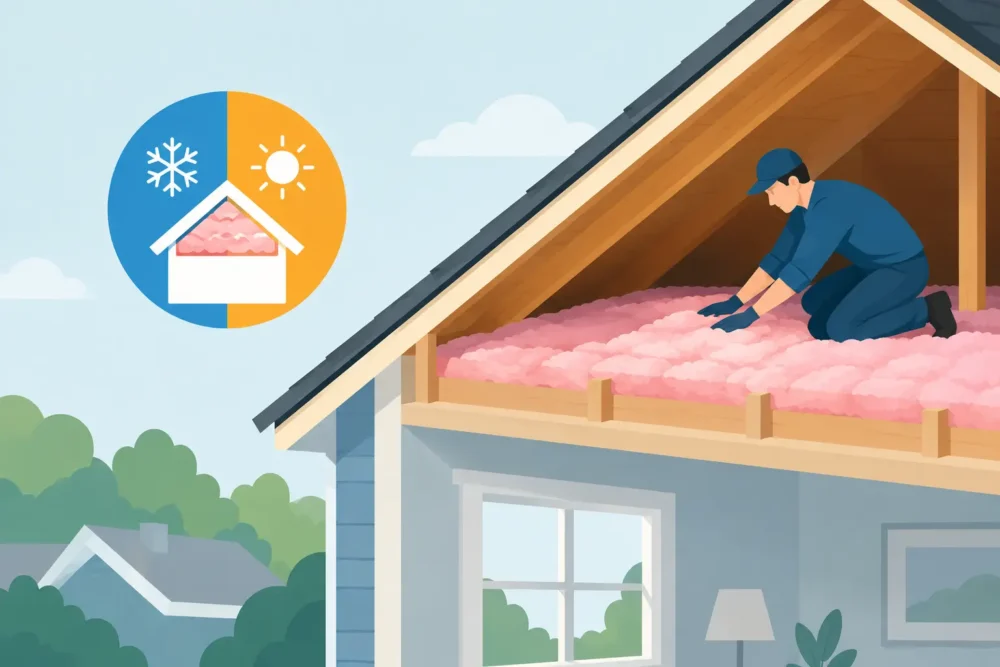
A chilly upstairs bedroom in winter or a second floor that will not cool down in July is often blamed on the HVAC system. Frequently, the real issue is overhead. If you are asking how much attic r value your home needs, the answer is not simply “add more insulation.” The right target depends on your climate, the insulation already in place, attic air leaks, moisture conditions, and whether the existing material is clean and performing as it should.
For many homes in the St. Louis area, improving attic insulation can reduce heat transfer, make room temperatures more consistent, and help the heating and cooling system work less hard. A proper assessment looks at the entire attic system, not just the depth of insulation on the attic floor.
How Much Attic R Value Is Recommended?
R-value measures how well an insulation material resists the flow of heat. A higher R-value means more resistance to heat moving through the ceiling into the attic or from the attic into the home.
St. Louis and much of eastern Missouri fall within a mixed-humid climate zone. For attics in this region, a total insulation level of approximately R-49 to R-60 is commonly recommended for strong energy performance. That range is a useful planning target for many existing homes, especially those with older, under-insulated attics.
The word “total” matters. Your attic may already have some insulation, and its existing R-value counts only if the material is dry, evenly installed, and not badly compressed, contaminated, or displaced. A few inches of aged insulation may offer far less real-world performance than its original rating suggests.
Local building requirements, home design, and the type of renovation being performed can affect the final specification. A professional inspection helps determine whether your attic needs a modest top-off or a more complete correction involving removal, sealing, and new insulation.
Why Insulation Depth Alone Can Be Misleading
Homeowners often measure attic insulation with a ruler and assume a certain number of inches equals a certain result. Depth is helpful, but it is not the whole story. Different materials deliver different R-values per inch.
Loose-fill fiberglass generally provides about R-2.2 to R-2.9 per inch, depending on the product and installed density. Loose-fill cellulose is often around R-3.2 to R-3.8 per inch. Spray foam products can provide a higher R-value per inch, but they are used differently and may be appropriate for particular roofline or assembly conditions rather than every attic floor.
For example, reaching R-49 may require roughly 13 to 15 inches of cellulose or closer to 16 to 20 inches of loose-fill fiberglass. Those are broad estimates, not installation instructions. Settling, framing obstructions, access paths, recessed fixtures, and uneven coverage all affect the final outcome.
More importantly, insulation does not stop air movement. Warm indoor air can leak into an attic through gaps around plumbing penetrations, wiring holes, top plates, duct openings, and attic hatches. If those bypasses remain open, conditioned air can escape beneath the insulation. That is why adding insulation without air sealing may leave comfort problems and utility costs largely unchanged.
Start With Air Sealing, Then Add Insulation
The most effective attic upgrades usually follow a practical order: address air leaks first, then install insulation to the required R-value. Air sealing helps prevent heated or cooled indoor air from reaching the attic, while insulation slows heat transfer through the ceiling assembly.
An attic hatch is a common weak point. So are open wall cavities, gaps around flues or chimneys, and penetrations for bath fans and electrical wiring. Some openings require heat-safe clearances or specialized materials, so this work should not be approached as a one-size-fits-all weekend project.
A thorough inspection can also identify duct leaks or disconnected ducts in the attic. Insulating over a duct problem will not correct the loss of conditioned air. In some cases, homeowners see better comfort from duct repair and air sealing than from insulation alone.
When Existing Attic Insulation Should Be Removed
Not every attic needs insulation removal before new material is added. If existing insulation is dry, reasonably clean, and evenly distributed, topping it off may be cost-effective. However, there are situations where covering old insulation creates a bigger problem.
Removal is worth considering when insulation has been damaged by roof leaks, mold, heavy rodent activity, smoke, or extensive contamination. Rodent droppings and nesting material are not merely unpleasant. They can affect indoor air quality and make attic work unsafe without proper containment and sanitation.
Insulation that is badly compressed, soaked, or matted down also loses performance. In these cases, removing the damaged material allows the attic floor to be cleaned, air leaks to be found, and the new insulation to be installed evenly. Eligible materials may also be recyclable, depending on their condition and local options.
Do Not Ignore Ventilation and Moisture
A high attic R-value is part of a healthy attic, not the only part. Moisture problems can undermine insulation and damage roof framing long before they become visible from inside the house.
Proper attic ventilation can help manage heat and moisture when it is designed as a balanced system, typically with intake at the soffits and exhaust near the ridge or roof peak. But ventilation is not a substitute for air sealing. Outdoor air moving through the attic cannot solve moisture that is entering from the living space through unsealed ceiling gaps.
Bathroom fans should vent outdoors, not into the attic. Roof leaks, plumbing leaks, blocked soffit vents, and poorly insulated ductwork can also contribute to moisture concerns. Before adding insulation, these conditions should be corrected so the new material stays dry and effective.
Signs Your Attic May Not Have Enough R-Value
Your utility bill is one clue, but it is not the only one. Homes with inadequate attic insulation often show a pattern of comfort and performance issues that homeowners notice every day.
You may need an attic evaluation if your upstairs rooms are much warmer or colder than the first floor, ceiling surfaces feel unusually hot or cold, or your HVAC system runs for long periods without delivering steady comfort. Ice dams in colder weather, excessive attic heat in summer, visible gaps in insulation, and insulation below the tops of ceiling joists can also point to a need for improvement.
These symptoms can have more than one cause. Window performance, duct leakage, crawl space conditions, and wall insulation may contribute as well. Thermal imaging and a careful visual inspection can help identify where heat loss is actually occurring, so you are investing in the right solution.
Choosing the Right Attic Insulation Approach
The best material and installation method depend on the attic itself. Loose-fill insulation is often a practical choice for open attic floors because it can fill around framing and provide consistent coverage. Batts may work well in specific areas when installed carefully, although gaps and compression can reduce their effectiveness. Spray foam may be considered for certain cathedral ceilings, roof decks, or complex assemblies, but it changes how the attic manages moisture and ventilation.
The goal is not to choose the product with the biggest number on the label. It is to create a continuous thermal boundary with sealed air leaks, correct insulation depth, protected ventilation paths, and safe access to mechanical equipment. Details such as attic dams, baffles, hatch insulation, and clearance around heat-producing fixtures can make a meaningful difference.
For homeowners in St. Louis and surrounding communities, Better Home Insulation can inspect attic conditions, explain the recommended R-value for your home, and address related concerns such as air leakage, rodent damage, moisture exposure, and contaminated insulation. A clear estimate should explain what will be sealed, removed, installed, and protected before work begins.
A comfortable home starts with knowing what is above the ceiling. Rather than guessing based on insulation depth alone, have the attic evaluated as a complete system and choose improvements that will keep delivering value through every season.