
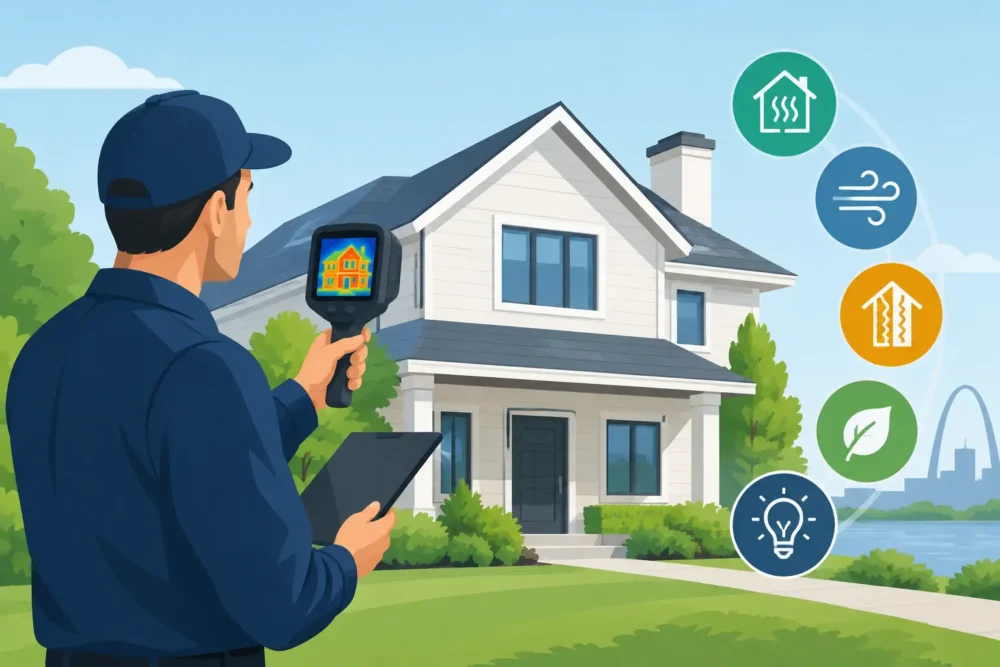
A home energy audit Saint Charles homeowners schedule is not simply an insulation check. It is a practical investigation into why one room stays cold in January, why the second floor feels stuffy in summer, or why utility bills keep climbing even when the thermostat barely changes. The goal is to locate the hidden performance problems that affect comfort, energy use, indoor air quality, and the condition of your home.
For many homes in Saint Charles, the biggest issues are above the ceiling, below the floor, or inside areas that are rarely inspected. An attic may have thin, uneven, or contaminated insulation. Warm indoor air may be escaping through wiring openings and framing gaps. A damp crawl space can allow moisture and musty odors to move upward. An energy audit helps separate the symptoms from the actual cause, so repairs can be planned in the right order.
What Happens During a Home Energy Audit in Saint Charles
A useful audit begins with listening. Your contractor should ask where you notice drafts, which rooms are difficult to heat or cool, whether you have seen moisture stains or pest activity, and how long the problem has been present. Your utility bills can also reveal patterns, especially if costs rise sharply during Missouri’s hot summers or cold winter stretches.
The inspection then focuses on the parts of the home envelope that control heat, airflow, and moisture. This includes the attic, exterior walls where accessible, crawl space or basement areas, insulation levels, duct-adjacent spaces, vents, and common air-leak locations around plumbing, electrical penetrations, and attic access openings.
Thermal imaging can be particularly helpful because it makes temperature differences visible. A thermal camera may reveal missing insulation, cold spots around framing, warm air entering through an attic bypass, or moisture-related concerns that deserve closer evaluation. It is a diagnostic tool, not a substitute for hands-on inspection. The best recommendations come from pairing thermal images with visible conditions, insulation depth measurements, and an understanding of how the home is built.
Problems an Energy Audit Can Reveal
Air Leaks That Make Insulation Work Harder
Insulation slows heat transfer, but it cannot stop moving air on its own. If air can travel from the living space into the attic through small gaps, conditioned air leaves the house while unconditioned outdoor air finds its way in. That can create drafts, uneven temperatures, and unnecessary strain on the HVAC system.
Common trouble spots include attic hatches, recessed lights, pipe openings, wiring holes, chimney chases, and gaps around top plates. These openings may look minor individually, but together they can have a major effect. Air sealing is often one of the highest-value improvements identified during an audit because it helps existing and new insulation perform as intended.
Insulation Gaps, Compression, and Age-Related Wear
A home may technically have attic insulation and still lack enough coverage to perform well. Insulation can settle over time, be installed unevenly, become compressed by storage, or be moved aside during electrical or mechanical work. Older materials may also fail to meet the home’s current needs.
Your audit should look beyond the question of whether insulation exists. It should identify whether the coverage is consistent, whether the insulation is dry and clean, and whether it provides an appropriate R-value for the area. The right R-value depends on the location, construction, attic conditions, and type of insulation used. Adding material without correcting air leaks, moisture, or contamination first can lead to disappointing results.
Crawl Space Moisture and Cold Floors
Cold floors, lingering odors, high indoor humidity, and signs of mold or wood deterioration can point to crawl space problems. In many homes, an exposed or poorly insulated crawl space allows outside temperatures and moisture to influence the rooms above it.
An audit can identify damaged insulation, exposed subfloors, vapor barrier issues, moisture entry points, and ventilation conditions. The solution may include crawl space insulation, a properly installed vapor barrier, targeted air sealing, or removal of wet and damaged materials. What is needed depends on the source of the moisture and the way the crawl space is configured. Sealing a problem area without addressing active water entry, for example, is not a complete fix.
Rodent Damage and Contaminated Insulation
Pests can turn an energy-efficiency issue into a sanitation issue. Rodents may tunnel through insulation, leave droppings, damage vapor barriers, or create openings that allow more outside air into the home. Nesting material and contamination can reduce insulation performance while affecting the cleanliness of the attic or crawl space.
When an audit identifies this kind of damage, the right approach may involve rodent proofing, insulation removal and disposal, cleaning or sanitizing affected areas, and replacement insulation after the space is properly sealed. Covering contaminated insulation with new material is rarely the best answer. The source of the intrusion should be addressed first.
Why Recommendations Should Be Prioritized
Not every finding needs immediate action, and a reliable audit should not treat every home the same way. The most sensible plan is usually based on safety, moisture control, expected comfort improvement, and the condition of existing materials.
For example, an attic with obvious air leaks and low insulation may benefit from air sealing before adding insulation. A crawl space with moisture-damaged insulation may need moisture control and removal before new insulation is installed. If insulation is clean and reasonably effective but the attic hatch is unsealed, a smaller targeted repair may be enough to improve comfort.
This prioritization protects your investment. It also helps you avoid spending money on an attractive-looking upgrade that does not solve the underlying performance issue.
When Should You Schedule an Audit?
A home energy audit is worthwhile when comfort problems become routine rather than occasional. You may be ready for an inspection if bedrooms feel much warmer or cooler than the rest of the house, floors feel cold, allergies or musty odors worsen indoors, or heating and cooling costs seem out of proportion to your home’s size.
It also makes sense before major insulation work, after a roof leak or pest infestation, when buying an older home, or before replacing HVAC equipment. Improving the home envelope can reduce the workload placed on heating and cooling equipment. In some cases, that may influence the size or performance requirements of future HVAC upgrades.
Spring and fall are convenient times to evaluate the home before extreme weather arrives, but a meaningful inspection can be performed year-round. In fact, very hot or cold days can make certain temperature differences and air-leak symptoms easier to detect.
Choosing a Contractor for the Work
The audit is only as helpful as the plan that follows it. Look for a contractor that can explain findings in plain language, show you where problems are located, and recommend work based on your home’s actual conditions. A complete solution may require more than insulation alone.
Better Home Insulation helps Saint Charles homeowners address the connected issues that affect home performance, including attic air sealing, insulation installation and removal, thermal imaging, crawl space insulation, vapor barriers, ventilation improvements, rodent proofing, and sanitizing. Licensed and insured technicians can provide a free inspection and estimate, then help you understand which improvements should come first.
A more comfortable home rarely comes from one guess or one product. It starts with a careful look at how air, heat, moisture, and insulation are working together, followed by repairs that address the real source of the problem.