
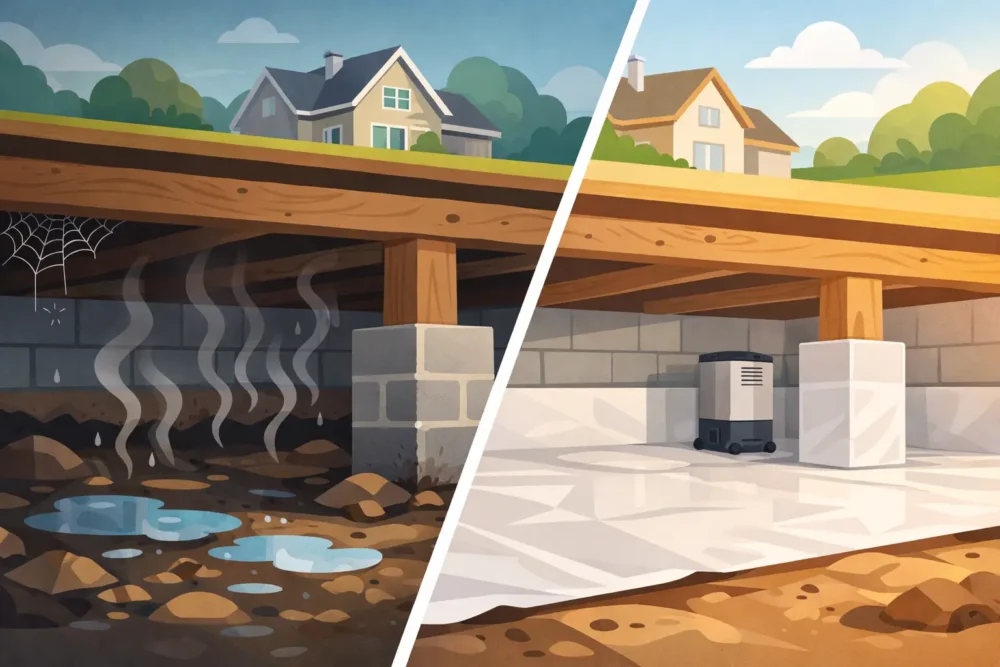
A crawl space vapor barrier in Ballwin, MO is not just a sheet of plastic laid on the ground. When it is selected and installed correctly, it helps control ground moisture before that moisture affects the framing, insulation, floors, and air inside your home. For homeowners dealing with musty odors, cold floors, damp insulation, or rising utility bills, the crawl space is often a smart place to start looking.
Many homes in the St. Louis area have vented crawl spaces that are exposed to humid summer air, wet soil, and seasonal temperature changes. Moisture does not stay neatly below the house. It can evaporate from the soil, collect on cooler surfaces, and move upward into the living area. A professionally installed vapor barrier is one practical part of a larger moisture-control plan.
What a Crawl Space Vapor Barrier Actually Does
A vapor barrier, often called a ground moisture barrier, is a durable polyethylene membrane installed across the crawl space floor. Its main job is to reduce the amount of moisture vapor rising from exposed soil. The material is overlapped, sealed where appropriate, and extended carefully around piers, plumbing penetrations, and other obstacles.
This matters because bare earth continuously releases moisture. Even when there is no standing water after a storm, that moisture can raise humidity under the home. High crawl space humidity may contribute to mold growth, wood movement, insulation deterioration, and conditions that attract insects or rodents.
A vapor barrier does not repair a drainage problem, stop a plumbing leak, or remove existing mold on its own. It works best after the underlying sources of water have been identified. If water is entering through foundation walls, poor grading, disconnected gutters, or a damaged pipe, those issues need attention first. Covering wet soil without correcting active water intrusion can hide the symptom while the problem continues.
Signs Your Ballwin Crawl Space May Need Attention
You do not have to enter a tight crawl space to notice every warning sign. Some of the most common clues appear inside the home. Floors over the crawl space may feel unusually cold in winter or humid in summer. You may notice a persistent earthy or musty smell, especially near floor vents, closets, or lower-level rooms.
Other signs include sagging or fallen crawl space insulation, visible condensation on ductwork or pipes, higher indoor humidity, and unexplained heating and cooling costs. In more advanced situations, homeowners may see dark staining on framing, damaged floor joists, or evidence of pest activity.
These symptoms can have more than one cause. A cold floor, for example, could point to missing insulation, air leakage, duct leakage, or moisture-damaged insulation. That is why an inspection is more valuable than guessing at a single product. The right recommendation should account for the condition of the ground, insulation, foundation walls, ventilation, plumbing, and wood structure.
Vapor Barrier or Full Crawl Space Encapsulation?
A vapor barrier and crawl space encapsulation are related, but they are not the same service. A standard vapor barrier focuses primarily on covering the soil. It is often a cost-effective option when the crawl space has manageable moisture levels, no active water intrusion, and a generally sound structure.
Full encapsulation is a more comprehensive approach. It may include a heavier liner on the floor and foundation walls, sealed seams, treatment of vents or openings, insulation improvements, air sealing, and humidity control. The goal is to make the crawl space less connected to outdoor humidity and more controlled as part of the home envelope.
Neither choice is automatically right for every Ballwin home. A basic barrier may be appropriate for a dry, well-drained crawl space that needs better protection from soil moisture. Encapsulation may be a better investment when humidity is persistently high, insulation has been damaged, ducts run through the crawl space, or the home has recurring odor and comfort problems.
The trade-off is straightforward: a more extensive system usually costs more upfront, but it can provide broader control when moisture and air leakage are significant. A professional inspection helps determine whether a barrier alone will solve the problem or whether it would be only one piece of the solution.
Why Installation Quality Matters
Thin plastic that is loosely spread across the soil may offer some benefit, but it can tear easily, shift during service visits, and leave large gaps around supports and edges. Those gaps allow moisture to continue entering the crawl space. Poor installation can also make future access difficult for plumbers, electricians, and pest-control professionals.
A quality installation begins with preparation. The crawl space should be evaluated for standing water, debris, damaged insulation, animal waste, and signs of mold or wood damage. Contaminated or fallen insulation may need removal before new materials are added. If rodents have been active, sealing entry points and sanitizing affected areas can be just as important as installing the barrier itself.
The barrier material should be appropriate for the crawl space conditions and installed with secure overlaps and clean transitions around piers and penetrations. Accessibility matters, too. A crawl space is still a service area, so the finished work should support future maintenance rather than create obstacles.
Pairing Moisture Control With Insulation and Air Sealing
A crawl space vapor barrier can protect insulation, but it does not replace insulation. In fact, moisture problems often explain why existing crawl space insulation is underperforming. Fiberglass that has absorbed moisture, fallen from between joists, or become contaminated cannot deliver the comfort and energy performance a home needs.
Once moisture is under control, insulation can help stabilize floor temperatures and reduce heat loss. Air sealing also deserves attention because gaps around plumbing, wiring, duct penetrations, and the rim joist can allow crawl space air to enter the house. This can carry odors, humidity, and allergens upward through small openings that homeowners rarely see.
The best combination depends on the home. A crawl space with ducts may benefit from duct insulation and air sealing. A home with cold floors may need insulation improvements after the barrier is installed. A crawl space with evidence of pests may need rodent proofing before new insulation is placed. Addressing these items together avoids spending money on a surface-level fix while the deeper cause remains.
What to Expect From a Professional Crawl Space Inspection
A useful crawl space inspection should give you more than a quick recommendation to add plastic. The technician should look for moisture sources, assess the condition of the insulation, check for air leaks and damaged ducts, and identify pest or sanitation concerns. They should also explain what they found in plain language and distinguish urgent repairs from worthwhile upgrades.
At Better Home Insulation, the goal is to recommend a practical plan based on your home rather than sell a one-size-fits-all package. That may mean vapor barrier installation only, or it may mean combining moisture control with insulation removal, new crawl space insulation, air sealing, ventilation adjustments, or rodent remediation. Homeowners should receive a clear estimate before work begins and understand how each recommended step supports comfort, cleanliness, and energy efficiency.
Protect the Space Below Your Home
The crawl space may be out of sight, but it has a direct effect on the rooms where your family lives. If you are noticing odors, dampness, cold floors, or failing insulation, a crawl space inspection can replace uncertainty with a clear plan. Controlling moisture at the ground level is often the first step toward a drier, more comfortable, and better-performing home.