
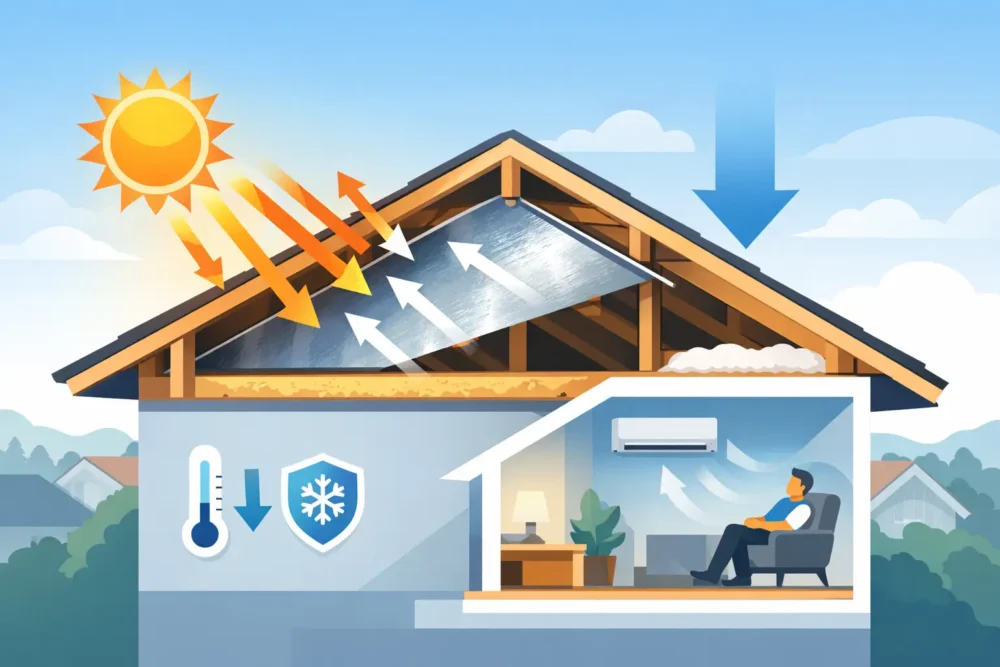
If your upstairs rooms get hot in the late afternoon even when the AC is running, your attic may be holding onto more heat than you realize. That is where radiant barrier in attic benefits start to matter. In many homes, the problem is not just a lack of insulation. It is the way the attic handles radiant heat coming off a sun-baked roof.
A radiant barrier is designed to reflect heat rather than absorb it. Installed correctly, it can reduce the amount of radiant heat transferred from the roof deck into the attic space. For homeowners, that often translates into a cooler attic, less strain on the air conditioner, and more stable indoor temperatures on the floor below.
That said, a radiant barrier is not a cure-all. It works best when it is part of a larger attic strategy that may also include insulation upgrades, air sealing, and ventilation improvements. The real value comes from knowing when it makes sense and when another fix should come first.
What a radiant barrier actually does
A lot of attic problems get lumped together, but heat moves in different ways. Standard insulation slows conductive heat transfer. Air sealing reduces unwanted airflow. A radiant barrier addresses radiant heat, which is the heat energy emitted by a hot roof surface.
In summer, roofing materials absorb intense sunlight and can become extremely hot. That heat radiates downward into the attic. A radiant barrier, usually a reflective material installed along the underside of the roof rafters or roof deck, helps bounce a portion of that heat away before it spreads through the attic.
This is why homeowners often notice the biggest benefit during hot, sunny weather. The attic temperature may stay lower, and the rooms below may feel easier to cool. In a place like the St. Louis area, where summer heat and humidity can put real pressure on HVAC systems, that can make a noticeable difference.
The most practical radiant barrier in attic benefits
The biggest benefit is reduced heat gain. When less radiant heat enters the attic, your home has a smaller cooling load to manage. That can help your AC run less often or for shorter cycles, especially during peak afternoon heat.
Comfort is usually the first thing homeowners notice. Bonus rooms, second-story bedrooms, and areas with vaulted ceilings often become less prone to overheating. If certain parts of the house have always felt warmer than the rest, a radiant barrier can help, though the result depends on the full condition of the attic and duct system.
Lower cooling costs are another reason people consider this upgrade. Savings vary based on roof design, existing insulation levels, duct placement, and how much direct sun the roof gets. Homes with HVAC equipment or ductwork in the attic often see stronger results because reducing attic heat helps those components operate in a less punishing environment.
There is also a durability angle. Excess attic heat can add stress to mechanical systems, and it can contribute to overall temperature extremes in the home envelope. While a radiant barrier is not a substitute for proper insulation or ventilation, it can support a better-performing attic assembly over time.
Where radiant barrier benefits are strongest
Not every home sees the same payoff. A radiant barrier tends to be most useful in homes with significant summer heat gain, especially when the attic gets very hot and that heat affects living areas below.
Homes with air ducts in the attic are a common example. When attic temperatures climb, those ducts are surrounded by hot air, which makes cooling less efficient. Reflecting some of that roof heat can reduce the burden on the system. The same idea applies when the air handler is located in the attic.
Homes with older attic insulation can also benefit, but this is where the trade-offs matter. If insulation is missing, compressed, contaminated, or poorly installed, a radiant barrier alone will not fix the main problem. In many cases, the better approach is to inspect the attic as a whole and decide whether air sealing, insulation replacement, or sanitation work should come first.
Roof orientation matters too. A home with heavy sun exposure and long hours of direct afternoon sun may gain more from a radiant barrier than a heavily shaded property. The climate matters as well. In warm regions and during hot Missouri summers, the effect is usually more meaningful than in milder conditions.
When a radiant barrier is not enough
This is where honest attic advice matters. Some homeowners hear about reflective barriers and assume they can solve every comfort issue in one step. Usually, that is not how attics work.
If your attic has major air leaks, hot attic air can still affect the home regardless of how much radiant heat is being reflected. Recessed lights, plumbing penetrations, wiring holes, and top plates can all allow conditioned air to escape and unwanted attic air to move where it should not. Air sealing often delivers major value because it addresses direct pathways for heat and air movement.
If insulation levels are low, the home may still lose or gain too much heat through the ceiling assembly. A radiant barrier can reduce one form of heat transfer, but it does not replace the need for proper R-value. And if the attic has moisture problems or poor ventilation, those issues need separate attention.
The takeaway is simple. A radiant barrier works best as part of a complete plan, not as a shortcut around deeper attic problems.
Radiant barrier in attic benefits depend on installation quality
Even a good product can underperform if it is installed the wrong way. Dust buildup, wrong placement, compressed materials, or poor integration with existing attic components can limit effectiveness. That is one reason a professional inspection matters before any recommendation is made.
A qualified insulation contractor should look at more than the roofline. They should evaluate insulation depth and condition, signs of air leakage, ductwork exposure, ventilation patterns, moisture concerns, and whether the attic has contamination from pests or damaged materials. Homeowners get better results when the recommendation is based on how the whole attic performs.
This is especially important in older homes, where multiple issues may overlap. An attic might need insulation removal, sanitation, rodent proofing, and air sealing before adding a radiant barrier makes sense. In newer homes, the issue may be simpler, but it still pays to confirm the true source of the heat problem.
What homeowners can realistically expect
The most realistic expectation is improvement, not perfection. A radiant barrier can help reduce attic heat and support better comfort, but results are shaped by the condition of the rest of the house.
Some homeowners notice bedrooms staying more comfortable in the afternoon. Others mainly notice the AC is not running as hard during high heat. Utility savings may show up over time, but they are rarely identical from one house to the next. Anyone promising a fixed percentage without inspecting the property is oversimplifying the job.
The better question is not, “Does it work?” The better question is, “Is it the right upgrade for this attic?” That is where experienced guidance makes a difference.
For homeowners in areas like Chesterfield, Ballwin, Wildwood, and across the greater St. Louis region, attics often face a mix of summer heat, humidity, aging insulation, and hidden air leakage. A radiant barrier may be a smart part of the solution, but only after the attic has been evaluated for the basics that affect performance every day.
How to decide if it is worth it
If you are dealing with hot second-floor rooms, rising cooling bills, or an attic that feels extreme in summer, it is worth having the space inspected. Ask for a recommendation based on the full attic system, not just one product. That includes insulation levels, air sealing opportunities, ventilation, duct conditions, and any signs of moisture or contamination.
A company like Better Home Insulation can be especially helpful when the attic needs more than one fix, because the right answer is often a combination of services rather than a single add-on. That kind of approach saves homeowners from paying for partial solutions that leave the real problem in place.
The best attic upgrades are the ones that match how your home actually performs. If a radiant barrier fits that picture, it can be a practical way to improve comfort and help control cooling costs. And if another issue should come first, finding that out before work begins is just as valuable.